


It’s the holiday season, and everything around you is designed to feel joyful and bright. But even with all the sparkle and music, you may notice your emotions don’t match the atmosphere, and that’s okay.
But when you open up, all you get is "Cheer up, it’s the holiday season!" from friends and family. And you won’t be wrong to think it feels toxic because it is.
Here are a few signs of toxic positivity, ways to protect your emotional well-being, and reassurance that it’s perfectly okay not to feel festive right now.
Permission Reminder: “It’s Okay Not to Be Okay This Holiday.”
You have the full right to skip family gatherings, pass on parties, or not care about gifts because you feel sad, overwhelmed, burned out, or simply not in the mood.
Choosing to stay at home and participate in comforting routines can be a healthy form of self-care. Allowing yourself to experience your emotions without judgment is part of being human and does not mean you are “ruining” the season.
Key Learnings
- The holidays can be tough, and your feelings are real, valid, and deserve space.
- Toxic positivity involves minimizing or dismissing "difficult" emotions and encouraging unrealistic expectations to remain positive at all times.
- Healthy positivity honors every feeling you have, not just the "easy" ones.
- Emotional honesty fosters stronger relationships and promotes mental well-being.
Examples of Toxic and Healthy Positivity
| Toxic positivity | Healthy positivity |
| Toxic positivity doesn’t give one permission to express their true feelings. Instead, it forces them to stick to showing what’s traditionally considered ‘positive emotions’ even if a person is going through emotional turmoil or dealing with trauma. | Healthy positivity is the practice of maintaining an optimistic or constructive outlook while fully acknowledging and validating all emotions, including those that are difficult or uncomfortable. It balances hope and positivity with realism and emotional awareness, allowing individuals to process challenges without suppressing or denying their feelings. |
Emotional Repression vs. Emotional Expression
Toxic positivity dismisses or shuts down difficult emotions, making it harder for someone to process their negative experiences. This supports emotional repression.
Healthy positivity, on the other hand, involves listening with empathy and creating space for all emotions, both positive and negative, so that the person can feel seen and understood. This supports emotional expression.
Forced Positivity vs. Healthy Balance
Forced positivity occurs when someone’s constant optimism unintentionally dismisses others’ difficult emotions and pressures them constantly to appear happy. Healthy positivity acknowledges and celebrates positive emotions while also validating real concerns and challenges.
Shallow Support vs Authentic Connections
A quick "good vibes only" response to a bid of vulnerability can feel superficial and shut down the dialogue. In turn, this makes one hesitant to share their emotional experiences in the future.
Healthy positivity, on the other hand, acknowledges genuine emotions, which, in turn, lead to positive emotions associated with better coping and greater resilience.
| When it’s Toxic… | When it’s Healthy |
| Focuses only on the bright side | Balances the dark and light moments |
| Pushes for constant positivity | Knows joy and sadness can coexist |
| Skips over legitimate concerns | Encourages one to talk things through |
| Feels like emotional pressure | Feels like psychological safety |
| Gives you “good vibes only” clichés | Gives you presence and empathy |
| Shames you for being real | Reminds you that feeling deeply is part of the deal |
Merry or Masked? How Toxic Positivity Shows Up During the Holidays
Movies and music often market the holidays as a time of joy, laughter, and miracles... when long-standing family tensions magically disappear, and everyone finds common ground.
In reality, some emotional challenges don’t simply vanish during the season.
Family Gatherings
Family gatherings can carry years of history and tension. While your relatives often mean well, some common phrases invalidate feelings instead of offering comfort.
Examples of Toxic Positivity Situations
- You might hear responses like, “Cheer up, it’s the holidays!” or “Don’t bring everyone down!” when you share something difficult, like losing a job or struggling with personal challenges.
- Your uncle says, “At least we’re all together — that’s what matters!” right after you mention how tense family gatherings make you feel.
- Your mother reproaches you with “Holidays are about family… Don’t you wanna spend time with us?” when you admit you’re too tired to join the party.
- Your siblings tease you with “Smile! It’s the most wonderful time of the year” when you’ve ended a long-term romantic relationship.
Social Pressure
Society doesn’t care that you’ve been looking forward to the “most wonderful time of the year” just to hibernate from the work overload for a week or two.
Examples of Toxic Positivity Situations
Here are some unwritten holiday rules that sound pretty toxic:
- Mandatory festive toasts. Everyone raises a glass to a great year. Yours might not have been that joyful, but still, you’re forced to pretend.
- "Perfect" family photos. Matching pajamas and forced smiles might feel like a performance of happiness, especially if some of your relatives are at each other’s throats.
- Kisses under the mistletoe. Well, this might feel awkward and intrusive.
- Making New Year’s Resolutions (again 🙄). “New year, new me!” puts you under impossible pressure to reinvent yourself overnight.
🎁 Gift Giving
Now there is a whole culture of gift-giving. It should be thoughtful. It should be personal. But most of all, it should be picture-perfect (and for some people, Insta-worthy).
Examples of Toxic Positivity Situations
- Secret Santa. The fun fades when the entire concept turns into a competition for the most creative or expensive gift.
- Gift unwrapping ceremonies. Everyone’s watching, phones out, waiting for your “happy face.” This all leaves no room for honest reactions.
- Feeling pressured to give meaningful gifts. Sometimes the pressure to make it “special” clashes with what your budget or your nervous system can handle. That tension doesn’t make you careless or unkind. It just means you’re doing your best with what you have.
🤳🏾Social Media Pressure
Somehow, we’ve turned holidays into a comparison game. Everyone seems to be traveling and glowing, surrounded by family, friends, and a pile of presents. Well, it’s not even a reality, but somehow this sets the tone for an unattainable standard for joy.
Examples of Toxic Positivity Situations
- Everyone expects you to travel for holidays. If you stay home for the holidays, you’re met with “Oh, but you have to make memories!” as if staying home for the holidays isn't acceptable.
- Caption clichés like “Happiness is a choice!” or “Grateful beyond words!” flood your feed, demanding a positive mindset 24/7;
- Seeing picture-perfect holiday scenes can make your own space feel less than ideal, even though that’s completely normal.
- Influencers preaching relentless optimism. “Good vibes only!” posts feel tone-deaf for those juggling loneliness, burnout, or grief.
- Toxic comment culture. No one wants to read honest posts about how much others feel sad or struggle.
🚩 Gratitude Shaming
On top of everything, everyone expects you to share your gratitude for the season online and in real-life conversations. Sure, you’re grateful for the things and people in your life, but shouldn’t we be thankful every day, not just on holidays?
Examples of Toxic Positivity Situations
- You’ve just complained about your toxic boss. Your uncle leans over the table and says, “You should be glad you’ve got a job! Think of all the people who’ve lost their jobs this year”.
- The family dinner makes you anxious, and you share your feelings, only to be met with, “Why are you making everything about yourself? Be grateful for your health!”
- Your toxic romantic relationship is over, but still, you feel heartbroken. Your friend responds by texting, “Everything happens for a reason. Just focus on the good.”
How to Respond to Toxic Positivity with Empathy and Honesty
It might feel like people trade genuine feelings for polite smiles and clinking glasses when they're sad, frustrated, or burned out. You don’t have to pretend. Here is how to respond to toxic positivity without betraying your true emotions or your mental health.
#1: Ground Yourself First
Grounding helps you regulate your emotions before you respond, so you don’t absorb someone else’s discomfort or invalidate your own feelings.
- Take a deep breath before you respond with something unhelpful.
- Remind yourself that most toxic positivity comes from good intentions: people often don’t realize how dismissive they are, or they don’t know how to help.
#2: Name Your Real Emotions that One Dismisses
Sometimes, we push our emotions aside (it's called emotional suppression), thinking it will make things easier. However, this can often lead to increased stress and make it harder to process our feelings in the long run.
Try the affective labeling technique. Affective labeling is the process of putting your feelings into words, identifying and naming the emotions you are experiencing. This act of labeling helps the brain regulate emotions, reduces emotional intensity, and improves self-awareness.
Name the emotion you're experiencing at the time to acknowledge it and permit yourself to stay in that state. This technique helps you activate brain regions responsible for problem-solving and emotional regulation. Plus, it lessens the intensity of the emotion itself.
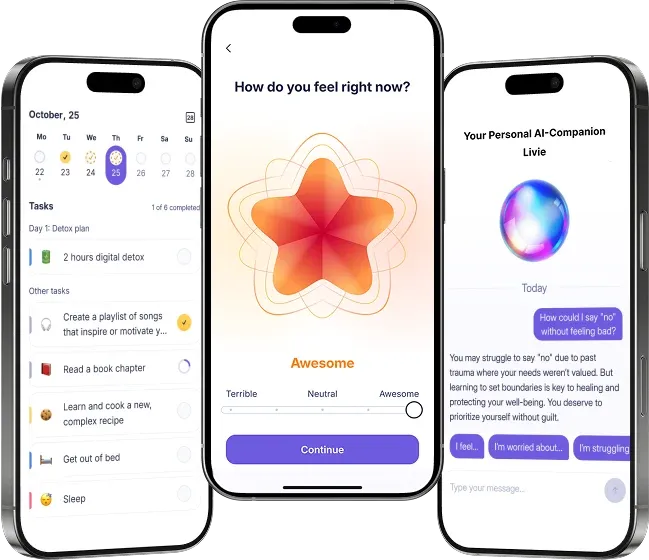
By the way, you can do it with technology if you can’t name the emotion loudly: a mood tracker in digital mental health apps like Liven lets you choose the emotion, note the trigger, and see how your emotional well-being changes over time
#3: Model Honest and Supportive Language
You can gently model what emotional validation sounds like in response to “Everything happens for a reason” or “It could be worse.”
- “I know you mean well, but right now, I just need space to process my feelings.”
- Thank you, but I need to feel this frustration first before I can look for a silver lining."
- “It’s okay not to have a bright side yet. I guess finding it takes time for me, and I’m fine with that”.
- “I really appreciate your optimism, but can we talk honestly for a bit?”
- "I am grateful for many things, and that gratitude doesn't cancel out the sadness I feel today."
#4: Tell the Other What You Need at the Moment
As you may recall, some phrases of toxic positivity stem from a place of genuine care when a person doesn’t know how to help.
In cases like this, you can try the following phrases:
- “I appreciate your positivity, but I’d feel better if you could just listen right now.”
- “Can you help me brainstorm a solution?”
- “I know you want to lift my mood, but I just need understanding today.”
#5: Protect Your Energy if You Feel Pressured
Create emotional distance if necessary. Honestly, even the most empathetic person can only handle so much “good vibes only” energy.
- Politely excuse yourself from the conversation with “I need some quiet time, but I’ll check in later.”
- Go to a quiet corner and find solace in a grounding ritual, such as pen-and-paper journaling or digital journaling with a mental health app like Liven.
- Complete an exercise from an anxiety management course (again, these are often part of mental health tools like Liven).
- You can always step outside and take a deep breath for a minute to calm down.
Fostering Self-Compassion and Emotional Resilience
We can internalize toxic positivity without even realizing it. Maybe we were taught as kids that no one loves us when we get angry, or got gratitude-shamed with lines like, “You should be grateful for the toys you have! Jimmy’s parents can’t even afford new shoes.”
Or perhaps the hustle culture taught us that, as adults, it’s our job to grind, not complain, and wear a smile no matter how hard life gets.
Here's how not to sacrifice authenticity.
#1: Understand What Fuels Toxic Positivity
Recognize the forces that make toxic positivity thrive:
- Social media bubble. People post perfect, happy lives (#PositiveVibesOnly), which create unrealistic standards of constant happiness.
- Individualistic cultures encourage people to “handle it alone” and suppress negative emotions.
- Corporate/performance-driven environments expect employees to stay motivated at all times.
- Self-help culture often pushes “think positive!” messages that ignore real pain or struggle.
#2: Notice the Signs of Toxic Positivity in Your Head
Here are the top signs of toxic positivity happening in your own thoughts:
- You avoid talking or even thinking about negative feelings.
- You feel ashamed when you experience negative emotions.
- You’re trying to find the ‘look on the bright side’ aspect in a bad situation.
- You admire people who consistently stay positive.
#3: Practice Emotional Flexibility
Emotional flexibility helps build resilience and a strong belief that pain can coexist with hope in real life.
- Accept the dual nature of human emotions. You can experience situational negative emotions, but have a positive attitude towards the bigger picture. For instance, you might be upset that not everyone on the team liked your presentation or supported your ideas, but still love the job you’re doing.
- Name the emotion. Yes, this technique helps one deal with their internalized toxic positivity. Instead of thinking, "I shouldn't be angry because I have so much to be grateful for," try naming the feeling, "I am feeling deep frustration because my hard work was ignored."
- Practice distress tolerance. In psychology, the top negative emotions are sadness, anger, and fear. One might turn to toxic positivity because they don’t know how to process these deeply uncomfortable emotions.
According to Dr. Tracey Marks, to deal with them, you have to “Accept it (the emotion/feeling), make room for it, sit with it, and let it pass on its own time.” In her video, she provides excellent real-life examples of how to apply this strategy effectively:
Final Thoughts: Behind the Glitter
Holidays are that time of the year when tricky conversations mingle with cinnamon and pine smells. And though society expects you to put on a smile, you don’t have to hide your lowest moments behind glitter and tinsel because the proper balance comes from feeling it all: the joy, the fatigue, the nostalgia, and even the sadness.
Meanwhile, keep the journey going: explore Liven’s blog for more mental health insights, take a quick wellness quiz, or check the app (Google Play and App Store) to see what small steps can keep your emotional balance steady into the new year.
Cheers! 🥂
References
- Binns, R. (2024). How bright is the bright side? Measurement and implications of toxic positivity for self and others. Mount Allison University. https://mta.scholaris.ca/items/a8a55bc1-4f04-4c23-845c-149ba99d73cb
- Marks, T. (2019). How to deal with negative emotions – Distress tolerance [Video]. YouTube. https://www.youtube.com/watch?v=puoddnGTAJk
- Marks, T. (2022). Toxic positivity: The reality of suppressing emotions [Video]. YouTube. https://www.youtube.com/watch?v=-_6N9pnj5Ek
- Snediker et al. (2024). Developing a measure of toxic positivity at work. University of Tennessee at Chattanooga. https://scholar.utc.edu/rcio/2024/posters/13/
- Wyatt, Z. (2024). The dark side of #PositiveVibes: Understanding toxic positivity in modern culture. https://www.researchgate.net/profile/Zoe-Wyatt/publication/383871051_The_Dark_Side_of_PositiveVibes_Understanding_Toxic_Positivity_in_Modern_Culture/links/66ded25eb1606e24c21b2c67/The-Dark-Side-of-PositiveVibes-Understanding-Toxic-Positivity-in-Modern-Culture.pdf
- Gross, J. J., & John, O. P. (2003). Individual differences in two emotion regulation processes: Implications for affect, relationships, and well-being. Journal of Personality and Social Psychology, 85(2), 348–362.https://doi.org/10.1037/0022-3514.85.2.348
- Tugade, M. M., Fredrickson, B. L., & Feldman Barrett, L. (2004). Psychological Resilience and Positive Emotional Granularity: Examining the Benefits of Positive Emotions on Coping and Health. Journal of Personality, 72(6), 1161–1190. https://doi.org/10.1111/j.1467-6494.2004.00294.x
FAQ: Toxic Positivity Examples
What is toxic positivity?
What are some examples of toxic positivity?
What are toxic positivity definition examples?
How can you avoid toxic positivity in difficult conversations?
Is there a healthy way to stay positive?
Why do people use toxic positivity?