



Emotional suppression is an incredibly common human experience. It is a protective shield, but over time it can become heavy.
When we suppress our repressed emotions, we aren't making them disappear; we are asking our body to store them for later. If you feel like you are struggling with a hard time or find yourself overwhelmed by strong emotions, know that your feelings are normal.
Learning how to shift from emotional repression toward conscious awareness is a brave step toward protecting your mental health and reclaiming your emotional well-being. It’s time to stop holding your breath and start learning how to express emotions by building emotional safety.
Key Learnings
- Labeling your feelings transforms the experience by enabling you to shift from a reactive emotional state to a rational one, and to identify the specific emotion behind your discomfort.
- Somatic practices like the "shake-off" or progressive muscle relaxation help the nervous system move through and let go of tension you have been holding that your mind might not yet be ready to vocalize.
- Recognizing when emotions feel too heavy to carry alone and seeking a therapist is an act of self-compassion that provides you with expert psychological strategies for long-term well-being.
Dealing With Emotional Suppression
When you're learning to stop emotional suppression, you develop strategies that build self-awareness, nonjudgmental evaluation, and emotional intelligence.
Express Your Emotions Without Judgment
Shame often stops us from expressing our emotions. To break the habit of emotional suppression, try this 5-minute emotional expression exercise designed to bypass your inner critic. We'll call it "stream of consciousness."
- Set a timer. Commit to just 5 minutes of focused expressing.
- Acknowledge the raw truth. Write down every sense of anger, sadness, or discomfort you feel right now. Don't worry about grammar or if it makes sense.
- Remove judgment. If you think "I shouldn't feel this way," write that down too. The goal is to practice being aware of these feelings.
- Physical release. Once the timer is up, take a deep breath to relax your body. You can choose to keep the paper or physically destroy it to symbolize letting go of repressed emotions.
Navigating the Complexity of Difficult Emotions
Handling strong emotions involves building the ability to sit with them until they pass. It takes time, but with the right tools and techniques, negative emotions won't get out of control.
- Create a safe container. If you feel grief, anxiety, or fear bubbling up at an inconvenient time (like during a meeting or while driving), acknowledge their presence. Mentally schedule 5 minutes later in the day to sit in a quiet space and feel it fully. This prevents unconsciously pushing the emotion down into long-term emotional repression, while still allowing you to function in the moment.
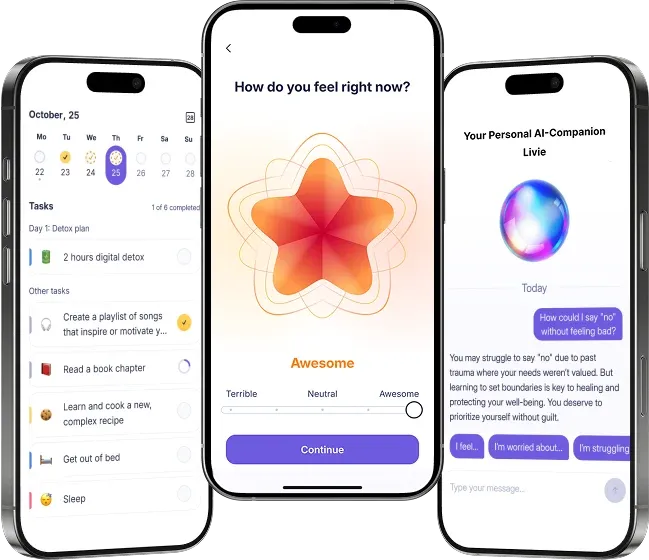
- The 90-second observation practice. Allow yourself to just let your emotions be, as if they are clouds. When a wave of anger or sadness hits, try to simply notice and feel it for 1.5 minutes. Don't try to change it; just practice watching the physical rise and fall of the feeling in your body. Then, picture the thoughts or feelings passing like clouds in the sky. Afterwards, you can use Liven's Mood Tracker to log your emotions and provide additional information about factors contributing to how you feel.
Focus on Growing Your Emotional Intelligence
Emotional intelligence is understanding what you and others feel and managing your feelings with self-compassion. Our ability to recognize and respond to our inner landscape is a skill we often don't learn from our primary caregivers.
When we lack this skill, we often unconsciously push away feelings before we even realize they've arrived. The cycle of emotional suppression can be broken by bringing mindfulness into our daily lives.
One of the most effective techniques for this is known as "Name it to Tame it." When you feel a surge of discomfort, take a moment to explore the specific emotional states you are experiencing. Is it just "stress," or is it actually anxiety about an upcoming deadline? Is it anger, or is it the pain of feeling unheard? By using your conscious awareness to label the feeling, this brief emotional check-in helps you process it more rationally.
Another powerful practice is the S.T.O.P. method:
- Stop. Pause what you’re doing. Interrupt the automatic reaction and create a moment of space.
- Take a breath to center your body. One or two deep, steady breaths can help calm the nervous system and bring your attention back to the present moment.
- Observe. Notice what’s happening inside and around you. Pay attention to your thoughts, emotions, and physical sensations without judging them.
- Proceed with compassion. Choose how to move forward thoughtfully rather than react automatically.
When you recognize that these emotions may be trying to tell you something, you can address them sooner. This proactive emotional regulation reduces the chances that emotions will become repressed and build up later.
Listen to Your Body
We've already established that when we don't let out our emotions sooner rather than later, it can have a long-term impact on our bodies. It can manifest as a stiff upper lip, a clenched jaw, or even a headache. That's why, when we struggle to process our emotions, we also may find it easier to go through our physical sensations first.
- Somatic shake-off. Stand up and begin gently shaking your hands, then your arms, and finally your legs. Allow your whole body to bounce loosely for 2-3 minutes. This mimicry of a natural animal reflex helps the nervous system discharge built-up stress and prevents emotional repression. It's okay to feel silly because you're just allowing yourself to relax.
- Progressive muscle relaxation.
- Prepare. Find a quiet space where you won't be interrupted for 10 minutes. Sit or lie down in a comfortable position. Close your eyes to increase your conscious awareness of your internal emotional states.
- Focus on breathing. Take three deep, slow breaths. As you exhale, imagine the day's overwhelm leaving your body.
- Tense and release. For each muscle group, inhale and squeeze the muscle as hard as you can for 5 seconds. Then, exhale and suddenly let go. Feel the muscle go limp and "loose." Pause for 10 seconds to acknowledge the sense of relaxation before moving to the next group.
- Final scan. After finishing your face, take a final deep breath. Scan your entire body for any remaining discomfort. If you find a "tight" spot, repeat the tense/release cycle there once more.
And if you need more help to figure out how to let your feelings just happen, take our quiz and get your personalized plan for a calmer mind.
What if It Affects My Mental Health?
While learning to stop suppressing your feelings is a powerful step, sometimes the emotions we uncover are too heavy to carry alone, and if left unprocessed, they can contribute to mental health challenges.
If you find that the process of opening up leads to increased anxiety, depression, or a sense of being stuck, know that this is a sign your mind is asking for additional support. It is a brave and healthy choice to recognize when you need the guidance of a mental health professional.
Therapists can help you understand why you behave or feel the way you do and offer strategies designed for your life. Seeing a mental health professional is a way to care for yourself and get the support you deserve.
Moving Forward
Learning how to stop suppressing your feelings is a lifelong practice, not a one-time event. Whether you are navigating grief or simply trying to handle daily stress, your ability to remain present with yourself is the greatest gift you can give your mental health. The next time you feel a difficult emotion, try sitting with it for just a moment or even naming it. And so, when you feel proud of taking this first step, you will know it's all thanks to your bravery.
References
- Erbildim, E., & Nweke, G. E. (2025). The mediator role of difficulties in emotion regulation in the relationship between guilt and shame-proneness and somatic symptoms. BMC Psychology, 13(1). https://doi.org/10.1186/s40359-025-02909-4
FAQ: How to Stop Suppressing Emotions
What are the long-term consequences of holding onto suppressed feelings?
Can bottling up my emotions actually affect my physical health?
Is there a connection between hiding emotions and substance abuse?
How does my emotional state impact my personal relationships?
Do children learn to suppress their emotions from their parents?
Why do I feel a sense of guilt when I try to express myself?