How to Get Over Driving Anxiety?



Reviewed by
Tara Passaretti, M.S., LMHC


It’s natural to feel anxious on the road if you’re a new driver or have had a distressing experience before. The good news is that there are proven ways to retrain your nervous system with patience and repeated exposure, and none of these methods require you to push yourself harder than you’re ready for.
Here is how to get over driving anxiety with the following cognitive-behavioral strategies that help calm the nervous system, reduce avoidance, and rebuild confidence while driving.
Key Learnings
- Driving anxiety is common and often rooted in past accidents, inexperience, or general anxiety.
- Taking small, achievable steps is more effective than pushing yourself too fast.
- Gradual exposure (including exposure therapy like VR) builds confidence safely.
What is Driving Phobia?
Driving phobia is a fear of driving a vehicle or being a passenger in one and comes with a fear that is often disproportionate to the actual danger.
The root cause of driving phobia might be:
- Past accidents, like a car crash (even if it’s only witnessing accidents).
- Lack of experience as a new driver.
- Generalized anxiety disorder, panic disorder, or other mental health conditions. These heighten sensitivity to stress and bodily sensations, making routine activities like driving feel more threatening.
Practical Tips and Tools for Reducing Driving Anxiety
This section provides you with practical tools, in-the-moment tips, and gradual exposure techniques to help you feel confident behind the wheel. These small steps lay the foundation for a calmer mind each time you sit behind the wheel.
1. Everything Starts with Acceptance
Many good drivers occasionally feel anxious and experience physical tension or a sense of “I might lose control.”
The best thing to do is acknowledge your overwhelming feelings and anxious thoughts without judgment:
- “A little nervousness doesn’t mean I’m unsafe.”
- “I’ve handled this before, and I can handle it again.”
- “Anxiety is a feeling, not a fact.”
2. Choose Tiny Wins Over Big Leaps
Set small, achievable goals:
- Sit in the driver’s seat for a few minutes while practicing deep breathing.
- Drive around the block once.
- Go to a nearby parking lot and practice smooth starts and stops.
- Merge into light traffic when you feel ready.
3. Bring a Calm, Trusted Companion
Take a trusted friend or family member for an even steadier support system. They can support you during the drive with light conversations and reassure you during more challenging moments, such as merging or turning.
How to Get Over Anxiety While Driving?
Here is what to do once anxiety starts crippling while you’re driving:
🎧 Focus on the present with grounding and deep breathing techniques
Deep breathing lowers physical responses, such as a rapid heartbeat and muscle tension, as it sends a signal to your brain that you are safe. To calm your nervous system, inhale for 3–4 seconds, exhale for 4–5. Repeat for a few cycles.
Meanwhile, a grounding technique can help you stop negative thoughts about what can go wrong. For example, name 3 things you can see, 2 things you can hear, and 1 thing you can feel (like your hands on the steering wheel).
By noticing your surroundings and bodily sensations, you challenge anxious predictions and remind yourself that you are safe in the present moment.
👣 Break the drive into small sections
Just like you’d do with a complex task, divide your journey into small, manageable chunks.
Here is an example of such a plan:
Step 1: Sit in the parked car for one to two minutes. Adjust your seat and let your body settle.
Step 2: Drive to the end of your street and come to a stop. Check in with your breath.
Step 3: Take the first familiar turn and drive one or two blocks.
Step 4: Pause in a safe location to reset if needed.
Step 5: Continue to the next “section” — maybe a single intersection or a short stretch of light traffic.
Step 6: Break down the route home the same way.
🌡️ Adjust your environment
Create a driving space that feels safe, soothing, and predictable.
- Choose calming music or ambient sounds
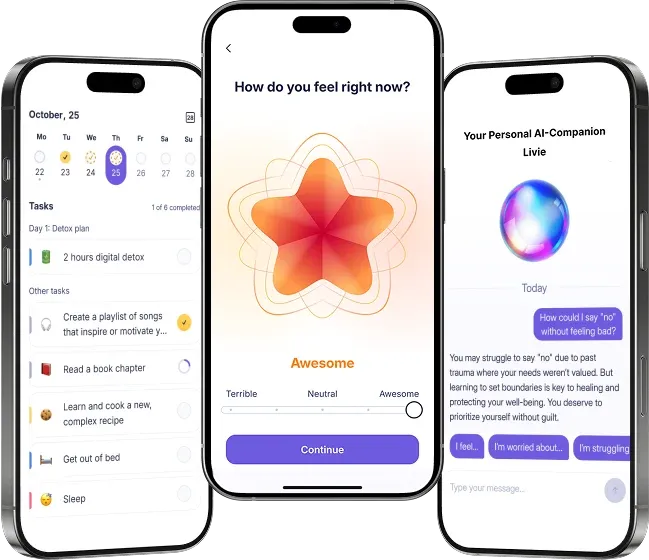
Gentle playlists, nature sounds, or instrumental tracks in mental health apps like Liven can reduce physical tension and lower your heart rate. At the same time, turn off loud vents and rattling objects to minimize distracting sounds.
- Set the temperature to what feels comfortable
Feeling too hot or too cold can make anxiety symptoms feel stronger.
- Keep the car tidy and uncluttered
A clean space helps reduce sensory overload and brings clarity to your mind.
- Choose the quietest times to practice
Light traffic, early mornings, or low-stress routes help you feel more in control, allowing confidence to build.
How to Overcome Driving Anxiety After an Accident?
You can apply all the tips from above if you’re returning to your driving routine after a car accident. However, there are a few additional strategies to help you rebuild confidence safely, as this situation triggers specific fears.
1. Start with Safe, Familiar Routes and Gradually Increase Complexity
When you gradually expose yourself to various driving situations, you retrain your nervous system step by step to perceive driving as a safe and predictable activity again.
The goal here is to feel safe and in control. Quiet residential streets, empty parking lots, or frequently traveled routes are the perfect places to start your practice.
Once you feel more comfortable with driving again, slowly add more challenging elements to your routes: minor intersections, moderate traffic, then highway driving or busy highway sections.
In one pilot study, every participant showed improvement, and 60% even achieved a clinically significant reduction in their driving anxiety.
2. Use Grounding Techniques to Stay Present
It’s normal for past accidents or car crashes to trigger anxiety symptoms, especially at the beginning of your coming-back journey. When memories arise, anchor yourself in the present by focusing on what you can see, hear, and feel in the here and now.
Focus on:
- Your hands wrapped around the steering wheel
- The feeling of your seat supporting you
- The hum of the engine
- The sounds outside the car.
3. Document Small Wins to Build Confidence
Write down moments like:
- Driving for a few minutes without feeling overwhelmed
- Merging into light traffic
- Completing a familiar route with less anxiety
- Trying a short highway segment for the first time.
You can use pen-and-paper journaling or a digital mental health tool like Liven to log your driving experiences and reflect on your progress, especially when combined with a mood tracker that shows how your anxiety changes over time.
4. Treat Yourself with Compassion
Your coming-back journey might take longer than you expected, especially if you’re still emotionally healing after a car-related event.
Open your journal or mood tracker to remind yourself of the progress you’ve already made and reassure yourself that you’re allowed to take things slowly.
Final Thoughts
It’s possible to overcome the fear of driving with the right strategies, like gradual exposure or grounding techniques. Continue practicing regularly, celebrate your progress, and reach out for professional support whenever you need it.
And if you want additional support as you build confidence on and off the road on your mental health journey, Liven can walk the path with you. Explore the Liven app (Google Play or App Store), dive deeper on the Liven blog, or check in with yourself using Liven’s free wellness tests.
References
- Figuerola Escoto, R. P., et al. (2025). Optimized VR for exposure therapy in amaxophobia. Applied Sciences, 15(21). https://doi.org/10.3390/app152111740
- Eisenberg, J. (2025). Stop fighting your anxiety and start using it [Video]. YouTube. https://www.youtube.com/watch?v=h-MHHlZqVaI
- Demonstrating different levels of anxiety [Video]. (2024). YouTube. https://www.youtube.com/watch?v=9U5-BrbLU1U