How to Manage Anger in a Relationship When Arguments Escalate?



Reviewed by
Tara Passaretti, M.S., LMHC


You’re in the middle of a conversation with your partner, and suddenly it shifts. Your tone sharpens, your chest tightens, and before you know it, you’re both saying things you don’t mean. Later, you sit there thinking, “Why did I react like that?”
Anger itself isn’t the problem, how we respond to anger is what matters most. The kind that makes you say things you don't mean and shut your partner out.
If that resonates, you're in the right place. Let's talk how to manage anger in a relationship in ways that help you express unmet needs and emotions in a healthy way.
Key Learnings
- Learning to pause and gently notice what sets you off can stop an argument from spiraling before it really gets going.
- When you approach conflict as teammates rather than opponents, disagreements start to feel less like battles and more like something you can actually work through together.
- Checking in with yourself, taking a breath when you need it, and reflecting afterward can help you meet your own anger with more steadiness and self-compassion.
What to Do When Things Heat Up
These tips help you pause before reacting, communicate more clearly, and return to the conversation with a more constructive mindset.
1. Know Your Triggers
Understanding your triggers is often the first step toward building your personalized plan for healthier relationships.
Common anger triggers in relationships include:
- Feeling like what you're saying doesn't land or doesn't matter
- Feedback that feels like it's about who you are, not what you did
- Sensing that your needs are an inconvenience
- Being compared to someone else
- Moments where trust feels shaky
- Running on empty, feeling tired, hungry, or already stretched too thin
- Something in the present that echoes something much older
Use Liven’s Journal to write down your top three to five anger triggers. Then share them with your partner in a calm moment. The goal isn’t to hand them a list of rules. It’s to share your experiences with honesty and vulnerability, and explain with respect and self-awareness why certain things feel especially triggering for you.
If you’d like a practical, therapist-led explanation of emotional triggers in relationships, this short video from licensed therapist Michelle Farris offers clear, compassionate guidance. She specializes in relationship dynamics and emotional regulation, and her work focuses on helping couples communicate without blame or shutdown.
2. Step Back for a Minute
When we're flooded with emotion, the brain's threat-detection system takes over, and rational, empathetic communication becomes nearly impossible.
Try the following techniques.
The Time-Out Agreement
When the heat is on, one partner can say the secret code word, something as silly as 'banana split', and both take a 20-30-minute breather. Trust us, it works.
The Physical Release Break
For some people, anger needs to move through the body before it can quiet down. A short run, some jumping jacks, or even stepping outside for fresh air can help discharge physical tension so you can return calmer and more present.
The Write-It-Out Break
Before returning to the discussion, each partner writes down: what they were feeling, what they actually needed, and one thing they could do differently. This shifts the brain from reaction to reflection mode.
You can exchange lists to literally see the words of your partner’s perspective, which helps ground the conversation in reality and move it forward.
3. Work Together as a Team
If there is no pattern of abuse in the relationship, intense anger is often not about a desire to cause harm. More commonly, it reflects a need to feel heard, understood, or emotionally validated in the moment.
Some practices that reinforce the team mindset include:
- Build conflict rules together. Draft a short list of agreements: no name-calling, no bringing up unrelated past issues, no stonewalling, always coming back to the conversation.
- Have a weekly relationship review. Set aside 15-20 minutes once a week to share how you're each feeling about the relationship. What went well? What felt hard? What do you each need more of? This will help you nip the issues in the bud.
- Use we language. Instead of "You need to change this," try "How can we handle this differently together?"
- Celebrate repairs. When you actually work something out, acknowledge it. "I'm really glad we talked about that" is a tiny sentence with a big effect. Or create special celebratory rituals, such as sharing a hug or high-five after resolving a conflict.
- Treat your partner with compassion. According to studies, optimism, compassion, altruism, and gratitude all help people forgive themselves, others, and situations. Remind yourself that your partner, like you, is a person with their own fears, wounds, and struggles.
4. Argue with Respect for Each Other
How you communicate during conflict shapes whether the conversation heals or harms.
A few rules can help set a respectful tone.
- Use I-statements. Instead of "You always do this" (which puts your partner on the defensive), try "I feel hurt when this happens because it makes me feel like I don't matter."
- Separate the action from the person. Criticizing what your partner did is very different from criticizing who they are. It can be helpful to focus on what happened rather than defining who your partner is.
- Watch the absolutes. Words like always or never often invite defensiveness instead of reflection.
- Practice active listening. When it's your partner's turn to speak, your job is to listen to understand. Reflect back what you heard: "So you're saying that when I do X, you feel Y, is that right?" This alone can de-escalate a conversation significantly.
5. Calm Your Body First, Then Your Mind
These techniques help you create a pause between the trigger and a reaction.
| Technique | Why it helps | How to try |
| Yoga and meditation | Train the brain to slow down and observe emotions. | Spend 10 minutes following a beginner yoga or meditation session through a trusted app, guided audio, or a short video. |
| Slow, deep breathing | A longer exhale activates the body’s natural calm-down system and lowers emotional intensity. | Inhale for 4 counts, hold for 4, exhale for 6. Repeat a few times. |
| Progressive muscle relaxation | Releases physical tension that builds up during anger. | Tense each muscle group briefly, then release, starting from your feet upward. |
| Cold water | Triggers a natural reflex that slows heart rate and reduces overwhelm. | Splash cold water on your face or run cool water over your wrists. |
| Grounding exercises | Brings attention back to the present moment and interrupts the stress response. | Name five things you can see, four you can touch, and three you can hear, two things you can smell, and one thing you can taste. |
By the way, you can practice mindfulness with Liven's Soundscapes, which include nature sounds, binaural beats, and calming instrumentals. They help your nervous system settle during or after a difficult moment.
When to Try Therapy
There's a lot you can do on your own, but some situations genuinely call for professional support. Consider couples counseling or individual therapy if:
- Anger outbursts are becoming more frequent or intense
- One or both partners feel afraid during episodes of anger
- There are patterns of emotional, verbal, or physical abuse
- The same conflicts repeat without resolution or repair
- Anger is negatively impacting your wellbeing, work, or other relationships
- One partner is navigating a mental health condition (such as PTSD or another stress-related disorder) that makes emotional regulation more difficult
Final Thoughts
The tools are all here: knowing your triggers, building breaks into conflict, talking with respect, staying on the same team, and calming your body. Together, they build emotional awareness and help you handle conflict in ways that strengthen trust.
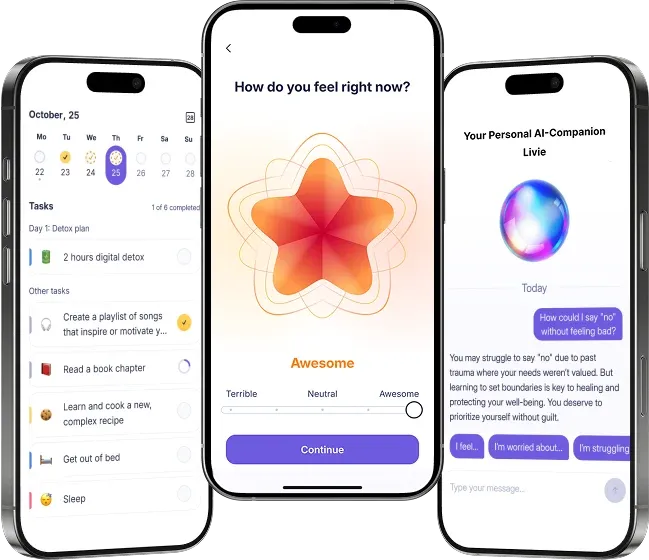
If you want to go deeper, you can continue your self-discovery journey with Liven. Download the Liven app (Google Play or App Store) for your personalized emotional wellness program, explore the Liven blog for more insights on relationships and mental health, or start with one of Liven's wellness tests to get a clear picture of where you are right now.
References
- Fox, D. J. (2024). The integration of somatic-based strategies into couples therapy. Clinical Social Work Journal, 52, 79–88. https://doi.org/10.1007/s10615-023-00905-y
- Kotiuga, J., Daspe, M.-È., Dawson, S. J., Bergeron, S., & Vaillancourt-Morel, M.-P. (2025). Empathic accuracy in couples: A daily diary study of relationship-related emotions. Emotion, 25(7), 1690–1703. https://doi.org/10.1037/emo0001532
- Relationships That Work with Michelle Farris. (2024). Mastering anger and emotional triggers in relationships [Video]. YouTube. https://www.youtube.com/watch?v=CsWqXb4HXbY
- Uzun, K., & Karataş, Z. (2023). The examination of the mediator role of optimism, self-compassion, altruism and gratitude in the relationship between cognitive distortions and forgiveness of emerging adults. Emerging Adulthood, 11(4), 845–868. https://doi.org/10.1177/21676968231171200
FAQ: How to Manage Anger in a Relationship
Is anger a healthy emotion in a relationship?
What are some anger management tips that actually help?
How do I manage anger in a relationship without shutting my partner out?
Can an angry partner change, or is this just how some people are?
What's the difference between healthy anger and uncontrolled anger in a relationship?
What role does active listening play in anger management for couples?
When does relationship anger become a sign that couples counseling is needed?
How can I feel angry without taking it personally or making my partner feel attacked?