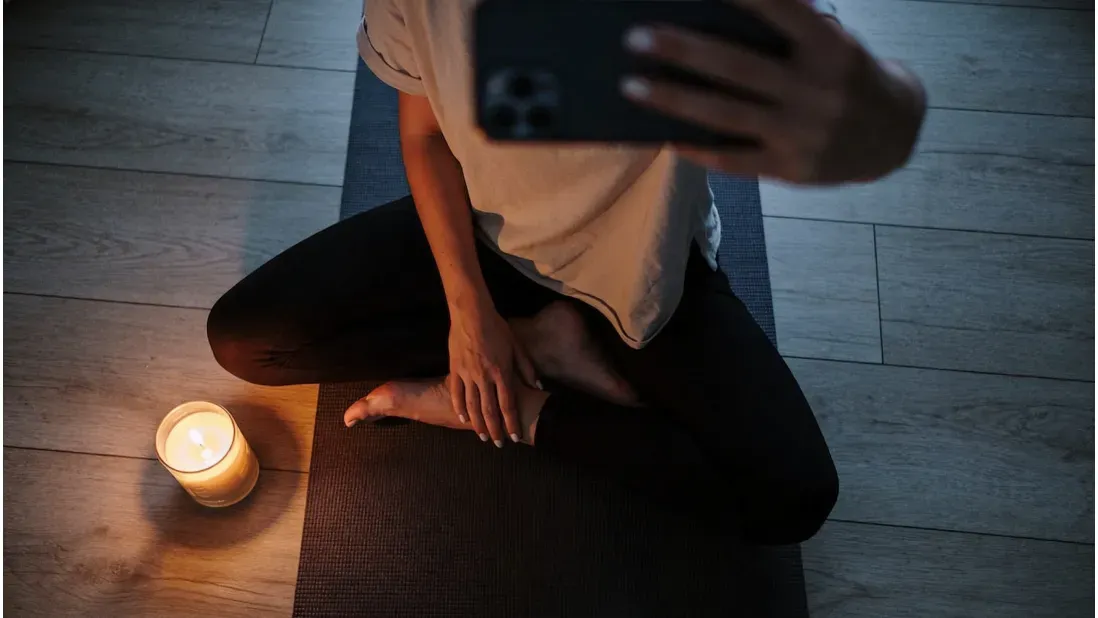



After a long day, you finally hit the pillow. Suddenly, your mind decides it's the perfect time to review everything you've ever said or done.
That's when a body scan meditation can help relax your nervous system and ease you into sleep naturally.
Check out an example of a body scan meditation you can try today and how to set yourself up for success with a few simple sleep hacks.
Key Learnings
- A guided body-scan meditation for sleep shifts your attention to physical sensations, and most people start to feel noticeably calmer within 5–10 minutes.
- Regular practice combined with journaling or mood tracking supports tension release and more consistent sleep.
- Mindful body scans enhance self-compassion, focus, and reduce nighttime overthinking.
Body Scan Meditation for Sleep: 10 Minutes of Guided Calm
This simple body scan for sleep meditation guides you from head to toe to prepare you for restful sleep.
- Find a comfortable position lying on your back. Let your arms rest naturally at your sides.
- Close your eyes and take three slow breaths — in through the nose, out through the mouth. With each exhale, feel your body becoming heavier against the bed.
- Bring attention to your forehead and allow it to soften. Relax the muscles around your eyes and let your eyelids rest heavily.
- Unclench your jaw slightly.
- Notice the scalp and crown of your head, simply observing sensations.
- Move awareness to your shoulders. With each exhale, imagine them gently dropping and releasing tension.
- Shift attention down your right arm to your hand and fingers, noticing warmth, heaviness, or tingling. Repeat on the left side.
- Notice your breathing as your rib cage rises and falls naturally. Let the chest soften.
- Bring awareness to the upper, middle, and lower back. Allow the muscles to get heavier.
- Feel your belly gently expand with each breath. Relax the hips and pelvis.
- Notice the weight of your thighs, then your calves, ankles, and feet. Let tension flow downward into the bed.
- Now sense your entire body at once: still, supported, and breathing slowly.
- If sleep comes, welcome it. If relaxation comes first, that’s enough. Nothing else is required.
“After nine years of meditation practice, I have not 'turned off' my thoughts — instead, I’ve become more aware of them. This includes mentally noting 'this is a thought,' noticing its duration and strength, and staying curious about where it comes from and what it relates to. Rather than stopping thoughts, meditation invites curiosity and kindness toward them, creating a new relationship with the mind.” — Gerald Avery, Mindfulness Facilitator
🤔 Did you know? After a 4-week body scan meditation program, first-year university students reduced stress-related thoughts by 27%. Emotional regulation improved by 90.7%, academic stress dropped by 85.7%, and 93% of participants reported overall improvement.
Doing a Body Scan But Still Awake? Try These Tweaks
Try these smart hacks to make the body scan for sleep meditation work better.
1. Set the Scene Before You Begin
Sleep environment is actually among the top factors strongly linked to sleep quality.
Dim the lights at least 30 minutes before bed to cue melatonin production, pop a pillow under your knees to relax the lower back, and consider an eye mask to block out any light.
2. Try Some Somatic Shaking First
This comes from somatic therapy and targets the nervous system directly. Before you lie down, stand and gently shake your body for 2-3 minutes: arms loose, knees soft.
3. Use Soundscapes to Lock In the Vibe
Binaural beats in the delta range (0.5–4 Hz) have been linked to deep sleep states. Nature sounds, white noise, or lo-fi music all help filter environmental distractions and quiet racing thoughts.
4. Add Aromatherapy for Better Relaxation
Certain scents, such as lavender, chamomile, and cedarwood, have been studied for their ability to lower heart rate and promote calm.
Diffuse essential oils or apply them to pulse points before your practice to create a multi-sensory environment that signals the parasympathetic nervous system to relax.
5. Try Meditation Apps for Newbies
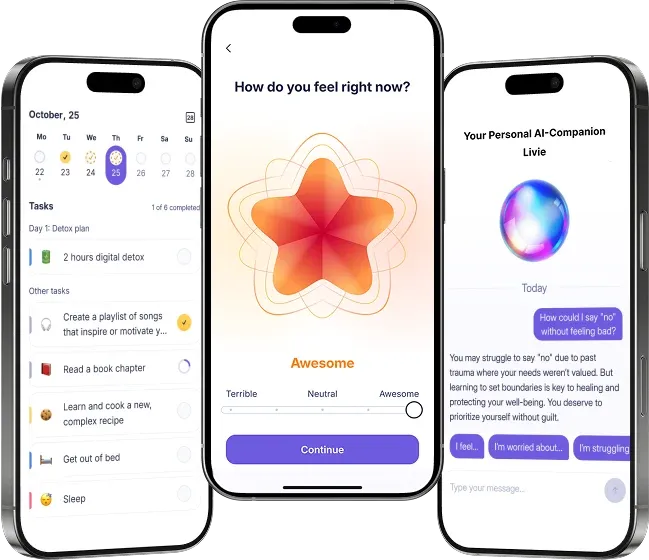
Audios and apps can take the mental load off. The best body-scan meditation for sleep apps will also layer in reminders and mindfulness practices, like emotional check-ins throughout your day.
6. Build Body Scans Into Your Personalized Routine
A one-off body scan meditation is helpful. Still, it’s the consistent practice that makes the whole experience beneficial.
Think of your evening body scan as part of your personalized plan for a calmer mind, alongside your wind-down playlist of Liven's calming Sounds, herbal tea, and phone-off habit.
7. Track Your Mood Before and After
Understanding what disrupts your sleep quality is just as important as knowing what helps it.
- How anxious were you when you got into bed?
- How do you sense your body now?
Logging this in Liven's Mood Tracker gives you concrete evidence over weeks and months that the practice is actually working. And on the nights it feels like it didn't? That data is valuable too.
Who Benefits Most From Body Scan Meditation
The short answer? Almost everyone. Still, the following types of restless sleepers tend to benefit the most:
- Overthinkers. Mindful meditation redirects your attention away from analysis and into bodily awareness, naturally helping to break cycles of repetitive or unhelpful thoughts.
- Individuals dealing with high stress and burnout often struggle to “switch off.” A guided body scan meditation for sleep helps you gently release accumulated tension.
- Light sleepers often wake because their nervous system stays slightly alert overnight. Meanwhile, a body scan teaches the body to reduce microarousals, brief activations of the sympathetic nervous system that can interrupt deep sleep.
- People with ADHD respond well to structured attention shifts. As we know, a body scan provides a clear sequence of actions to follow, helping guide focus and train awareness. Some studies even show that mindfulness meditation improves impulse control in people with ADHD.
Final Thoughts
Whether you do a guided body scan meditation for sleep every night or just pull it out on the hard weeks, you're practicing self-compassion in one of its most concrete forms. You're saying: I'm worth those ten minutes of kind and curious attention. And you are.
The body scan is a beginning. For those ready to take the next step, the Liven app (Google Play or App Store) offers the tools to make self-discovery a real daily practice — Mood Tracking, a Smart AI Companion (Livie), structured Courses, and Personalized Mood-Based Content tailored to where you actually are.
Check out the Liven blog for more, or take one of Liven's free wellness tests to understand your mental health baseline today.
References
- Faith Hunter. (2025). Somatic Shaking: Shake Off the Stress. YouTube.
https://www.youtube.com/watch?v=ySJT7EBMDH4 - Hoang et al. (2023). Knowledge discovery in ubiquitous and personal sleep tracking. JMIR mHealth and uHealth. https://doi.org/10.2196/42750
- Uzun, Y. (2026). Examining the effectiveness of body scan meditation on stress among first-year university students. TPM in Applied Psychology. https://tpmap.org/submission/index.php/tpm/article/view/3945
- Zhang et al. (2023). Meditation-based mind-body interventions and executive function in people with ADHD. Journal of Attention Disorders. https://doi.org/10.1177/10870547231154897
FAQ: Body Scan Meditation for Sleep
What is a body scan guided meditation, and how does it work?
How does a body scan help you fall asleep?
Can a body scan meditation help with anxiety and work stress?