Is Liven Helpful? What the Research and Reviews Show
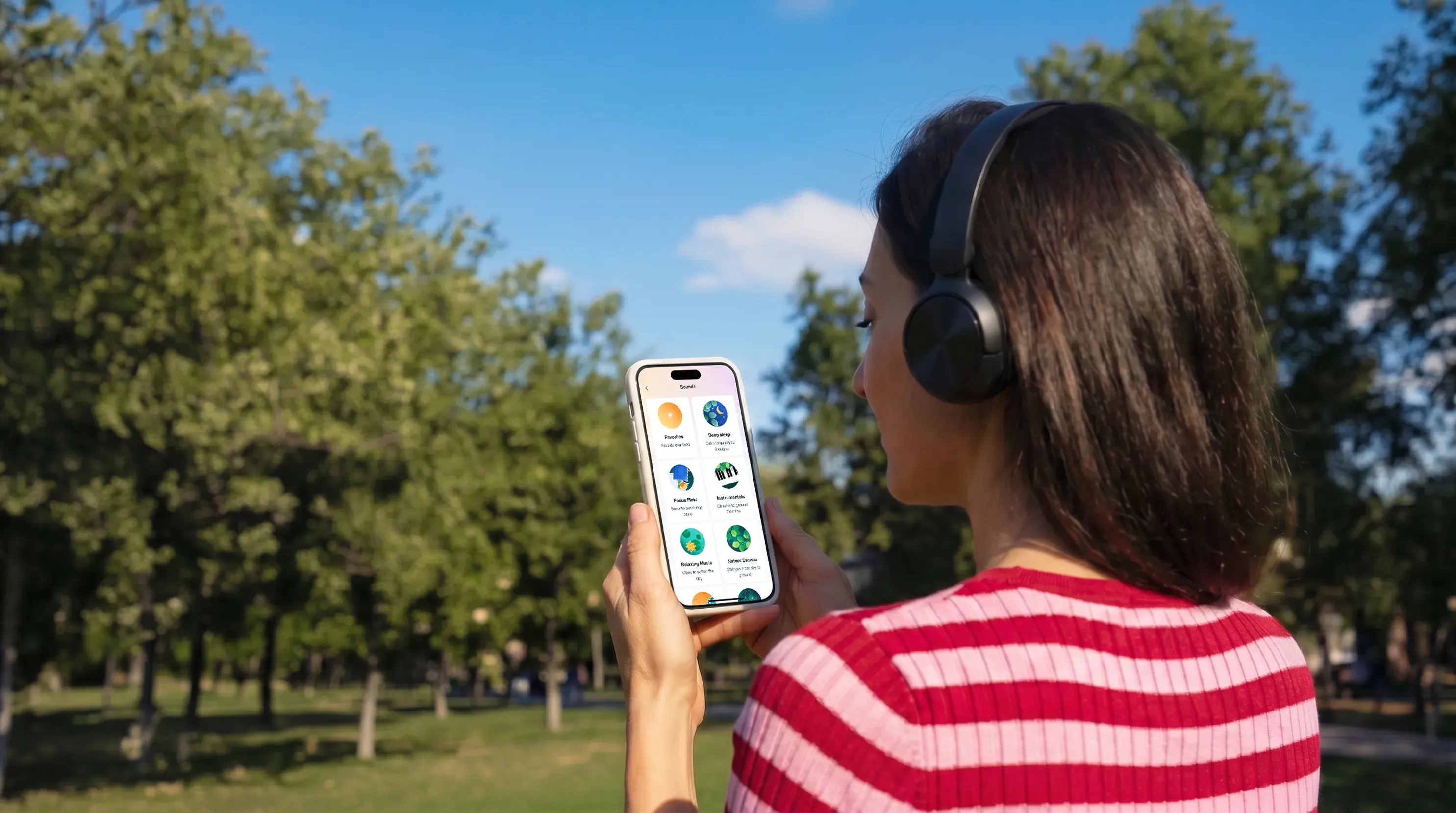



You've read the reviews, watched a few testimonials, and you're still sitting with the same question before you commit: is Liven helpful, or just another wellness app promising more than it delivers? It's a fair question.
The wellness app space is crowded with big claims and thin substance, so it makes sense to want more than marketing copy before you commit your attention and money.
To answer it properly, here’s the framework behind the app, the independent research it draws from, and what real users report after using it consistently.

Key Learnings
- Liven is built around a three-step framework — reflect, collect, act — designed to close the gap between insight and behavior change.
- An internal survey of engaged U.S. users found meaningful, self-reported shifts in overwhelm, stress, and overthinking.
- Liven's tools (Mood Tracker, Journal, Livie, Sounds) are grounded in published research on labeling emotions, expressive writing, and sound-based regulation.
- Liven is designed to complement, not replace, professional mental health care.
The Quick Answer to "Is Liven Helpful"?
For most people who use it consistently, yes.
Liven is a self-discovery app built on evidence-based frameworks, including Cognitive Behavioral Therapy (CBT) and Dialectical Behavior Therapy (DBT), with content developed in collaboration with a board of 20+ licensed health professionals. It works best as a daily practice, not a one-time fix, and it's designed to sit alongside professional care rather than replace it.
What Liven Does Day-to-Day
Liven's approach is built around small, repeatable actions rather than one dramatic overhaul.
The app runs on what it calls the micro-cycle method: reflect on a pattern, collect a real-time check-in, then act on one small, suggested step.
In practice, a typical day might look like a quick lesson tied to your onboarding answers, a mood check-in, and a short journal entry or Livie conversation, all wrapped into a routine of about 10 minutes.
| Feature | What it does | Time commitment |
| Mood Tracker | Logs how you feel and surfaces patterns over time | ~1 min/day |
| Journal | Structured prompts for expressive writing | ~5 min/day |
| Livie | Smart companion for reflection and thought structuring | On demand |
| Sounds | Calming audio, including theta-wave protocols | On demand |
| Personalized Journey | Adaptive lessons built from your onboarding quiz | ~5 min/day |
| Mental Tests | Self-assessments tracked over time | ~3 min/session |
The Science Behind Liven
None of this works by accident. Each tool maps onto a specific, published finding about how emotional regulation works in practice.
- Naming what you feel appears to quiet the brain's threat response. Putting a feeling into words can reduce the brain's negative reaction to distressing events, and the calming effect holds up over time. Liven's Mood Tracker check-in ("What got under your skin today?") uses the same mechanism.
- Writing about what's going on has a similar effect. Writing about a stressful situation is associated with fewer stress-related symptoms and stronger personal resources, such as self-efficacy. Liven's Journal gives that practice a private, structured home.
- Sound can shift physiological state, too. Sound-based interventions, including binaural beats, show measurable effects on the stress response, though the evidence base is still developing and effects vary by person. Liven's Sounds library uses theta-wave protocols for this reason.
- Consistency beats intensity. Habits typically take two to five months of consistent repetition to feel automatic, with wide variation between individuals, and shorter, more frequent practices tend to stick better than occasional long ones. That's the reasoning behind Liven's roughly 10-minute daily routine rather than a demanding weekly program.
Where It Fits Into an Ordinary Day
Helpfulness, in practice, tends to come down to whether a tool fits into moments you already have rather than moments you have to create.
Liven's own guide to using the app day-to-day points to a few natural windows: a two-minute mood check-in during a commute, a short journal prompt between meetings when something feels off, and a Sounds track or brief mood log before bed to close out the day.
None of it demands a block of free time, which is part of why it tends to stick for people who have tried longer routines and dropped them.
What Liven Users Report
An internal Liven survey of U.S. users who completed at least 14 days of meaningful engagement found notable shifts across several areas of well-being. Separately, in a broader internal survey of active users, about 1 in 2 reported feeling calmer after using the app:
- 68% reported building better daily self-awareness through the app's daily check-in structure
- 49% reported an improved relationship with themselves
- 42% felt less on edge
- 41% felt less stressed or overwhelmed
- 40% reported less overthinking
- Only 4 to 7% reported any negative effects
*These results are based on an online survey of 499 regular Liven users in the United States, conducted March 27-31, 2026.
Beyond the numbers, respondents described a range of real-life changes, including:
- Understanding the cognitive distortions and coping patterns driving their behavior
- Communicating more openly with partners and reducing conflict
- Setting boundaries and saying no without guilt
- Feeling less alone with their struggles
- Making decisions they had been avoiding
- Catching themselves before reacting automatically to stress or triggers
- Building a consistent journaling habit
- Identifying specific issues to bring into therapy sessions
Disclaimer: Based on self-reported responses from Liven users in the United States surveyed in March 2026. Results reflect individual experiences and are presented in aggregate. This is not a controlled clinical study.
Independent coverage points in the same direction. The Everygirl described Liven as "10 minutes of logging, reflecting, and tiny habits set off a ripple effect that pulled me out of a slump," and outlets including Woman's World and TechTimes describe it as a practical, accessible tool for everyday emotional regulation.
Is Liven Helpful for Everyone?
Probably not in the same way. Liven suits people who already understand quite a bit about their own patterns but struggle to act differently in the moment — the gap between insight and behavior. It's a different story if you need a diagnosis or are managing a condition that requires clinical treatment.
The table below is a quick way to check whether Liven's scope matches what you're looking for:
| Liven is designed for | Liven is not designed for |
| Short daily practices (2-10 min) | Long-form guided meditations or courses |
| Mood tracking and journaling | Diagnosing or treating any condition |
| Self-awareness and pattern recognition | Replacing therapy or professional care |
| Pairing alongside therapy, meditation, or movement | Working as a one-time fix without consistent use |
Someone in an active crisis or dealing with symptoms that significantly disrupt daily life will likely get more from a licensed provider than from any self-guided app, including Liven.
If you are experiencing a mental health crisis or may harm yourself or someone else, please contact a licensed professional or a crisis helpline in your region right away.




Try It Before You Decide
The app offers a 3-day free trial on iOS and Android, so you can test the daily routine before committing to anything longer-term. Use those three days for something specific: log a mood each morning, try one guided session, notice whether the daily nudge feels like support or one more thing to manage.
That small test tends to tell you more than reading about the app ever could. If the routine starts to feel familiar by day three, that's a real signal. If it still feels like a chore, that's useful information too.
You can also take Liven's short self-discovery quiz to start exploring where your own patterns might be showing up. It takes about two minutes and won't diagnose anything — it's just a low-pressure way to get a clearer sense of what you're working with before you decide whether the trial is worth your time.
Final Thoughts
So, is Liven helpful? That depends partly on what you're comparing it to. Rather than doing nothing about ongoing stress, a consistent, short practice is likely to help most people notice more and react less. Against therapy for a diagnosed condition, it's not a substitute and doesn't claim to be.
Based on the framework it's built on, the research behind its individual tools, and what engaged users report, Liven appears helpful for people willing to show up for a short daily practice. It won't diagnose or cure anything, and it isn't meant to replace a therapist.
What it offers is a structured, evidence-informed space to notice your patterns and practice something different, consistently, which the research suggests matters more than any single big effort.
References
- Liang, J., & Lin, H. (2023). Current and lasting effects of affect labeling on late positive potential (LPP) amplitudes elicited by negative events. Brain and Behavior, 13(7), e3065. https://doi.org/10.1002/brb3.3065
- Lukenda, K., Sülzenbrück, S., & Sutter, C. (2023). Expressive writing as a practice against work stress: A literature review. Journal of Workplace Behavioral Health, 39(1), 1–32. https://doi.org/10.1080/15555240.2023.2240512
- Saskovets, M., Saponkova, I., & Liang, Z. (2024). Effects of Sound Interventions on the Mental Stress Response in Adults: A Scoping Review. JMIR Mental Health, 12. https://doi.org/10.2196/69120
- Singh, B., Murphy, A., Maher, C., & Smith, A. E. (2024). Time to Form a Habit: A Systematic Review and Meta-Analysis of Health Behaviour Habit Formation and Its Determinants. Healthcare, 12(23), 2488. https://doi.org/10.3390/healthcare12232488
FAQ: Is Liven Helpful?
Is Liven helpful for stress and overwhelm?
How long before Liven feels helpful?
Is Liven helpful if I already go to therapy?
What makes Liven different from a basic mood tracker?
Is there any evidence Liven doesn't help?
Do I need a subscription to see if Liven is helpful?
Is Liven helpful for building habits beyond mental well-being?