



People procrastinate differently; it is a part of human nature. Have you noticed that while you nervously procrastinate, your friend enjoys a sense of stress and performs best under pressure?
This difference stems from dissimilar emotional causes beneath our procrastination. Sometimes, we even develop productive procrastination, which can be helpful. Chronic procrastination is what causes us long-term discomfort. However, once you discover your type, you can break the habit and learn how to stop procrastinating.
Key Learnings
- There are different types of procrastinators, with the following being most common: Perfectionist, Dreamer, Worrier, Crisis-maker, Defier, and Over-doer.
- Understanding your procrastination type helps you identify the root cause and break free.
- Procrastination and laziness aren’t the same thing: laziness is the quality of being unwilling to use energy, while procrastination is a much more multifaceted issue.
Six Types of Procrastination: Which Is Yours?
Each procrastination type works a little differently. Some researchers list seven or more, but we’ll focus on six of the most common. What sets them apart is the emotion underneath. Each one is driven by a distinct fear, need, or belief, which means the way to overcome them also needs to be different.
The Perfectionist
Pattern: Perfectionists aren’t satisfied with the outcome unless it’s ideal — this stalls them during each stage of the process. Instead of finishing projects, a perfectionist circles back, looks their work over in fear of not meeting expectations, and puts off work because they fear they won't do it correctly.
It might appear as if Perfectionists don’t care, but they fear making mistakes. Studies show that people with worry and perfectionism are prone to procrastination.
Root cause: Typically, Perfectionists are driven by the fear of judgment, including their own, especially if they see critical tasks ahead. They are prone to negative self-talk and may often have past issues with unrealistic expectations from close people in their past.
Everyday example: You spend three hours hyperfocusing on the wording of a single slide in a presentation, while the rest of the project goes untouched.
How to manage:
- Learning to define accept “good enough” as that's part of the process
- Practice self-compassion by reframing unhelpful thoughts
- Setting realistic and manageable goals.
The Dreamer
Pattern: Have you ever enjoyed making plans more than actually completing them? If you’re a Dreamer, procrastination means holding onto the perfect vision in your mind. But when reality kicks in, it never feels quite as exciting.
Root cause: This pattern is caused by difficulty tolerating structure, repetition, or tasks that don’t feel exciting. Some Dreamers feel they need to be inspired to act successfully.
Everyday example: I want to start journaling for my mental health, but I buy all different types of journals and notebooks to never write a single word or prompt.
How to manage:
- Dedicating just 5 minutes to your project or finding a time that works best for you, even one minute, is a start!
- Shifting your focus from inspiration to momentum — start by engaging with one small, tangible step.
💭 Reflection prompt: “If I had to start today with one small step, what would it be?”
The Worrier
Pattern: The overthinker who envisions all the challenges and worst-case scenarios before they even appear? The Worrier. To these procrastinators, every potential threat seems impossibly real. You may spend so much time predicting mistakes, risks, or what could go wrong.
Root cause: Overthinking often stems from memories of past failures or a lack of understanding and support from others.
Everyday example: You want to apply to a job posting, and you are a great match. Yet, your negative emotions overcome you, and your fear of failure prevents you from even sending out a CV. This unhelpful thought may sound like "Why bother sending my resume? They won't call back anyway with so many applicants."
How to manage:
- Exposing yourself to small risks without over-focusing on the result
- Reframing actions as experiments.
The Crisis-Maker
Pattern: The Crisis-Maker thrives on pressure. They put things off until the last moment, chasing the adrenaline of a looming deadline. For them, urgency is fuel
Root cause: People often procrastinate because they naturally crave excitement or stimulation, or because they find it hard to stay motivated without external pressure or structure. If you have tried to finish the task in a very short timeframe and it worked well, you might have learned that it is worth the stress.
Everyday example: Someone puts off starting a project until the night before the deadline because they find routine work boring and only feel motivated when the pressure is high.
How to manage:
- Creating false deadlines
- Artificially creating a sense of urgency.
The Defier
Pattern: The Defier procrastinates as a form of resistance to control, expectations, or imposed structure. They delay or reject tasks that feel forced, using procrastination to reclaim autonomy, even when it hurts their own goals.
Root cause: This behavior often arises from a deep need for independence or past experiences with rigid authority. Tasks tied to external pressure or rules can trigger rebellion. Underneath the defiance is often a desire for freedom and self-expression.
Everyday example: Your manager assigns a report due Friday. You know it’s important, but you can’t stand being told how or when to do it — so you delay until the last minute, feeling both defiant and guilty.
How to manage:
- Reclaim ownership. Reframe the task as a choice rather than an obligation: “I choose to finish this so I can free up my weekend.”
- Inject autonomy and creativity. Adjust the process: pick your own approach, set your own schedule, or personalize how the task gets done.
💭 Reflection prompt: “What would completing this task on my own terms look like?”
The Over-doer
Pattern: The Over-doer procrastinates by staying constantly busy — but not necessarily productive. They take on too many responsibilities at once and struggle to prioritize. Instead of focusing on one meaningful goal, they jump between tasks, convincing themselves they’re working hard while avoiding what truly matters.
Root cause: This type of procrastination often stems from perfectionism, people-pleasing, or fear of missing out. Over-doers associate self-worth with productivity and may avoid slowing down because rest feels “lazy.” They stay in motion to dodge uncomfortable emotions, like uncertainty or failure.
Everyday example: You need to write an important report, but instead you clean your inbox, reorganize your workspace, and check off smaller to-dos first. By the end of the day, you’re exhausted — yet the main task hasn’t even begun.
How to manage:
Prioritize by impact.
Choose one “most important task” (MIT) for the day and commit to finishing it before starting anything else.
Set boundaries on busyness.
Schedule short focus blocks for deep work and resist the urge to multitask.
Reflection Time: Which Procrastination Type Do You Relate To?
Do you know what two types of procrastination you are most likely to have? Usually, we have more than one behavioral tendency category we fall into. Try to answer this quick list of questions just for yourself. Is there one particular type that feels most like you?
- Do you struggle to start because it’s never “good enough”? (Perfectionist)
- Do you love planning but don’t find details particularly interesting? (Dreamer)
- Do you hesitate to begin because you’re afraid of something going wrong? (Worrier)
- Do you wait until the last minute to feel motivated? (Crisis-Maker)
- Would you like to be able to stop time and stay focused for longer? (Overwhelmed)
- Do you often get pulled into distractions and do not care about rewards that seem far away? (Pleasure-Seeker)
Still don’t know for sure? Take a quick quiz to find out your procrastination type.
Your Playbook to Overcome Procrastination
Now that you know your type, here’s how to beat procrastination. Look through all the options or develop strategies that combine various forms of self-regulation.
Perfectionists: Progress Over Perfection
Allow yourself to just act, even if it’s not ideal, even if it’s messy. Remind yourself that a blank sheet is only perfect because there’s nothing written on it. Here are two strategies to get you started:
- The 70% rule. Aim to finish each action when it feels 70% “good enough,” then move on. If you are prone to perfectionism, you need to build this rule not just with the result but with each step. It will help you start accepting a healthier attitude much faster. We promise: you’ll get to the finish line much faster, and if you want, you can edit a few things later.
- Time the task. Pick up one responsibility, such as writing a draft of an essay, and give yourself a limited timeframe to complete it. Whether it’s perfect or not, stop the activity when the timer goes out.
Dreamers: Add Structure
Although planning is fascinating, you can address your procrastination by taking practical steps and introducing enough structure to remain committed. Introduce excitement into your reality (rather than just your hypothetical results), and you’ll get a motivation boost.
- Organized progress. Break tasks into the tiniest steps (e.g., “write one sentence,” “open the spreadsheet”) and check them off for quick wins. Regularly envision the finish to keep it more interesting.
- Accountability buddies. Decide on a slightly intimidating goal that you plan to achieve — for instance, finishing your unpacking after a move — and ask your friend to commit to something else. Add regular check-ins to build mutual accountability.
Worriers: Changing the Path
Worriers shouldn’t punish themselves for procrastinating; since they often engage in negative self-talk, they should learn to be more self-compassionate.
- Worst-case scenario. Write down or type the worst-case scenario your mind pictures, even if it feels silly or overly catastrophic. Let your imagination free. Then try to counter each potential catastrophe with a logical counterargument.
For instance, if you write down a scenario, “Everyone will laugh at me, and I will be a failure,” gently ask yourself, “Do I really think this is a Mean Girls episode? It will be much better than that!” - Self-compassion work. This strategy may need time to take hold, so remember to stay persistent. Whenever you feel anxious, gently put a hand on your chest, take a few deep breaths, and tell yourself: “I am doing my best, and it is enough. I am just trying, and I am proud of this.” Check out these positive affirmations.
Crisis-makers: Artificial Override
We can trick ourselves into thinking that we’re in a hurry even if we’re not. So instead of facing a genuine risk, you can simulate the conditions that work best for you.
- Artificial deadlines & consequences. Add deadlines a few days or hours before the actual finish date for larger projects. Ask a friend to check in on you to serve as an additional incentive. If you keep procrastinating or miss a deadline, add a micro-consequence for yourself.
- Power sprints. Create a sense of urgency by dedicating 15-30 minutes to focused work. Playing fast music that usually puts you in an active mood can even alter your heartbeat, further fueling the urge to act quickly.
Overwhelmed: Simple and Reliable
When you feel overwhelmed, your brain sees the task as too big to start. The key is to shrink it until it feels doable. How to manage:.
- Use checklists: Writing each mini-step makes progress visible and calming.
- Set short focus times: Commit to working for a short burst, then take a break.
- Start small. Choose just one clear action as your first step. It can be as simple as opening a tab and starting to read. It can be a few sentences. Just give yourself two minutes to begin, and you will notice the discomfort begin to ease.
Pleasure-Seekers: Shaking Things Up
Keep procrastination at bay by reframing “boring tasks.” Make them fun and train your concentration.
- Pair it up. Pair an enjoyable activity (like listening to your favorite podcast) with a task you’ve been avoiding (like doing laundry). When you can, make these chores interesting or engaging, and you’ll find yourself looking forward to them.
- Reward swaps. Train your focus by promising to get the treat not before you finish the activity, but after. For instance, you will have a 15-minute session of staring at your phone after you finish your study session.
Bonus: Our Favorite Tools
Here’s a small list of our favorite tools that can help you with your productivity.
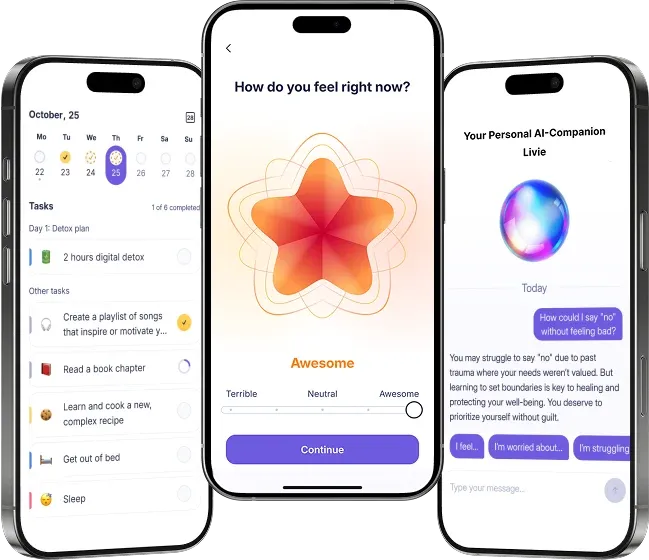
- Liven. The app features a mix of instruments that you may find particularly useful. Soundscapes can help you focus, the Mood Tracker allows you to check in with your emotions that cause procrastination, and the Habit Tracker shows you how to build a more productive and fulfilling routine.
- StudyBuddy. Need someone to hold you accountable? This app helps you find someone to study with.
- Focus Friend. In this program, your virtual companion makes socks while you concentrate.
- Freedom. It blocks distractions, including apps and websites, so you get the quiet time you need.
- one sec. Just by adding a gentle pause and a hint, this tool encourages you to stop mindless scrolling.
- Noisli. If you need a background noise that genuinely feels satisfying, try out this app.
- Forest. This gamified app lets you grow a tree with every focus session.
It Is Not Laziness
Remember: procrastination is a common habit. You can learn to navigate your procrastination patterns with smart, simple strategies. Although it can seem intimidating at first, you can approach your productivity with small steps. Try out a few tips we have included in this article, even if your procrastination type does not always fit. Experiment a little and observe how each change feels. Try tools like Liven’s journal, Routine Builder, and mood tracker to build momentum one habit at a time.
Will there be a few setbacks? Most likely, there will be. But isn’t this a part of experimentation and progress, a rare step back to get even farther? Aside from structure, you also need self-compassion, so keep these two close by as you overcome procrastination.
References
- Rajan, K. C. S., & Harini, S. V. (2025). Scroll, delay, repeat: How academic fatigue and digital distraction intensify the effects of procrastination on learning outcomes. IJIRT, 12(2).
- Rezaei-Gazki, P., Ilaghi, M., & Masoumian, N. (2024). The triangle of anxiety, perfectionism, and academic procrastination: Exploring the correlates in medical and dental students. BMC Medical Education, 24(1). https://doi.org/10.1186/s12909-024-05145-3
- Samokhval, V. (2025a, April 21). Procrastination at work: Proven strategies to stay productive. The Liven. http://theliven.com/blog/wellbeing/procrastination/procrastination-and-mental-health-how-anxiety-and-depression-play-a-role
- Samokhval, V. (2025b, May 5). Productive procrastination: How delays can benefit you. The Liven. https://theliven.com/blog/wellbeing/procrastination/how-procrastination-can-actually-be-productive
- Zhang, R., et al. (2021). The anxiety-specific hippocampus–prefrontal cortex pathways link trait anxiety to procrastination via poorer self-control. Human Brain Mapping. https://pubmed.ncbi.nlm.nih.gov/34952988/
- ADHD and productive procrastination. (n.d.). Psychology Today. Retrieved from https://www.psychologytoday.com/us/blog/on-your-way-with-adhd/202206/adhd-and-productive-procrastination
FAQ