


There might be a moment when our mental health takes a toll on us, impacting our daily routine and love for life. People with depression are among those who might find it difficult to feel motivated, even about the things that used to excite them.
The World Health Organization (WHO) claims that around 5.7% of the global population has this mental illness, which is characterized by "a depressed mood or loss of pleasure or interest in activities for long periods of time." However, even when things feel overwhelming, we still face pressure to accomplish our daily tasks and maintain our connections with others.
From a CBT perspective, it’s part of a common cycle in which low mood leads to reduced activity, which then reinforces hopelessness and further drains motivation. The good news is that motivation doesn’t have to come first. With small, intentional steps, we can gently re-engage with activities that matter and begin shifting that cycle. The sections below explore practical strategies to boost motivation while also caring for your mental health.
Key Learnings
- Small behavioral shifts, like getting dressed, moving gently, or completing a five-minute task, can activate the brain’s motivation systems even when energy feels absent.
- Simple routines, focusing on long-term values, and accountability support lower decision fatigue, helping to reconnect daily actions to a bigger purpose.
- Professional help, social connection, music, and kindness toward yourself all play a critical role in sustaining motivation while protecting emotional well-being.
Mental Health and Behavioral Strategies
Everyone’s mental health experience is different. A strategy that feels helpful and motivating for one person may not be effective in the same way for someone else. Even when our struggles look similar, our coping tools and the pace at which they help can vary. The goal is to experiment, notice what genuinely supports you, and build a toolkit that fits your needs.
Start With Depression Treatment
Some mental health disorders, including depression, have a long-lasting impact on us. Motivation is only one of the factors that we face in the long term. Some symptoms include irritability, trouble sleeping, loss of motivation to perform simple tasks such as maintaining hygiene and eating, and professional and personal challenges. In the case of severe forms of depression, we can even develop suicidal thoughts and social isolation.
We can work on our motivation, but because this situation often becomes severe if left unaddressed, it's always a good idea to seek help from a mental health professional. A licensed therapist will help you examine the core symptoms you have and provide you with a personal improvement plan.
If you are not able or don't have access to get professional help right now, you can take a quick quiz and get your personalized dopamine management plan to address your motivation levels.
Create a Daily Routine for Low Motivation
When depression lowers motivation, even simple choices can feel overwhelming. Science shows that when our routines are disrupted, we can experience greater depression and anxiety. Routines reduce the cognitive load when we're struggling to make decisions.
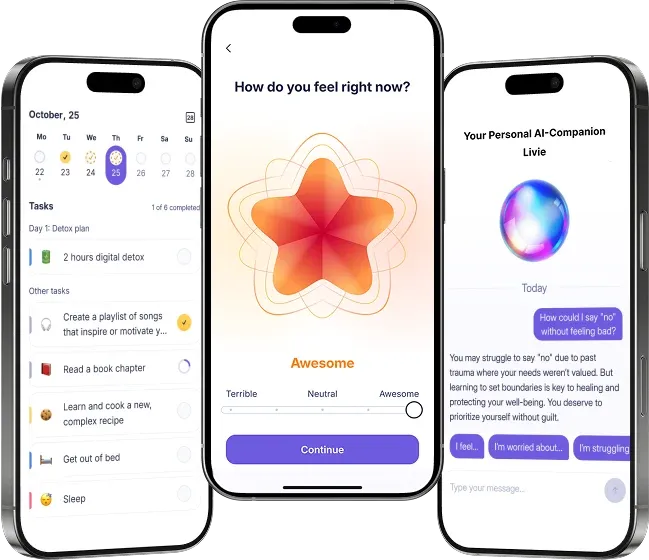
Using tools like Liven's Routine Builder, along with a to-do list, can help you manage your schedule by aligning daily actions to a long-term plan.
Here are some other apps that make maintaining a simple routine easier, from self-care suggestions to digital calendars:
If you prefer to print out materials, you can download one of the worksheets from Mental Health America or use any of the pre-made templates on Canva.
Get Out of Bed and Your Pajamas
Yes, we know. Sometimes we don't want to. After all, what's the benefit of doing this if our physical energy is nowhere to be found and we want to sleep all the time?
Coping with depression is about details; psychologically, this tiny step creates a powerful state shift even if you don't have a job or chores to do. By physically moving and changing clothes, we signal to our brain that the day has started. This activates systems associated with alertness, motivation, and initiating behavior, helping to counteract the low energy and inaction often seen in depression
Try Physical Activity to Get Motivated
Movement can improve our mood and increase our energy levels. A meta-review by Stanton, Happell, and Reaburn highlights the benefit of moderate and manageable exercise on depression symptoms:
"Studies show that a reduction in physical activity over time is associated with an increased likelihood for the development of future depressive illness, with studies reporting up to a 10-fold increase in the likelihood of developing future depressive illness." But if we exercise regularly, we have a much smaller risk of developing severe depression.
If you feel a lack of motivation when thinking about exercise, it's okay. Just a little bit of low-impact movement makes all the difference. While most research explores the benefits of walking, it doesn't mean it is the only movement we might try. The key is to simply do what you can and enjoy, such as gentle stretching, a few yoga poses, or holding the plank position for 1 minute.
Exercise for depression can contribute to your well-being due to behavioral activation, which we'll discuss in detail below. Some examples of exercises that require minimal effort include stretching, yoga, and light calisthenics.
Focus on a Bigger Picture
Negative emotions, especially during depression, can create a kind of "tunnel vision." When mood drops, the brain tends to fixate on immediate discomfort and potential problems. As a result, everyday tasks can start to feel pointless, overwhelming, or not worth the effort, even when they usually matter to us.
Considering the bigger picture allows us to shift our attention from immediate discomfort to a broader meaning. Studies reveal a decrease in sadness and stress among people who make an effort to shift their perspective from a single situation to a broader one. By reflecting on what truly matters to you in the long run (such as your health, family, and stability), you can remind yourself why each small step can make a significant difference. You’re signaling to yourself, “My life still matters, even when I feel overwhelmed.”
Journaling is a practical way to reflect on your thoughts, emotions, and long-term goals. This process engages brain systems involved in meaning-making and self-reflection, which can help clarify what matters most and support motivation for taking small, purposeful actions. You can try using this simple template or talk to Liven's AI companion, Livie, simply asking her, "I need you to help me put this situation into perspective."
Here's how to journal and address your low motivation with this adjustable framework.
Step 1. Name your long-term value.
Pick one:
- My health
- My stability
- My relationships
- My future self
- My sense of self-respect
- My growth, even if slow
Write it at the top of the page.
Step 2. Connect it to the present moment. Complete this sentence:
“Even though I feel ___ today, I still care about ___ because ___.”
For example, “Even though I feel depressed today, I still care about my future stability because I want life to feel less chaotic later.”
Step 3. Translate this value into one tiny action. Finish this sentence: "A small action that supports this is…” Try to keep this small task under 5 minutes.
Step 4. Close the loop. Write one sentence of self-kindness: “This one step is enough to keep me moving.”
Find an Accountability Buddy to Tackle Depression Motivation
When another person regularly checks in with us, we find it easier to succeed in our daily tasks. It increases our motivation levels by introducing an external structure that drives us forward. A psychologist, Suzy Reading, offers two approaches to this:"The first works more like a mentor where one person benefits from the other’s wisdom; the second is when two people are focusing on a common goal. They can both work equally well."
It can be anyone, whether your family member, friend, partner, or even a semi-anonymous user from social media. What type of person will support and help you achieve your goals? A licensed professional Kamalyn Kaur says we need to find someone who matches our energy. When one person progresses faster than another, it can create jealousy. So if you're looking for such an individual, it's best to look for someone secure in their self-esteem and goals.
If you're struggling to find a person who can motivate you and stick to their goals, these apps can help you find support around the globe:
Use Music to Keep Negative Thoughts at Bay
Music can be a surprisingly effective tool for lifting mood and reducing rumination. Listening to music engages multiple brain regions simultaneously, including emotional centers, memory networks, and motor areas, which is why it can have a profound influence on our emotions.
In a heartwarming recollection about how music helped her through depression, writer and singer Sophia Bruscato shares her love for this beautiful medium: "A long time ago, I wrote in a journal 'life is much more pleasant when one can choose its soundtrack.' You are immediately affected by the sound of busking musicians, or walking into a funeral or a birthday party. They all carry an atmosphere that affects us, which I call energy."
Let's approach our lack of motivation with upbeat music.
- POV: You're finishing that one essay at 11:59 pm
- Get your work done ★ you got this
- Songs that'll make you dance the whole day
- Classic Rock Hits of the 1970's
- POV: You're not gonna give up that easily.
Lean on Your Support Network
Positive relationships with the people we love can be a decisive force motivating us to prioritize self-care, establish healthy habits, and achieve our goals.
When you lack motivation, a strong support network reminds you that you're not alone and that your feelings matter. Whether they hype you up to do your laundry or make you feel comfortable talking about your depression, they offer a space where you can rest.
Final Thoughts
If the road ahead feels overwhelming, don't pressure yourself. Low motivation is a natural part of depression. Start by breaking tasks into small, manageable steps, such as making your bed. Draw inspiration from supportive people around you, and as you begin moving forward, approach yourself with kindness and patience. Recovery and growth are rarely about giant leaps; they happen one small, intentional step at a time.
References
- Bruscato, S. (2023, November 15). OP-ED: How listening to happy music helped me through my depression, and why I think it’ll help you too. The Seattle Collegian. https://seattlecollegian.com/op-ed-how-listening-to-happy-music-helped-me-through-my-depression-and-why-i-think-itll-help-you-too/
- Carney, C. E., & Manber, R. (2009). Quiet your mind & get to sleep: Solutions to insomnia for those with depression, anxiety, or chronic pain. New Harbinger.
- Chaudhuri, A. (2023, November 27). The buddy boost: How “accountability partners” make you healthy, happy and more successful. The Guardian. https://www.theguardian.com/lifeandstyle/2023/nov/27/the-buddy-boost-how-accountability-partners-make-you-healthy-happy-and-more-successful
- Depressive disorder (depression). World Health Organization. (2025, August 29). https://www.who.int/news-room/fact-sheets/detail/depression
- Gu, L., Yang, X., Li, L. M., Zhou, X., & Gao, D. (2017). Seeing the big picture: Broadening attention relieves sadness and depressed mood. Scandinavian Journal of Psychology, 58(4), 324–332. https://doi.org/10.1111/sjop.12376
- Li, T. W., Liang, L., Ho, P. L., Yeung, E. T., Hobfoll, S. E., & Hou, W. K. (2022). Coping resources mediate the prospective associations between disrupted daily routines and persistent psychiatric symptoms: A population-based Cohort Study. Journal of Psychiatric Research, 152, 260–268. https://doi.org/10.1016/j.jpsychires.2022.05.033
- Mental health conditions: Depression and anxiety. Centers for Disease Control and Prevention. (2023, October 13). https://www.cdc.gov/tobacco/campaign/tips/diseases/depression-anxiety.html
- Stanton, R., Happell, B., & Reaburn, P. (2014). The mental health benefits of regular physical activity, and its role in preventing future depressive illness. Nursing: Research and Reviews, 45. https://doi.org/10.2147/nrr.s41956
- Zaatar, M., Alhakim, K., Enayeh, M., & Tamer, R. (2024). The transformative POWER OF MUSIC: Insights into neuroplasticity, health, and disease. Brain, Behavior, & Immunity - Health, 35, 100716. https://doi.org/10.1016/j.bbih.2023.100716
FAQ: How to Find Motivation When Depressed
Why is it so hard to get motivated when I’m dealing with depression?
Can small tasks really help when treating depression?
How do I choose the right self-care steps when I have moderate depression?
Does lack of sleep affect depression symptoms and motivation?
How can I motivate myself to do tasks when they don’t make sense emotionally?
Is movement helpful even if I can only manage a little?
When should I consider professional therapy or treatment?