Best Mental Health Assessment Tools




When life is as dynamic and demanding as it is, keeping track of your well-being feels like another responsibility. It may seem as if taking your morning cup of tea is the only self-insight moment you have to yourself.
Stress, burnout, anxiety, overthinking, or low mood can build gradually, making it hard to notice when something feels off. And if you've been struggling to be mindful of your emotions and behaviors on your own, it's totally okay to look for tools that can make the process easier.
In this article, we'll review the best mental health assessment tools for common mental disorders available today and explore how you can use them to bring positive change into your life.
Key Learnings
- If you want a comprehensive tool with various tests, Liven can help you track your gradual progress; if you're looking for a specific screening instrument for a particular mental health issue, explore tests focused on that area.
- Reliable tests can help you screen for potential symptoms of anxiety disorders, bipolar disorder, ADHD, and other mental disorders based on DSM-5 criteria and clinical observations.
- While these tests are valuable for regular self-check-ins and tracking changes over time, they cannot actually offer a diagnosis of any mental health disorders, and any concerning results should be discussed with a qualified primary care provider.
Liven, a 360° Well-Being Toolkit
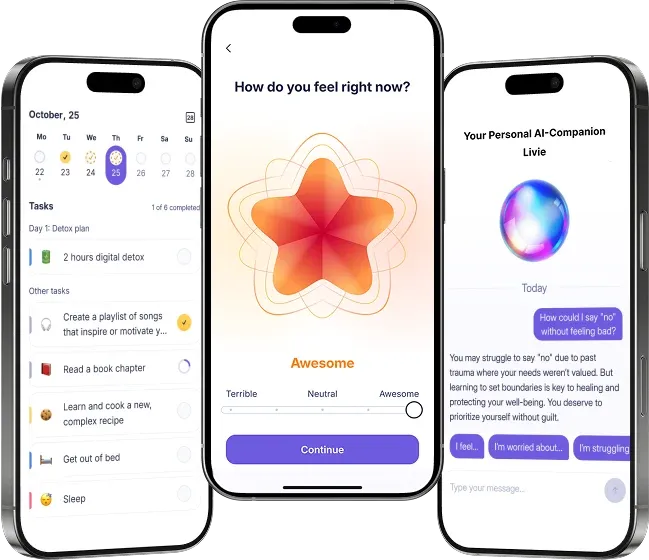
While traditional mental health assessment tools are valuable for identifying symptoms and tracking changes, they often stop at awareness. Liven takes this a step further. It provides a comprehensive well-being toolkit designed to help you understand, reflect on, and actively improve your mental and emotional health.
When users take their introductory test in the app, they indicate which challenges they struggle with most. This helps Liven develop a personalized plan tailored to their needs, based on their energy level and areas of interest.
Such a personalized plan opens a broad range of tools, both practical and educational:
- Mood Tracker
- Journal
- To-Dos
- Sounds
- Smart companion Livie
- Journey
- Today's Routine
- Bite-sized content
- Well-being tests.
Liven keeps a history log of your mental health assessments, and you can view how the data changes over time. Each time you take a test, you gain a new perspective on your mental and cognitive state.
Mental Health Tests for Depression
Child Mind Institute Depression Test for Teens
This free online test is designed to help teens and parents identify behaviors and mood patterns that may align with signs of depression.
Patient Health Questionnaire-9 PHQ
The Health Questionnaire-9 (PHQ-9) is a widely used, clinically validated screening questionnaire that assesses depressive symptoms over the past 2 weeks. This depression scale is based directly on the DSM-5 diagnostic criteria for major depressive disorder. It also provides directions for further clinical evaluation. Although the PHQ-9 is usually used by mental health professionals rather than by adult patients on their own, it's a simple screening tool that can be used independently.
Mental Health Assessments for Anxiety Disorders
Spence Children's Anxiety Scale
Spence Children's Anxiety Scale evaluates anxiety symptoms in children and adolescents. It asks young respondents to rate how often they experience feelings and behaviors associated with different types of anxiety disorders using age-appropriate language.
Penn State Worry Questionnaire
The Penn State Worry Questionnaire (PSWQ) is a self-report tool that measures how much and how often you tend to worry — especially in ways that are excessive, uncontrollable, and persistent, which are core features of generalized anxiety disorder patterns rather than occasional worry. It also covers how anxiety affects our bodies. It can successfully measure anxiety symptoms to screen for chronic worry tendencies, but it does not diagnose generalized anxiety disorder.
Panic Disorder Test by HealthCentral
Panic disorder is a type of anxiety condition characterized by sudden, intense episodes of fear often accompanied by physical symptoms like heart racing, shaking, or shortness of breath. This panic disorder test from HealthCentral helps you reflect on whether your experiences line up with common panic attack patterns.
Screening Tests for Bipolar Disorder
MHA Bipolar Disorder Self-Report
The MHA bipolar screener uses a set of questions that reflect patterns associated with the mental health symptoms of bipolar disorder, such as shifts between low and high mood, changes in energy or activity level, and behavior that’s noticeably different from someone’s typical self.
Child Mind Institute Bipolar Test for Kids and Teens
This screening questionnaire is designed to help parents and teens notice patterns of mood swings that might point toward bipolar-related symptoms rather than typical mood swings of adolescence. It asks about periods of elevated mood, increased energy, rapid thoughts, irritability, or behavior changes that are more intense than usual.
Tests for Attention Deficit Hyperactivity Disorder
ADHD Quiz by The ADHD Centre
An ADHD quiz from The ADHD Centre is a free initial screening tool that asks about common symptoms of Attention Deficit Hyperactivity Disorder to indicate whether ADHD traits are present (please note that it does not provide a diagnosis). It's based on recognised screening methods and can help identify patterns that may indicate the need for further diagnostic assessment.
Adult ADHD Test
The adult ADHD test from the Attention Deficit Disorder Association uses the Adult Self-Report Scale (ASRS) screener, which is a widely recognised set of questions developed in collaboration with the World Health Organization. Its goal is to help identify symptoms of adult ADHD, such as inattention, restlessness, and distractibility, based on the international classification.
A Few Other Mental Health Tests
- Eating Recovery Center Eating Disorder Quiz
An online quiz from Eating Recovery Center asks questions about eating habits, thoughts about food, body image, and behaviours that may indicate disordered eating. It's designed to help you reflect on whether your relationship with food and body image aligns with common signs of an eating disorder.
- Drug Abuse Test From American Addiction Centers
American Addiction Centers features a screening test that analyzes potential substance abuse patterns, control over usage, and negative consequences to help you see whether your behaviour might align with addictive patterns. It covers a range of substances and focuses on how use affects daily life and functioning.
- MHA Post-Traumatic Stress Disorder (PTSD) Screening
MHA offers an online screening tool that uses validated questions about trauma-related symptoms, such as intrusive memories about traumatic events, avoidance behaviours, heightened alertness, and emotional reactions. This allows the test to estimate whether someone's experiences align with common patterns of post-traumatic stress disorder (PTSD). It doesn't diagnose any mental health disorders, but it can serve as a PTSD checklist for further clinical interview in primary care settings.
- Neurotransmitter Imbalance Quiz
This online quiz from Integrative Psychiatry asks about emotional, cognitive, and physical symptoms to suggest which neurotransmitters might be involved in those patterns. It commonly refers to chemical messengers such as serotonin, dopamine, GABA, and norepinephrine.
Feel like your dopamine levels might be impacting your mood? Take a free quiz and get your personalized dopamine management plan.
Next Steps
Mental health assessments can be a valuable way to check in with yourself, especially during periods of stress, life transitions, or noticeable emotional changes. For general self-monitoring, using a screening tool every few months (or whenever you feel noticeable changes in affect, motivation, concentration, or daily functioning) can help you track patterns and health conditions over time rather than relying on a single snapshot.
That said, it's important to remember that online tests are screening tools, not diagnoses. They can highlight potential behavioral problems or protective factors, but they cannot confirm a mental illness or replace a comprehensive evaluation by a qualified mental health provider. If your results raise concerns or symptoms are affecting your daily life, the most helpful next step is to consult a licensed healthcare professional who can provide appropriate screening and personalized guidance.
References
- Nkhoma, H. H. (2025). The reliability of self-report measures in clinical psychology: Evidence from outpatient. International Journal of Research and Innovation in Social Science, 9(10), 1125–1132. https://doi.org/10.47772/ijriss.2025.910000094
FAQ: Best Mental Health Assessment Tools
What is a mental health screening tool?
How does the Patient Health Questionnaire (PHQ-9) measure depression?
Can screening tools detect anxiety disorders like generalized anxiety disorder?
What assessments are commonly used for children and teens?
What is the Mood Disorder Questionnaire used for?
How often should I complete a mental health assessment?
Are online tests enough to diagnose mental illness?