Stress and Sex Drive: How to Reduce Stress and Reignite Libido?



We live in a world where chronic daily stress can temporarily lead to low libido. But even amidst the busiest days, there are powerful ways to rekindle sexual desire and deepen closeness with your partner when you know the nature of the stress-and-sex-drive connection.
This article explains the science behind how stress affects sex drive and which practical, research-informed tips can help restore sexual well-being.
Key Learnings
- Sexual problems are often temporary and reversible.
- Emotional closeness and communication matter just as much as biology.
- Relationship issues, medications, and different mental health conditions often play a significant role in low sex drive.
- Managing stress through communication, relaxation techniques, and lifestyle changes can gradually restore a healthy sex life.
“If I could give one paradigm shift to anyone who feels stuck, it would be this: you are not stuck — your nervous system is protecting you precisely the way it was designed to.” — Allie Prosalova, Holistic Health Practitioner
The Science Behind Stress and Low Sex Drive
There are a few physical and psychological mechanisms that impact sexual desire.
1. Stress hormones suppress testosterone and estrogen production.
Stress hormones, specifically cortisol and epinephrine (also known as adrenaline), affect the production of estrogen and testosterone, both of which are sex hormones. Once the estrogen or testosterone is reduced, the sexual desire decreases as well.
2. Stress reduces blood flow and disrupts sexual arousal.
Stress activates the sympathetic nervous system, which prioritizes survival over pleasure. As a result, blood flow to the genital area may decrease, which can affect erectile function and genital arousal. Research indicates that higher stress levels are associated with increased difficulties in sexual arousal, particularly in men.
3. Stress adds mental distraction and cognitive load.
Cognitive load means you’ve got too many tasks and responsibilities on your mind, which distract you from your sex life. And when you can’t focus on the present moment, it gets more challenging to experience psychological arousal or respond to sexual cues because your mind is preoccupied with other things.
4. Stress and worry reinforce each other.
Stress and anxiety often interact in a reinforcing cycle: the more stressed you get, the higher your anxiety, and high anxiety leads to even more stress, making relaxation and intimacy more difficult.
Key Differences in How Stress Affects Male vs. Female Sex Drive
Biological differences, hormone patterns, and psychological responses all contribute to the differences in how stress impacts female vs. male libido (individuals assigned male or female at birth in this context).
For instance, studies show that females react to stress more strongly.
Stress and Sex Drive in Women
| Aspect | How Stress Affects It | Impact on Sexual Function | What the Solution Might Be |
| Estrogen & Progesterone Secretion | Stress hormones suppress female sex hormones | Reduced genital arousal, difficulty achieving sexual response | Stress management, relaxation, and a healthy lifestyle |
| Relationship Issues | Psychosocial factors impact emotional intimacy | Lower sexual desire, diminished satisfaction | Couples therapy, date nights, shared hobbies |
| Life Circumstances | Work, caregiving, and financial stress | Fatigue, decreased sexual activity | Daily self-care, stress-reducing activities, and outdoor time |
| Medication / Birth Control | Some hormonal contraceptives and anti-depressants influence sex hormones | Decreased libido, reduced sexual arousal | Discuss alternatives or adjustments with the healthcare provider |
Stress and Sex Drive in Men
| Aspect | How Stress Affects It | Impact on Sexual Function | What the Solution Might Be |
| Testosterone Levels | Cortisol suppresses testosterone production | Low sexual desire, reduced erectile function | Exercise, sleep, and stress management help restore hormone balance |
| Blood Flow/Erectile Function | Reduces blood flow to the genital area | Delayed genital arousal or erectile dysfunction | Relaxation techniques |
| Psychological Arousal | High stress affects focus | Difficulty responding to sexual cues | Talk therapy, mindfulness, or couples therapy |
| Lifestyle/Exercise Levels | Sedentary habits amplify stress effects | Reduced blood flow and sexual arousal | Regular sports activity and outdoor time |
Practical Ways to Reduce Stress and Restore a Healthy Sex Life
Here are some science-backed approaches that help one gradually regain sexual desire and improve overall well-being.
1. Practice Open and Honest Communication With Your Partner
Honest communication means partners know how to share concerns, expectations, and emotional needs without blame. When couples talk openly about stress and desire, it often reduces misunderstandings and pressure around sex.
Communication Exercises Couples Can Try at Home
A few exercises which psychologists often offer to couples that want to improve their communication include:
Mirroring emotions
One partner expresses a feeling while the other mirrors it back verbally. For instance, Partner A says, “I’ve been feeling really stressed lately, and when I’m overwhelmed, my sexual desire drops. You’ve done nothing wrong; it’s just that I feel overwhelmed by responsibilities.”
Partner B mirrors back: “What I’m hearing is that stress has been weighing on you, and it’s making it harder to feel desire, even though our relationship isn’t the issue. Is there any way I can help with your responsibilities?”
Non-sexual touch exercises
More sex doesn’t mean more intimacy. Spend 5–10 minutes holding hands, hugging, or giving gentle massages. These activities help improve psychological arousal and reconnect sexual cues without pressure.
Daily check-in
Each day, partners share one positive thing about their relationship and one stressor. For example, “I appreciated you checking in on me today. I’ve been feeling really exhausted because of the work presentation.”
Each partner can respond with a simple “thank you for sharing” in the end.
2. Schedule Date Nights with Your Partner
Couples who have regular date nights have a 20% lower probability of ending their relationship.
A dinner, a walk, or simply an evening with no distractions is a great way to show your partner that you care enough to set aside all work and focus on having quality time with them.
Here are 14 fun date ideas to try:
3. Try Relaxation Techniques to Lower Cortisol Levels
In one study, women aged 45 and older tried mindfulness classes online, which helped them feel less worried, guilty, and distressed about their sex drive. This proves that mindfulness activities, such as yoga, meditation, or even simple deep breathing exercises, calm the sympathetic nervous system, thereby lowering stress levels.
Where to start your mindfulness journey?
- Learn deep breathing techniques and try short meditation sessions via apps like Insight Timer.
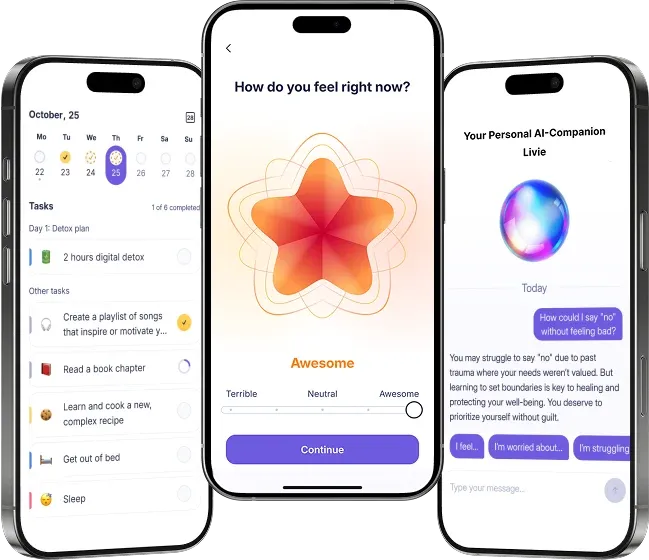
- Start journaling and use mental health tools like Liven to build science-backed self-care routines.
- Try a micro-meditation.
- Try Yoga Nidra, also called “yogic sleep,” sessions for relaxation.
- Body scan exercises to release physical tension.
“Every moment is an opportunity to return to the present moment and to ask, 'Is my mind and body in the same place?' In mindfulness, we open our attention, much like the aperture of a camera, to include both the internal and external experiences. “ — Gerald Avery, Mindfulness Facilitator
4. Make Stress-Reducing Activities a Part of Your Daily Life
Both body and mind thrive on movement, fresh air, and enjoyable pursuits.
🎨 Choose Hobbies That Help You Relieve Tension
Hobbies are powerful mental health tools that can improve life satisfaction and overall well-being.
Examples of stress-reducing hobbies include:
- Creative activities (drawing, painting, crafting, writing)
- Learning how to play a musical instrument
- Cooking or baking for pleasure
- Reading for enjoyment
- Gardening or caring for plants
- Low-pressure social activities with friends
🏋️ Add Regular Physical Activity
Exercising can help improve sexual function, especially when combined with other stress management strategies, such as daily mindfulness activities, a well-balanced diet, and social support.
Simple ways to add movement:
- Daily walks (even 10–20 minutes count)
- Light strength training or resistance bands
- Yoga, Pilates, or stretching routines
- Dancing at home or in a class
- Swimming or cycling at a comfortable pace
🏕️ Spend Time in Nature
Interestingly, in one study, 1 in 3 men living at high altitudes, where oxygen levels are chronically low, reported decreased sex drive. While most of us don’t live in the mountains, a lifestyle that keeps us indoors for extended periods can similarly limit our intake of fresh air and oxygen.
Easy ways to reconnect with nature:
- Walk in a park or green space
- Sit outside during breaks or meals
- Open windows regularly for fresh air
- Spend weekends outdoors when possible
5. Get a Medical Check-In to Rule Out Other Health Issues
If low libido, sexual dysfunction, and other sexual difficulties persist, it’s important that you contact a healthcare provider to rule out any other medical conditions that can contribute to decreased sex drive, whether physical or mental.
A medical check-in can assess thyroid hormone production, sex hormone levels, and other bodily functions.
When to Consider Talk Therapy or Couples Therapy?
When low sex drive and sexual difficulties create significant distress, talk therapy or couples therapy can be invaluable. Meanwhile, sex therapy offers tools for managing stress in intimate contexts.
Research shows that among the top 3 causes for low sex drive, which women name online are anti-depressants, hormonal birth control, and relationship problems.
Final Thoughts
A lower sex drive is often a natural stress response that we all experience at different times in our lives. The great news is that reduced sexual desire is temporary and completely reversible if we use the right tools and strategies to support ourselves during stressful periods.
Continue your healing journey with Liven: try the Liven app (Google Play or App Store) to track moods and stress patterns, explore deeper on the Liven blog, and learn more about your current mental health state through Liven’s free wellness tests.
References
- Bacia, A. J. (2024). Holistic approaches to stress management. Research Invention Journal of Current Research in Humanities and Social Sciences.
- Belcher et al. (2023). Women’s experiences with low libido. The Journal of Sexual Medicine. https://doi.org/10.1093/jsxmed/qdac045
- Cleary et al. (2025). Hobbies and mental well-being: A review. Issues in Mental Health Nursing. https://doi.org/10.1080/01612840.2025.2512006
- Hodes et al. (2024). Sex differences in stress response. Current Neuropharmacology. https://doi.org/10.2174/1570159X22666231005090134
- Liu et al. (2023). Gender-specific sexual dysfunction in depression. Frontiers in Psychiatry. https://doi.org/10.3389/fpsyt.2023.1194228
- Meng et al. (2025). High altitude and male libido. Sexual Medicine. https://doi.org/10.1093/sexmed/qfaf035
- Seyer et al. (2024). Stress and libido frequency. The Journal of Sexual Medicine. https://doi.org/10.1093/jsxmed/qdae167.097
- Thomas et al. (2023). Mindfulness for low libido in women. The Journal of Sexual Medicine. https://doi.org/10.1093/jsxmed/qdad081
FAQ: Stress and Sex Drive
Can chronic stress really affect my sex life?
How does chronic stress affect sexual function in the body?
Can stress and anxiety cause erectile dysfunction?
Can everyday stress and emotional factors affect sexual desire?
Are there ways to protect sexual health while managing chronic stress?