How to Keep the Spark Alive in a Relationship? Interview with a Marriage Therapist



On February 14th, when our social media feeds are flooded with grand romantic gestures and curated couple goals, it’s easy to feel like our own lives don't measure up. This contrast might evoke a sense of heaviness: the exhaustion of giving too much, the fear of being left behind, loneliness, or the feeling of being invisible to loved ones.
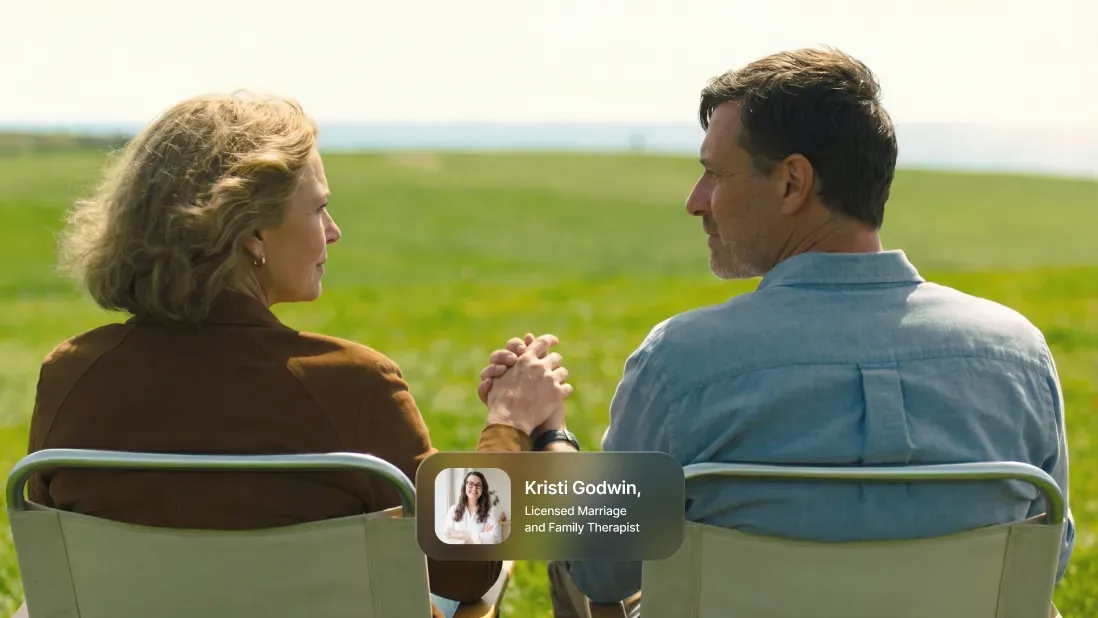
We sat down with Kristi Godwin, a Licensed Marriage and Family Therapist, to talk about what it takes to stay connected. In this interview, Kristi peels back the layers of relationship pressure to offer actionable advice on how to keep the spark alive in a relationship by focusing on self-love, steadying your heart, and building healthy boundaries.
😶🌫️ On Navigating the Love Season Pressure
We are scrolling past hundreds of perfect lives a day. How do we stop comparing our behind-the-scenes bloopers to everyone else’s Instagram reels?
We must remind ourselves that no one shares the bloopers. What is posted on social media is not only the best someone has, but also is often edited, filtered, and sometimes generated with AI. It is a far cry from REAL, and it is easy to make something fake look perfect. Reality is messy, sometimes chaotic, but AUTHENTIC. And authentic love beats the storybook fantasy every day.
Why does the commercialization of romance often make us feel lonelier inside our relationships than being single does?
The presentation of a flawless, fantastical love shows us something unrealistic and unattainable, yet sells it as normal, as something everyone should have and want. Our reality will always fall short of the fantasy, and the flaws or deficiencies we experience will be highlighted as failures, perhaps as evidence that our relationship isn’t real or that it isn't love.
We will feel like something is wrong with us for not finding this perfect scenario, and the result is feeling less connected to our partner and to others around us. We may fear that others can see the flaws in our relationship and judge us. This unrealistic representation of romance can keep us perpetually dissatisfied and isolated.
If you recognize this pattern, ask yourself how the relationship supports you in your day-to-day life. To ground yourself, try taking a deep breath and notice one small way your partner shows up for you each day. Bring your attention back to the ways you have connection and support, even if it is not perfect or the most romantic. Those little things, those little moments, are REAL, and that outshines fantasy every time.
🌷 On Nurturing Intimacy
How does the nature of the spark change when it is no longer fueled by the drama of validation?
There is much to be said on this. I would recommend you do some of your own research on the spark…For one, what it is not is LOVE. The spark has more to do with infatuation (which never lasts more than 2 years) than it does true love.
The spark can be chemistry, physical attraction, infatuation, or even your nervous system telling you someone is unsafe. But the truth is, it will inevitably change. This is NORMAL. A spark fueled by drama and validation is not love at all; if mistaken for love, it will likely lead to an unhealthy dynamic in a relationship. The initial spark in a healthy relationship, however, should become a slow-burning ember that must be stoked to keep it alive. It should be grounded in safety, trust, and intimacy that grows over time and is not based on validation.
When we feel unseen, we tend to cling tighter. Why is “leaning back” so terrifying for the anxious heart, and why is it exactly what is needed to reignite interest?
Worry tells us we have to hold on tighter for reassurance and safety, when in fact that suffocates our partner and can cause them to withdraw from us even further. While “leaning back” is actually the antidote that will likely lead our partner to lean forward and draw closer to us, do note that this action initially ignites panic and fear of abandonment in us.
In therapy school, I learned about a relational dynamic we call “push-pull.” The harder one partner chases the other, the faster the other one runs away. But the minute the chasing partner stops and “leans back” instead, the other partner comes toward them. One example of leaning back is pausing before seeking immediate reassurance when you feel insecure.
Instead of sending multiple messages or pushing for a conversation right away, you might acknowledge the worry internally, ground yourself, and let the feeling pass before reaching out later in a calmer way. This gives the relationship room to breathe and allows your partner to come toward you without pressure.
Another example is redirecting your energy back into your own life when you notice yourself over-monitoring your partner’s availability or mood. That might look like keeping plans you enjoy, staying connected to your routines, or spending time with people who make you feel steady, rather than reorganizing your world around maintaining closeness.
When your sense of safety isn’t entirely dependent on the relationship, the connection tends to feel more mutual and alive.
🌿 On Self-Care and Healthy Boundaries
We are often taught that love means “merging.” But for there to be a spark, there must be two distinct people. Can you discuss why having strong boundaries, knowing where “I” end and you begin, is actually sexier than being easy-going?
Think of a healthy relationship as two complete people coming together to create something new, rather than losing themselves in each other. When we “merge” or overlap too much, it can actually lead to an unhealthy cycle of codependency. Maintaining your own spark and your own life isn't just good for you; it’s what keeps the relationship healthy and vibrant.
The presence and maintenance of boundaries indicate that someone is healthy and conscious of their interactions with the world. This is a very attractive quality and indicates hope for a healthy, happy relationship.
An example of this could be when one partner feels forgotten but hesitates to let their partner know they need more quality time, for fear their partner will think they are clingy or needy. Asking for what you need from your partner is not selfish, and not asking for what you want can lead to resentment and the deterioration of the relationship itself.
Research on attachment shows that appropriate bids for reassurance actually increase closeness and reduce long-term resentment when they’re expressed clearly.
Another example of a healthy boundary that might be perceived as selfish is saying “no” when your partner asks for something. Saying “no” when you are emotionally depleted is not selfish. Boundaries around emotional capacity protect against burnout and passive withdrawal, which are far more damaging to relationships than an honest “not right now.”
For the empathetic partner who absorbs their partner's moods like a sponge, intimacy can feel exhausting. How does one build an “emotional immune system”?
I think what you are describing is actually a degree of codependency. You can be empathetic to your partner without absorbing the emotion. For a true empath, this takes practice, but it is a much healthier way of navigating the world.
I believe, in this example, the “emotional immune system” in question would be building a protective wall so that you maintain awareness of your partner’s moods without absorbing them. Imagine you are in a clear bubble as you walk through the day. You can see the emotion around you, but others’ emotions cannot penetrate the bubble. Practicing this imagery will help you learn to strengthen your “emotional immune system.”
If the spark starts with the self, is “selfishness” actually a survival skill for relationships? What does healthy selfishness look like in practice?
Yes, I do believe selfishness is often a survival skill developed out of necessity, much as selflessness can be. A degree of selfishness is healthy, as we do need to engage in self-preservation and self-care to some degree to be our healthiest selves. I think it is always about balance — balancing our own needs with those of our partner and the relationship.
Healthy selfishness would look like: engaging in self-care as a priority rather than sacrificing self to meet the partner’s needs, taking care of oneself when exhausted or ill, rather than pushing through to attend a big event with the partner, or holding a boundary that might contradict with the partner’s needs but is necessary for your own needs (not actually selfish, but certainly can seem that way).
💘 Kristi’s Take on Valentine’s Day
What’s your healthy (and favorite) version of Valentine’s Day?
Outside of a relationship, my favorite is actually celebrating Galentine’s Day — planning something fun and festive with my girlfriends! Valentine’s Day does not have to only be for lovers, but can be for friends, too!
In a relationship, I think spending sweet, quality time with your partner beats the cliché dozen roses and candlelight dinner. Snuggling up and having an authentic discussion about the progression of the relationship, or enjoying a favorite meal at home while recounting some of their favorite moments together as a couple, are two great ways to deeply connect and to build intimacy, rather than to try to create a social media post that makes everyone else jealous.
I’ve heard it said that if you want a healthy, lasting relationship, keep it off social media. The best moments are private ones!
❓Quick Q&A with Kristi
Red Flag or Green Flag: Sleeping in separate beds to get a good night's sleep?
Sleep quality is strongly linked to emotion regulation and relationship satisfaction — protecting it helps both partners show up better. A green flag for health, but a red flag would be sleeping in separate beds due to an argument, not feeling safe with one another, or to “punish” the other.
The biggest aphrodisiac in a long-term relationship is…
Feeling emotionally safe and attuned to. Desire grows where the nervous system can relax.
What is one piece of popular relationship advice that you wish people would stop following immediately?
“Your partner should meet all your needs.” No one's nervous system can sustainably carry that much. Secure relationships are supported by community, purpose, and self-connection, too.
If you could ban one romantic movie cliché forever because it sets us up for failure, what would it be?
The idea that the right relationship won’t require effort or repair. Healthy attachment is built, not found.
And what is your favorite romantic movie about healthy relationships?
The Fault in Our Stars offers a beautiful example of unconditional love that withstands sickness and even death. It wasn’t perfect; there were arguments and struggles, but ultimately, they stood by each other with compassion and love. Life is difficult, and every couple will face hard things and have bad days, but true love still stands when the sun comes out again.