How to Bond With Your Child When You Don’t Know Where to Start



Reviewed by
Tara Passaretti, M.S., LMHC


Your child is in their room, door half-shut, headphones on. You knock. You ask how school was. They say "fine" without looking up. You back out into the hallway wondering when it got this quiet between you. If that scene feels familiar, you are not alone.
Learning how to bond with your child does not demand grand gestures or perfect parenting moments. It starts with 5 surprisingly simple tips, and this article walks you through each one.
Key Learnings
- Nearly 40% of children lack strong emotional bonds with their parents, most often because of busy lives and missed small moments.
- Simple rituals like a two-minute check-in after school, a bedtime chat, or a weekly pancake morning strengthen trust and help your child feel safe, seen, and valued.
- When parents take care of their own emotional state first, it becomes much easier to stay calm, repair after conflict, and show up as the steady, trusting presence children rely on.
5 Ways to Build a Lifelong Bond with Your Child
The connection between you and your child is built in small, everyday moments that shape their sense of safety, trust, and emotional security over time. You don’t need to implement all of these at once. Choose what resonates, try it out, and notice what helps create more connection in your relationship.
1. Let Your Child Feel Seen
When a child prefers drawing over sport, or is obsessed with playing Lego warriors while you would rather be outdoors, the bond deepens not when you redirect them toward your world, but when you show up for theirs with real enthusiasm.
In other words, when you genuinely celebrate your kid, they feel it. And that feeling helps build lasting self-worth.
Try these:
- Praise the process, not just the result. "You stuck with that even when it got hard" lands deeper than "You are so smart."
- Mark their efforts with small rituals. A special dinner, a fist-bump tradition, or just a quick message: "I saw that. I am proud of you."
- Skip comparisons to other kids, or to yourself at their age. Each child individually deserves to be seen on their own terms.
- Put the mobile phone face-down and make eye contact when they share something important. This signals: you matter more than anything else right now.
2. Stay Genuinely Curious
This matters especially if you are parenting a teenager. Underneath all that "you do not understand me" energy, what they need most is for you to see them but without any judgement.
With younger kids, this matters just as much. When a child notices that you are genuinely interested in their theories, questions, and change in current interests, they feel that you value and accept them for who they are.
- Ask open-ended questions that can't be answered with a yes or a no. Try: "What made you laugh today?" or "What's your favorite character in [their current show] and why?" The more specific to their world, the more likely they are to actually answer.
- Lead with understanding before advice. When they share something, start with "that sounds hard" before offering any solutions.
- Make it clear their opinions are welcome even when you disagree. "I see it differently, but I want to understand your thinking" goes a long way.
- Ask about their world specifically: their friends, the shows they watch, the music they are into. You do not have to love it. You just have to be genuinely interested.
3. Create Connection Rituals
When a child knows that every Saturday morning means cocoa and pancakes with you, or that you always play the same silly game before bed, those rituals turn into a foundation for your bond.
Ideas to get you started:
- Slow Sunday mornings screens off, just eating and talking.
- A monthly yes day where they pick one activity, and you show up fully, no complaints.
- Going to a library or bookshop once a month - each of you picks something the other might like.
- Movie nights with their pick, your snacks, and zero scrolling.
- A shared playlist you both add songs to.
- Cooking together and letting them be the head chef sometimes.
- For teens: sending each other memes or inside jokes during the week.
If you're not sure where to begin, this short video from Aideen McCartney is a genuinely helpful starting point. A Play Therapist and Parent Coach with over 20 years of experience working with children and families, she walks parents through the everyday moments that help build connection with their kids. Worth a watch before you decide which ritual to try first.
4. Reflect, Process, and Repair
When negativities arise, your job is not to avoid the argument. It is to come back after and show that your relationship is bigger than any single fight.
Steps for a healthy repair conversation:
- Let things cool first. Taking a few minutes to write down in Liven’s Journal after a difficult interaction can help you understand what triggered you and what you might want to do differently next time.
- Name what happened without blame: "That conversation got heated. I do not think either of us was at our best."
- Acknowledge their experience first: "I can see you were really frustrated. That makes sense."
- If you say or do something that caused harm or disconnection, offer a direct apology without over-explaining. Children learn accountability and emotional repair by watching adults model it in real time.
- Invite them to share their side, and listen without interrupting or getting defensive.
- Keep it short. The goal is reconnection, not a second round or a lecture.
5. Be Emotionally Available
Emotional attunement in early caregiving relationships is one of the strongest predictors of a child's ability to regulate their own emotions as they grow.
Emotional availability means you notice when something is off, hold space for feelings without rushing to fix them, and let your child know that their inner world is welcome around you.
Tips to practice emotional availability:
- Notice emotional cues before words. If your child seems quiet, a simple "You seem a bit off today. I am here if you want to talk" can open everything.
- Put the mobile phone face-down or out of the room entirely. Your child can tell when you are half-present.
- Share your own emotions, age-appropriately. "I am feeling a bit stressed today" models emotional literacy without burdening them.
- Let all emotions be welcome at home, not just the convenient ones. A child who learns that big feelings are too much learns to hide them.
- Keep your reactions calm and neutral, especially when they share something surprising. If they sense judgment, they will stop talking.
Final Thoughts: Keep Showing Up
Connection isn’t built through perfection, but through presence, repair, and return.
Some days you will feel genuinely close. Other days the door will be metaphorically (or literally) shut. Both are normal. What matters is that you keep showing up, repairing when things go sideways, and finding small ways to let your child know they are seen, loved, and never a burden.
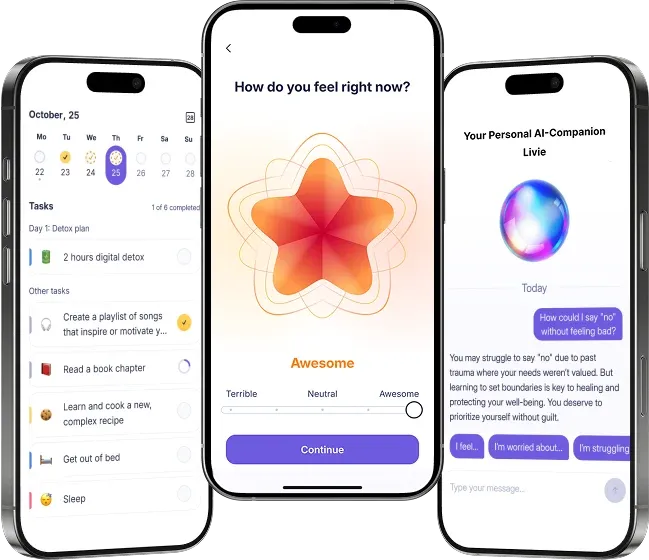
Want to keep going? Download the Liven app (Google Play or App Store), check in on your own emotional state with Liven's wellness tests, or explore the Liven blog to start building the habits that help you show up as the parent you want to be.
References
- Huber, B. R. (2026). Nearly 40% of U.S. children lack strong emotional bonds with parents. The Chronicle of Evidence-Based Mentoring. https://www.evidencebasedmentoring.org/nearly-40-of-us-children-lack-strong-emotional-bonds-with-parents/
- Playful Pathways. (n.d.). Building better bonds with children [Video]. YouTube. https://www.youtube.com/watch?v=1hZqcc7lxXg
- Social Sciences & Humanity Research Review. (2025). Exploring the impact of parent-child bonding on psychological well-being in adolescents, 3(3). https://doi.org/10.63468/sshrr.075
- Sun et al. (2025). Exploring the impact of parent-child contact, future orientation, and self-esteem on students' learning behavior. Acta Psychologica, 252, 104683. https://doi.org/10.1016/j.actpsy.2024.104683
- University of Cambridge. (2023). Young children who are close to their parents are more likely to grow up kind, helpful and “prosocial”. https://www.cam.ac.uk/research/news/young-children-who-are-close-to-their-parents-are-more-likely-to-grow-up-kind-helpful-and-prosocial
FAQ: How to Bond With Your Child
How do I create strong bonds with my child without harsh steps or pressure?
How can I encourage honest interaction and build a lifelong bond with my kid?
How to bond with your child when they seem to be pulling away?
What are some unforgettable experiences I can create with my child that don't require much planning?
How do I become a more trusting parent without feeling like I have to be perfect?
Can bonding really happen in everyday moments, or does it require dedicated family time?