Defining Self-Worth: 6 Practical Steps to Build It




Many people spend years trying to prove their self-worth, often measuring it against shifting external standards. Promotions, praise, appearance, or social media attention can offer you temporary boosts, but they don’t last.
These things are not harmful in and of themselves, but given their fluctuating nature, our sense of self-worth can rise and fall with them.
Psychologists often define self-worth as the belief that you have value simply because you exist as a person, not because of your specific productivity or achievements.
When you define your self-worth this way, you become less dependent on external approval or praise, more resilient in the face of setbacks, and better able to maintain healthy boundaries.
In this article, we'll explore why many people struggle with it and how you can begin cultivating self-worth sustainably.
Key Learnings
- Self-worth should be intrinsic, and it becomes problematic when tied to external validation.
- Low self-worth often develops through childhood experiences, criticism, or constant comparison with others.
- Cultivating unconditional self-worth involves shifting away from constant self-evaluation and recognizing inherent value.
- Using reflection tools, setting boundaries, and emotional awareness can help strengthen your sense of worth over time.
Why Defining Your Self-Worth Matters
Low self-worth shapes behavior in subtle yet damaging ways, leading people to overthink and develop self-confidence issues over time. They hesitate to pursue opportunities, avoid challenges, and prefer to stay quiet when their speaking up would matter more. These patterns reinforce the belief that they are less capable or deserving than others.
Many unknowingly tie their value to outcomes, such as school grades, work performance, recognition, and job titles. When your worth depends on achievement, life becomes a continuous test. Any mistake can trigger much emotional pain. Understanding self-worth and defining it for yourself in a healthy way breaks this cycle.
Self-Worth vs. Self-Esteem
Although the terms are often used interchangeably, self-worth and self-esteem are not exactly the same. Understanding the difference can help clarify why defining self-worth is so important.
- Self-esteem is situational: it rises and falls with external validation. Praise, promotions, achievement, and social acceptance influence self-esteem. It's how positively you evaluate yourself in a given moment.
- Self-worth is foundational: the stable belief that you deserve respect and dignity regardless of outcomes. You can lack confidence in a particular situation yet still hold deep, inherent worth.
This distinction matters. Over-reliance on self-esteem traps you in endless self-evaluation. If you ground your sense of value in something more stable, you will see that even setbacks become data for future plans, not verdicts about your worth.
However, the two concepts aren't completely isolated, and things are often more nuanced. Higher social standing and external success can reinforce resilience in maintaining self-worth. Research confirms that self-esteem often serves as a protective buffer against low self-worth. Different concepts for sure, but still intertwined in practice.
Where Low Self-Worth Often Begins
Low self-worth develops gradually through formative experiences.
Childhood conditioning
Early feedback from caregivers and teachers shapes self-evaluation. Conditional praise, given only for impressive achievements, creates the belief that your worth must constantly be proven.
Habitual comparison
Social media can accelerate self-sabotage by showcasing curated successes that make others' lives appear effortless. Regular comparison reshapes how you measure your own value.
Achievement-based identity
Growing up believing you must perform to be valued leads to self-evaluation based solely on results. This narrative persists even when circumstances change, shaping your decisions and relationships long after its origin.
Practical Ways to Define and Strengthen Your Self-Worth
Self-worth grows from small, repeated choices, and the steps below tend to hold up when life gets loud. Take them in whatever order fits where you are right now.
Step 1. Separate worth from productivity
Many people subconsciously link their value to their to-do list. A productive day may bring a sense of pride, while unfinished tasks can create guilt or self-criticism. Over time, this mindset makes worth feel conditional.
But much of life involves activities that never appear on productivity trackers, like caregiving, emotional support, personal growth, and countless unpaid tasks. All these contribute to well-being but are rarely recognized.
Learning to separate worth from productivity begins with noticing these internal assumptions. Your value does not increase because you completed a long list of tasks, nor does it decrease because you needed rest.
Step 2. Recognize your positive qualities
When people struggle with self-worth, their attention often gravitates toward perceived flaws or mistakes. They may evaluate themselves harshly while overlooking strengths that others easily recognize.
Shifting this pattern requires intentionally noticing positive qualities that define who you are beyond achievements. Traits such as kindness, persistence, curiosity, and empathy often say far more about a person’s character than any external accomplishment.
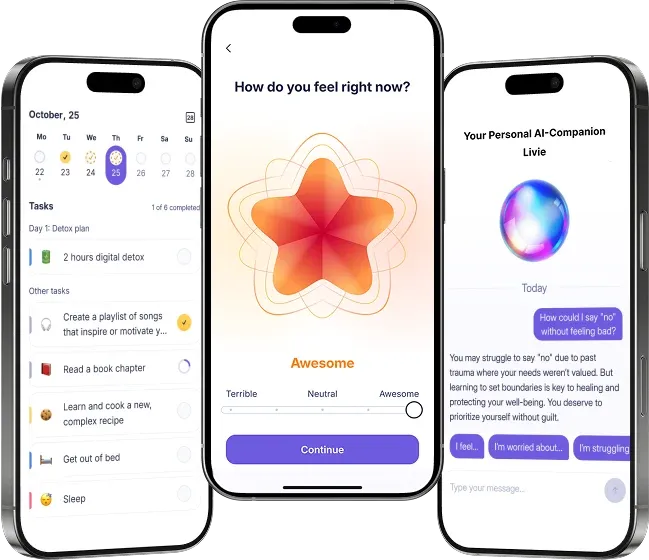
Reflective practices can help here. Journaling or self-reflection exercises allow you to step back from automatic criticism and gain insight into the patterns shaping how you see yourself. Tools like Journal in the Liven app can support this process by helping you track thoughts, emotions, and experiences over time.
Gradually, this awareness makes it easier to challenge the belief that worth must constantly be proven.
Step 3. Stop overextending yourself to prove value
People with low self-worth sometimes try to demonstrate their value through constant giving. They may accept additional unpaid responsibilities, take on unrealistic workloads, or struggle to say no when others ask for help.
At first, this behavior may feel productive or generous. But over time, it can lead to exhaustion and resentment. The underlying belief is often that value must be earned through effort and sacrifice.
Learning to set boundaries helps shift this pattern. This might mean stopping overpromising, setting realistic timelines, or choosing commitments more carefully.
Step 4. Build relationships that reinforce respect
Our social environment can play a powerful role in shaping how we see ourselves. Supportive personal relationships can strengthen confidence and provide a sense of belonging, while consistently critical or dismissive environments can gradually erode self-worth.
Healthy relationships allow room for growth, disagreement, and individuality without constant judgment. They create a sense of emotional safety in which mistakes do not threaten a person’s value.
If social interactions regularly leave you feeling diminished, it may be helpful to reflect on the dynamic itself. Sometimes the issue is not personal inadequacy but simply a relationship that does not support mutual respect.
Step 5. Define yourself through values, not roles
Many people base their identity on external roles: job titles, income levels, business achievements, or status in a group. While these aspects of life can be meaningful, they are also temporary.
Ultimately, careers change, and circumstances shift. These things often depend more on the broader socio-economic conditions than your own abilities.
When identity is tied exclusively to these things, any change can feel like a loss of self. Defining yourself through values instead, such as integrity, curiosity, compassion, or creativity, creates a more stable foundation for self-worth. These qualities remain meaningful even when external circumstances change.
If you're looking for more practical everyday strategies for developing your self-worth, this quick video by psychotherapist Georgia Dow might be useful:
Step 6. Track Your Self-Worth Growth
Self-worth is rarely strengthened by a single realization. It usually develops gradually through reflection, emotional awareness, and small behavioral shifts. You might notice progress when your internal dialogue becomes more supportive, when you maintain boundaries more comfortably, or when you pursue long-term goals without constant self-doubt.
Tracking emotional patterns can clarify this process. Tools like Mood Tracker in the Liven app can help you observe how thoughts, habits, and relationships that influence your sense of identity over time. These insights will reveal patterns for you that would otherwise remain unnoticed.
Ready to Take Your First Steps?
Start small this week. Try to notice one moment when you tie your value to an outcome, and choose to untie it. Set one boundary you have been avoiding. Write down one quality that defines you beyond your achievements. These steps are modest, but they build something durable: a sense of self that remains steady even when the world around you shifts.
You do not always need to earn your place. You are already here, and that is enough.
References
- Enting, M., Jongerling, J., & Reitz, A. K. (2024). Self-esteem and social interactions in daily life: An experience sampling study. European Journal of Personality, 39(5), 697–714. https://doi.org/10.1177/08902070241292987
- Hagen, R., Havnen, A., Hjemdal, O., Kennair, L. E. O., Ryum, T., & Solem, S. (2020). Protective and vulnerability factors in self-esteem: The role of metacognitions, brooding, and resilience. Frontiers in Psychology, 11, Article 1447. https://doi.org/10.3389/fpsyg.2020.01447
- Haines, J. E., & Schutte, N. S. (2022). Parental conditional regard: A meta-analysis. Journal of Adolescence, 95(2), 195–223. https://doi.org/10.1002/jad.12111
FAQ: Defining Self-Worth
Can self-worth improve over time?
Is self-worth the same as self-esteem?
How do relationships affect self-worth?
Why do people constantly evaluate themselves critically?
Can self-worth exist without confidence?
What's the difference between self-worth and self-compassion?