


Have you ever wondered why your body reacts in the way it does when you face a stressful situation? Much of our daily tension stems from an imbalance between the sympathetic nervous system, the part responsible for fight-or-flight, and our body's ability to return to rest.
The vagus nerve, which transmits signals between the brain and vital organs to regulate heart rate, digestion, breathing, and reduce inflammation, is a key player in how safe or threatened we feel at any given moment. Our expert Tara Passaretti, M.S., LMHC, puts it perfectly well:
"Ongoing stress isn't a weakness; it's often a nervous system stuck in high alert. The vagus nerve helps the body return to a state of calm by regulating breathing, heart rate, and digestion. When we learn to signal safety to the body, stress becomes easier to regulate."
Individuals who know how to stimulate the vagus nerve can be more emotionally resilient and restore internal balance faster. This article explores evidence-based ways to support vagal tone and help the body return to a calmer, more balanced rhythm.
Key Learnings
- The vagus nerve is a critical component of our stress response. An overactive sympathetic nervous system keeps heart rate, blood flow, blood pressure, and digestion elevated. The vagus nerve modulates and supports their regulation.
- Our mental health benefits even from small changes. Cold water exposure, humming or singing, and slow somatic movement engage vagal pathways without overwhelming us.
- Even small, manageable practices can support mental health and stress recovery. Moreover, targeted somatic exercises, such as Rosenberg's Basic Exercise and Sternocleidomastoid (SCM) stretches, improve our ability to recover after emotional or cognitive load.
Vagus Nerve Stimulation Strategies
Supporting the vagus nerve doesn't require difficult techniques or drastic lifestyle changes. Many forms of vagus nerve stimulation are subtle and work by reinforcing the body's existing ability to self-regulate.
Deep Breathing to Strengthen the Vagal Tone
Breathing is one of the most accessible ways to influence vagus nerve activity because it directly interacts with the autonomic nervous system. Because breathing is consciously controllable, it can quickly shift the autonomic nervous system toward parasympathetic (vagal) activation, helping regulate stress, heart rate, and emotional state.
When breathing slows and becomes more controlled, it can signal safety to the body, supporting a shift out of the stress response and helping regulate heart rate and blood pressure.
Try the following techniques:
- Inhale through the nose for about four seconds.
- Pause briefly.
- Exhale slowly through the mouth for six seconds.
- Repeat for a few minutes, without forcing the rhythm.
Over time, this pattern can support parasympathetic activation and steadier blood flow, especially during moments of emotional or cognitive overload. All small changes, from deep breathing and yoga to micro-meditations, help us recharge our nervous system.
Using Cold Water for Reset
Brief exposure to cold can stimulate vagal pathways by activating reflexes that influence heart rate and circulation. Cool sensations on the face, in particular, can engage nerve networks connected to autonomic regulation.
It doesn't mean you need to start jumping into freezing water during winter, which would be more stressful than soothing. You can try splashing your face, taking a quick cold shower, or using an ice pack on your skin.
Humming, Signing, and Other Voc alizations
Singing or humming can be a great vagus nerve stimulator. Because vocalization engages breathing patterns, facial muscles, and laryngeal nerves that interact with the parasympathetic system, these activities can promote a calming response. The effect is less about directly “stimulating” the vagus nerve and more about creating conditions that help the nervous system shift out of stress.
Mindful Movement and Somatic Release for Mental Health
Gentle, non-competitive movement is great for vagus nerve stimulation, as it combines physical sensation with rhythmic breathing. Movement plays a significant role in emotional regulation and in reducing overthinking. Unlike high-intensity exercise, somatic movement focuses on awareness rather than performance. Some people prefer strength training or fun cardio (e.g., dancing or running) for overall health, but you don't need to break a sweat for it to work.
Here are a few ideas:
- Gentle neck rolls or shoulder circles while breathing slowly.
- Rocking motions while seated or lying down.
- Slow walking, paying attention to how the feet meet the ground.
- Intuitive dancing with closed eyes to the music's rhythm.
Rosenberg’s Basic Vagus Nerve Exercise
This exercise, developed by the first craniosacral therapist Stanley Rosenberg, is designed to reduce neck tension and support vagal pathways through slow, controlled eye and head movements.
- Sit or lie down in a comfortable position.
- Interlace your fingers and place your hands behind your head. This means you will need to let the elbows fall open.
- Without moving your shoulders, slowly turn your head to the right and hold the position for about 30–60 seconds.
- Return to the center and repeat on the left side.
Sternocleidomastoid (SCM) Exercise
The sternocleidomastoid muscle runs along the side of the neck and plays a role in head movement, posture, and breathing patterns. Because of its close relationship with cervical nerves, gentle work in this area can support vagus nerve stimulation.
- Sit upright or lie down comfortably, allowing your shoulders to relax.
- Slowly turn your head to one side until you feel a gentle stretch along the front or side of the neck.
- Hold the position for 20-30 seconds while breathing slowly and evenly.
- Return to the center and repeat on the other side.
Electrical Impulses for Vagus Nerve Function
Electrical impulses are used to stimulate the vagus nerve in medical practice. It typically targets the left vagus nerve, which is usually preferred because it has fewer direct effects on heart rhythm while still sending strong signals to the brain. These signals don't "force" your body into calm; instead, they encourage a more balanced communication within the nervous system.
This method has been explored through multiple clinical trials, particularly for people whose symptoms haven’t responded well to standard treatments. It is most commonly used in care plans for treatment-resistant mood conditions, and it is also effective in treating conditions such as inflammatory bowel disease, rheumatoid arthritis, and other neurological disorders.
What Changes Can You Expect?
Improving vagal tone may help the body recognize when it is safe to relax again. With stronger vagal tone, the nervous system may be better able to move out of a heightened stress response and return to a state of regulation.
Here's what vagus nerve stimulation may help with in the long-term perspective:
- A calmer and more flexible stress response, especially during emotional or physical pressure
- Better gut-brain communication that helps control digestion.
- Support for cognitive health.
- Improved nervous system recovery pathways.
- Greater resilience when combined with lifestyle factors like a healthy diet, sleep, and gentle physical activity.
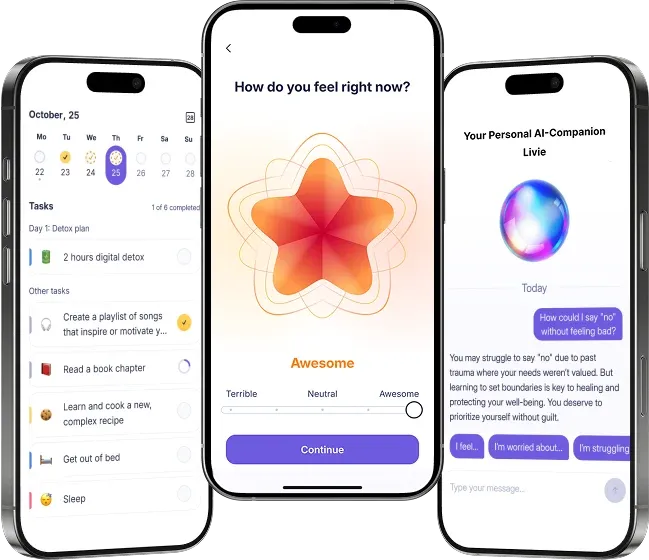
Using journaling and mood tracking tools, such as Liven's Mood Tracker, can help you notice even the smallest changes. And if you want a detailed breakdown of your potential progress, you might take the quiz to get your personalized plan for a calmer mind.
Preparing for Life-Changing Steps
What can you expect now that you have all these tips in your pocket? Let the changes in — slowly, when you feel ready, without pressuring yourself to turn your life upside down. Even one breathing exercise a day, and a short stretch can change your brain activity.
And as you step onto the path of improvement, treat yourself with kindness and compassion: you're rewriting your habits, and this is a great (even if challenging) process.
References
- Austelle, C. W., O’Leary, G. H., Thompson, S., Gruber, E., Kahn, A., Manett, A. J., Short, B., & Badran, B. W. (2022). A comprehensive review of vagus nerve stimulation for depression. Neuromodulation: Technology at the Neural Interface, 25(3), 309–315. https://doi.org/10.1111/ner.13528
- Richer, R., Zenkner, J., Küderle, A., Rohleder, N., & Eskofier, B. M. (2022). Vagus activation by cold face test reduces acute psychosocial stress responses. Scientific Reports, 12(1). https://doi.org/10.1038/s41598-022-23222-9
- Rosenberg, S. (2018). Accessing the healing power of the vagus nerve: Self-help exercises for anxiety, depression, trauma, and autism. North Atlantic Books.
FAQ: Vagus Nerve Reset
What is vagus nerve stimulation?
Can I stimulate the vagus nerve without a vagus nerve stimulator?
How is vagus nerve stimulation used in medical treatment?
Does vagus nerve stimulation help after a stroke or in stroke rehabilitation?
Can improving vagal tone reduce inflammation-related conditions?
Is vagus nerve stimulation linked to brain health conditions like Alzheimer’s disease?