Overthinking Test: Break Free from Thought Loops
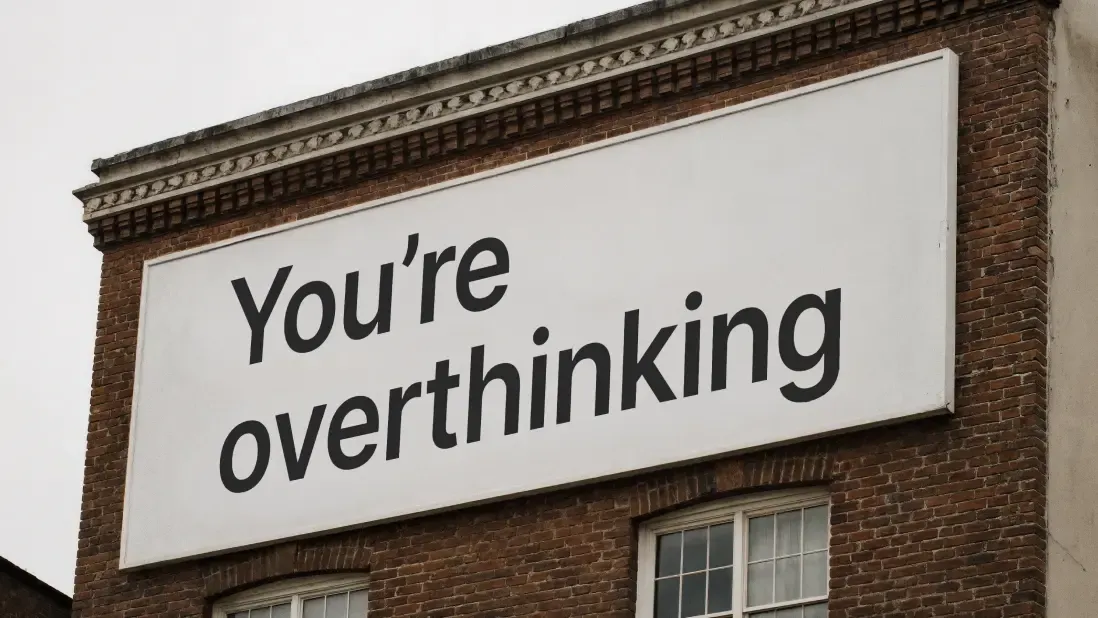
Let's take a deep breath before we get to the point. Most likely, you opened this text because your thoughts have become too intrusive. That's normal. Each of us has fallen into these mind traps at least once. Many people experience periods when thoughts spin in circles and don't let go.
It's important to notice this early and look for a way out with self-compassion.
In this article, we'll try to highlight patterns and suggest steps that will help restore clarity and lightness. This test is designed as a self-reflection and an opportunity to understand how strongly overthinking affects your life.
Key Learnings
- Overthinking shows up in different ways. It can look like rumination over the past, decision paralysis in the present, or worry spirals about the future.
- Whether you’re replaying regrets, doubting every choice, or imagining endless “what ifs,” overthinking keeps your mind stuck instead of moving forward.
- Overthinking isn’t a mental illness. It’s a learned pattern that you can understand, train, and shift through awareness and self-regulation.
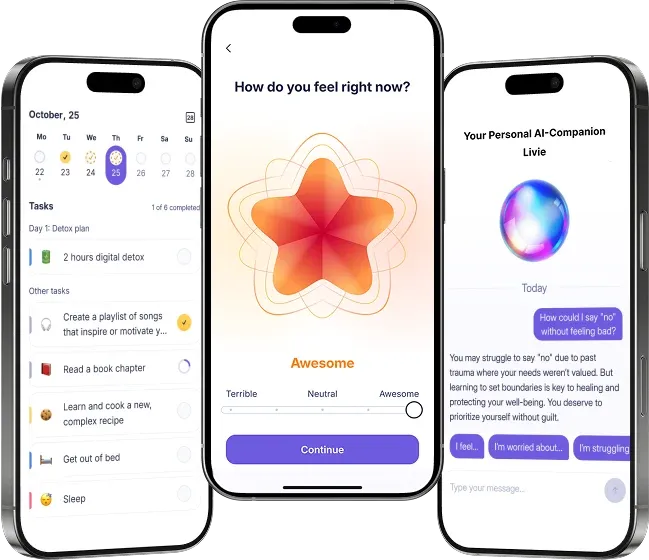
- Self-reflection builds control. Tools like Liven's overthinking test and journal can help you notice patterns, separate thoughts from facts, and gradually build confidence in your decision-making.
Overthinking Quiz
Before you start the quiz, take a moment to notice how you feel right now. Are you calm, tense, or distracted? This part isn't about getting the right answer; it's about being curious about how your mind works.
The following self-assessment will help you gently figure out how often your thoughts take up space and make you think too much.
Below are questions for self-assessment. Answer on a scale from 1 to 4, where:
1 – Never, 2 – Sometimes, 3 – Often, 4 – Always.
- I get stuck on the same thoughts and start obsessing. ________
- I worry a lot about the future and feel concerned. ________
- I replay past conversations and events over and over again. ________
- I imagine all possible scenarios of what might happen. ________
- I find it challenging to cope when things don't go according to plan. ________
- I feel anxious before bed and experience difficulty sleeping. ________
- My head feels overwhelmed, and I am unable to relax. ________
- I often experience inner questioning and second-guess my decisions. ________
- I dwell on small mistakes and feel discomfort. ________
- I rethink conversations long after they've ended. ________
My total score: ________
Scoring System
10–16: Low overthinking. You rarely get stuck and can easily let go of negative thoughts.
17–25: Moderate overthinking. You sometimes feel overwhelmed. It's important to identify moments when this affects your focus.
26–33: High overthinking. Your thoughts are exhausting and may cause stress, depression, or heightened anxiety.
34–40: Very high overthinking. Your tendencies are often associated with rumination, worry, and even ptsd or trauma. This is counterproductive and may require help with therapy.

What Your Results Mean
Low: You can reflect and be self-awareness. This means that the way you think helps you stay balanced. It's normal for everyone to have negative thoughts from time to time, but they don't get in the way of your daily life.
Moderate: You might sometimes have trouble with anxiety and doubt. In this case, it's important to pay attention to patterns that happen over and over again and may get worse when you're under more tension. You need to learn how to think about yourself. This will help you see when worry starts to affect your choices.
High: You feel a lot of feelings, like anxiety, anger, guilt, or sudden sadness, and you have trouble sleeping. This can be tiring and make it hard to speak, make decisions, and stay concentrated. Such a result demonstrates the importance of stress management habits.
Very high: You feel trapped, scared, and overwhelmed. This shows that your tendency to ruminate and obsess has a big impact on how you feel and act in general. With this result, it might be a good idea to get professional help and make some changes to the way you sleep and rest, approach mindfulness, and manage your time.
Your Next Steps to Manage Overthinking
Now that you have your result, it's important to understand what's next. The next step is to choose a specific direction for working with your level of overthinking.
If your level is low, we recommend spending at least 5 minutes a day on journaling. Write down three thoughts and one thing you're grateful for. You can also add breathing exercises, for example, "square breathing."
If your level is moderate, try more structured techniques. For example, an exercise from CBT practice. Write down an anxious thought, ask the question "What evidence is there for and against it?" and replace it with a more realistic one. You can also try somatic exercises to release stress.
If your level is high, it's worth choosing a more systematic approach. For example, an evening ritual of "unloading your head." You need to write down all thoughts before bed, which will help free your mind and reduce difficulty sleeping. Supplement with self-discovery apps such as Liven or guided meditations in Headspace.
If your level is very high, we recommend, as a first step to find a therapist or online resource like BetterHelp. Plan regular meetings and create a support system. Additionally, meditation and sleep apps like Calm can also help.
Useful Questions for Self-Reflection
To make sure you don't just read this material, stop for a moment and take a deep breath. Let your mind settle and pay attention to how you feel right now. This part is about taking your thoughts and putting them into action instead of letting them spin around in your head.
Take 10 to 20 minutes to write down your answers to the questions below to make it easier:
- What thoughts have been occupying my mind lately?
- Which situations make me feel anxious or worried?
- What can I actually solve or change from these issues?
- What past things am I still holding onto?
- Where do I notice my self-doubt or difficulty making decisions?
- Which habit helps me relax and regain focus?
- What do I want to learn to better deal with my feelings and tension?
Answers to these questions will become your starting point toward mindfulness and provide insights for further work. You can return to this list in a week and reflect on the changes.
This will help you feel peace and support. It's a movement toward discovering your patterns and solving them through habits. You're taking the first step to discover your patterns and solve them through an approach.
Resources for Self-Help and Growth
Articles
- How to Regulate Your Nervous System
- Effective Stress Management: Practical Strategies
- The Science of Emotional Regulation
- Rumination and Mental Health: How to Break the Cycle. Verywell Mind
Videos
- How I Stopped Being an Overthinker. Tally Feingold (TEDx)
- Making Decisions as an Overthinker. Caroline Odom (TED)
- How to Make Anxiety Your Friend. David H. Rosmarin (TED)
- How to Stop Your Thoughts from Controlling Your Life. Albert Hobohm (TEDx)
- The Power of Overthinking. James Samassa (TEDx)
Final Thoughts
Overthinking isn’t something to “fix” overnight. It's a chance to slow down and watch your mind. Writing a few lines in your journal, taking a deep breath, or stopping yourself in a loop and smiling are all small ways to become more aware that are already moving you toward peace.
Keep in mind that awareness grows in quiet times. Take a break here to think about things and bring some warmth back into your daily life. You will start to notice that things become clearer on their own, without you having to force them.
Methodology
This short self-assessment was developed based on common cognitive and emotional patterns observed in people who experience overthinking. The statements draw inspiration from validated psychological frameworks such as rumination scales and generalized anxiety measures, but were simplified for everyday reflection. Each question helps identify how frequently you engage in repetitive thoughts, worry about future events, or dwell on past experiences. Scoring from 1 (Never) to 4 (Always) offers a quick snapshot of your current thinking habits. It's not a clinical diagnosis, but a guide to understanding how your mind reacts under stress. Use your results as a starting point for self-awareness and reflection, not as a label or judgment.
References
- American Psychological Association. (2024, April). Estrangement & feedback on emotions. https://www.apa.org/monitor/2024/04/healing-pain-estrangement
- APA Cognitive Therapy Insights. (2024). Cognitive behavioral therapy. https://www.apa.org/ptsd-guideline/patients-and-families/cognitive-behavioral
- Harvard Health Publishing. (2024). Break the cycle. https://www.health.harvard.edu/mind-and-mood/break-the-cycle
FAQ