The Dopamine Diet: What to Eat to Feel Motivated Again



Most people assume overeating means food feels too good. Researchers at UC Berkeley found the opposite. People with obesity enjoy food less than people of a healthy weight, and the reason has everything to do with a single brain chemical most of us have never heard of.
That chemical is neurotensin. And when it drops, food stops feeling rewarding. So does most of life. You feel flat, unmotivated, and you keep reaching for snacks or your phone anyway. Not because you're enjoying it, but because your brain is chasing a signal it can barely feel anymore.
That's where what you eat starts to matter. The dopamine diet is a high-protein, low-carb way of eating built around foods that support the brain's natural dopamine production, rather than spike and crash it. Michelin-starred chef Tom Kerridge brought it into the mainstream after losing 11 stone over three years following its principles. The science behind the approach is worth understanding on its own terms.
Here's what the research says, what to eat, and how to get started.
Key Learnings
- People with obesity enjoy food less than people of a healthy weight. A drop in neurotensin is why.
- Screens and ultra-processed food hit the same dopamine pathway. Combined, they train your brain to need both just to feel normal.
- Your brain builds dopamine from amino acids found almost exclusively in protein. That's why protein anchors every meal.
- When dopamine stabilizes, cravings often ease, and motivation tends to return.
Why You Eat Without Enjoying It
Think of neurotensin as the bridge between eating and feeling good about it. When it's working, a meal feels satisfying. When it drops, the pleasure disappears, but the urge to eat doesn't. A chronic high-fat diet reduces neurotensin in the brain's reward circuit.
You're going through the motions, eating out of habit rather than hunger or enjoyment, and wondering why nothing quite hits the spot. Screens make it harder to go through a different route. The more you combine the two, junk food and scrolling, the more you train your brain to need both just to feel normal.
What is the Dopamine Diet
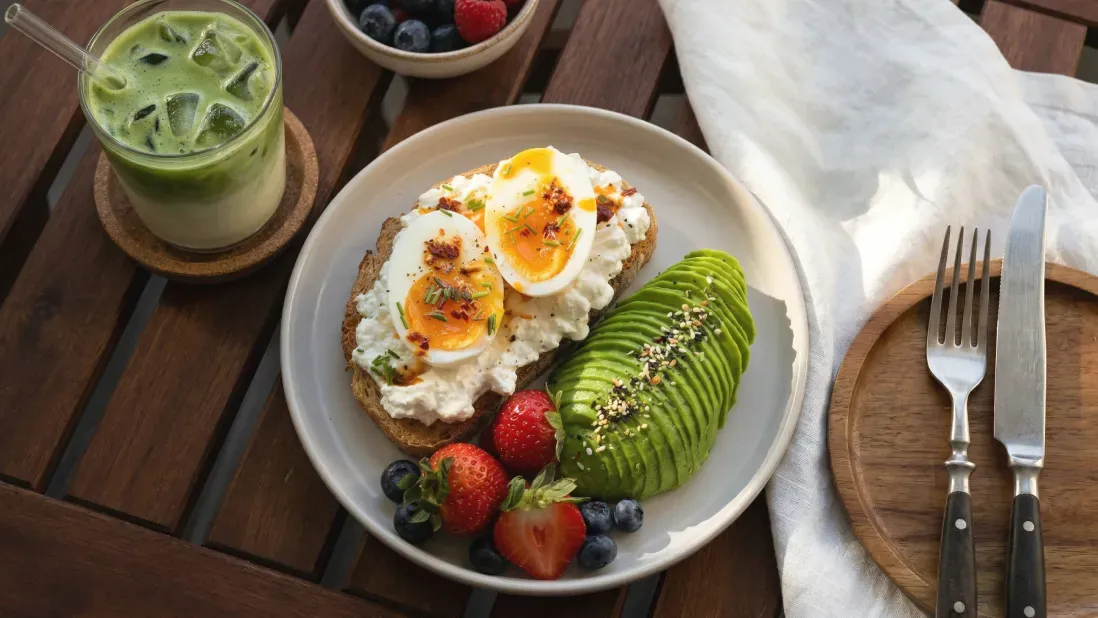
The dopamine diet cuts the things that hijack dopamine - alcohol, ultra-processed food, and refined sugar - and replaces them with foods that help the brain make it properly. Think meat, fish, eggs, dairy, nuts, vegetables, and yes, dark chocolate. Foods that work with your brain, not against it.
It was popularized by Michelin-starred chef Tom Kerridge, who lost 11 stone over three years following its principles. But weight loss is a side effect, not the point. People report calmer cravings, more consistent energy, and a better mood long before the scale moves.


How Food Supports Dopamine Production
Dopamine starts with two amino acids: tyrosine and phenylalanine. Your body can't make phenylalanine on its own - it has to come from food. From there, your body converts it into tyrosine, then into dopamine.
But that conversion needs help. Three nutrients drive the process: vitamin B6, iron, and folate. Without any one of them, the whole thing stalls. Think of them less as nice-to-haves and more as load-bearing walls.
Research confirmed that phenylalanine and tyrosine levels directly regulate dopamine production at the cellular level - when either drops, so does dopamine output. It's a supply chain, and protein is where it starts.
Foods Highest in Tyrosine and Phenylalanine
These are the building blocks your brain needs most:
- Beef, chicken, turkey, and pork
- Seafood
- Eggs
- Dairy
- Lentils
- Nuts and seeds
Foods That Support the Conversion
The raw materials aren't enough on their own. Your body also needs these to complete the process:
- Vitamin B6: chicken, turkey, bananas, and chickpeas
- Iron: red meat, lentils, and spinach
- Folate: leafy greens, broccoli, and chickpeas
Two Treats That Help
Giving up caffeine and alcohol can feel like losing your two most reliable pick-me-ups. These aren't perfect substitutes, but they're the real deal:
- Dark chocolate (at least 70% cocoa): modulates dopamine release and contains magnesium, zinc, and chromium. A square or two counts.
- Spicy food: triggers endorphins through a completely separate pathway, producing a reward response without spiking dopamine artificially.
Should You Supplement?
Food comes first, always. But if your diet is restricted, or you've been running on empty for a while, a few supplements have solid evidence behind them. Talk to your doctor before adding anything new.
| Supplement | What it does |
|---|---|
| Tyrosine | The direct precursor to dopamine |
| L-theanine | Another dopamine precursor, found naturally in green tea |
| Vitamin D, B5, and B6 | All needed for dopamine synthesis; a deficiency in any one of them can stall production |
| Omega-3 fatty acids | Support the health of dopamine receptors, not just how much dopamine you make |
| Magnesium | Involved in over 300 enzymatic reactions, including those that regulate dopamine |
What to Avoid on a Dopamine Diet
Junk food, refined sugar, and artificial additives spike dopamine just as effectively as the foods on this list. As Kerridge puts it, the brain doesn't know the difference between a chicken salad and a fast food burger. Both hit dopamine. But one supports the system over time, and one quietly breaks it down.
Here are some types of food to avoid:
- Ultra-processed food: Suppresses neurotensin and blunts the dopamine reward response
- Alcohol: Disrupts dopamine signaling and undermines everything else you're doing
- Refined sugar: Spikes dopamine artificially, accelerating receptor downregulation
- Saturated fat in excess: A diet high in saturated fat reduces dopamine signaling in the brain's reward areas
- Starchy carbohydrates: White bread, pasta, rice, and potatoes spike blood sugar and interfere with stable dopamine production
- Caffeine: Creates dependency and disrupts the natural dopamine rhythm over time
The goal isn't simply restriction. It's to stop outsourcing it to foods that leave you needing more.
This TEDx talk by NHS doctor Chris van Tulleken is one of the clearest explanations of why it's so hard to stop at just one biscuit, and why willpower was never really the problem:
How to Do the Dopamine Diet
The plan runs in two phases. The first two weeks ask the most of you. The second two weeks show you what's possible.
Phase 1: The Reset (Weeks 1 and 2)
Cut refined sugar, alcohol, and starchy carbs. No bread, pasta, rice, or potatoes. Protein at every meal is the one rule that isn't negotiable - without a steady tyrosine supply, the rest of the diet doesn't work.
Here's how that looks across different ways of eating:
| Non-Vegetarian | Vegetarian | Vegan |
|---|---|---|
| Beef, chicken, turkey, pork | Eggs | Tofu |
| Salmon, mackerel, tuna, cod | Full-fat Greek yogurt | Tempeh |
| Eggs | Halloumi | Lentils, chickpeas |
| Cheese | Nuts, seeds, edamame |
Fair warning: weeks one and two often feel worse before they feel better. The artificial dopamine spikes are gone, and your brain hasn't recalibrated yet. This is the point most people quit - usually right before things start to shift. Stick with it.
Phase 2: Integration (Weeks 3 and 4)
Keep the high-protein foundation. Add one serving of complex carbs at lunch - quinoa, lentils, black beans, sweet potato, oats, or brown rice. But don't think of it as a reward for making it this far. It's a deliberate reintroduction of slow-release fuel that supports stable dopamine without spiking blood sugar.
By week four, most people notice food starting to taste like something again. That's your neurotensin recovering. It's a small thing that feels enormous when it happens.
Getting a Food Scale and Calculating Proper Macronutrients
A food scale helps answer:
- Am I actually eating enough protein?
- Am I consistently meeting my target?
- Am I underestimating portions?
Many people discover they were consuming much less protein than they thought. The scale provides objective information rather than relying on memory or estimation.
Another interesting angle is cognitive load.
Without tracking:
- Did I eat enough?
- How much protein was in that?
- Should I eat more?
The brain spends energy guessing.
With tracking:
- You know where you stand.
- You know what's left.
- The uncertainty decreases.
For some people, this reduces mental clutter and frees attention for other goals.
When you can see how much you're eating at each meal, it's a lot easier to know where you stand. Without tracking your protein, carbs, and fats, it's hard to tell whether you're actually meeting your goals.
A good starting point is your body weight, which can help you gauge how much protein you might need throughout the day. It also tends to help when your protein is spread out rather than packed into one meal. Here's an example of what that could look like:
- Breakfast: 30-40 g
- Lunch: 30-40 g
- Dinner: 30-40 g
- Snack: 20-30 g
How To Stay On Track With Your Diet
Most diets fail because they make you feel like you're missing out. The dopamine diet works differently. High-protein and healthy fats keep you physically full, and the tyrosine in those foods actively supports your mood while you eat.
That said, a few common mistakes are worth knowing about before you start.
- Cutting fat instead of ultra-processed food. Fat is not the problem. Ultra-processed food is. Cutting the wrong thing leaves you hungry, unsatisfied, and back where you started within a week.
- Swapping food spikes for screen spikes. Cutting junk food while spending four hours on your phone is trading one dopamine problem for another. The reward pathway doesn't care where the spike comes from.
- Quitting at week two. Week two is when dopamine is at its lowest. The artificial spikes are gone, and the brain hasn't recalibrated yet. It feels like the diet isn't working. It is. This is the worst time to stop.
And don't make this harder than it needs to be. If you need a coffee in the morning, have it. If you want a burger once in a while, have it. The goal is to give your brain what it needs, consistently, not to be perfect.
When Food Feels Good Again
The dopamine diet is just a high-protein, low-carb way of eating that gives your brain what it needs to make dopamine. No detox, no punishment, no white-knuckling through cravings.
The building blocks are the same for everyone: protein at every meal, low-carb vegetables, healthy fats, and complex carbs at lunch from week three. What goes on your plate depends on how you eat.
And don't make this harder than it needs to be. If you need a coffee in the morning, have it. If you want a burger once in a while, have it. The goal is to consistently give your brain what it needs.
If stress has been running the show lately, take the quiz to spot the patterns behind it and find tools that fit into your day.
Additional Resources
If this article has you curious about the bigger picture (how dopamine shapes the way we eat, what ultra-processed food is actually doing to our brains, and how to build a healthier relationship with both), these are the best places to go next:
Books
- Tom Kerridge's Dopamine Diet - the practical recipe companion to this article, written by the Michelin-starred chef who lost 11 stone following its principles.
- Diet, Drugs, and Dopamine by Dr. David A. Kessler - the most current science-backed book on weight, dopamine, and the food system, from the former FDA Commissioner.
- Dopamine Nation by Dr. Anna Lembke - the definitive book on the dopamine cycle, by Stanford's chief of addiction medicine. Referenced across almost every credible podcast on this topic.
- Ultra-Processed People by Dr. Chris van Tulleken - the book behind the TEDx talk embedded in this article, and one of the most important reads on what modern food is doing to our brains.
Podcasts
- Dr. Anna Lembke: Understanding & Treating Addiction - Huberman Lab. The go-to episode on dopamine and addiction, covering food, screens, and how to reset your baseline.
- Hostage Brain: Understanding Dopamine, Sugar Addiction, and Control - Diary of a CEO with Steven Bartlett, Dr. Robert Lustig. Neuroendocrinologist Dr. Lustig breaks down how sugar hijacks the brain's reward system, and why 17 seconds of pleasure can rewire your entire dopamine baseline.
Sources
- Gazit Shimoni, N., Tose, A. J., Seng, C., Jin, Y., Lukacsovich, T., Yang, H., Verharen, J. P. H., Liu, C., Tanios, M., Hu, E., Read, J., Tang, L. W., Lim, B. K., Tian, L., Földy, C., & Lammel, S. (2025). Changes in neurotensin signalling drive hedonic devaluation in obesity. Nature. https://doi.org/10.1038/s41586-025-08748-y
- Kerridge, T. (2017). Tom Kerridge's dopamine diet: My low-carb, stay-happy way to lose weight. Bloomsbury Publishing.
- Szigetvari, P. D., Patil, S., Birkeland, E., Kleppe, R., & Haavik, J. (2023). The effects of phenylalanine and tyrosine levels on dopamine production in rat PC12 cells: Implications for treatment of phenylketonuria, tyrosinemia type 1, and comorbid neurodevelopmental disorders. Neurochemistry International, 171, 105629. https://doi.org/10.1016/j.neuint.2023.105629
FAQ: Dopamine Diet
What is the dopamine diet?
Who popularized the dopamine diet?
What foods are allowed on the dopamine diet?
What foods should you avoid on the dopamine diet?
Can vegetarians or vegans follow the dopamine diet?
Can you take supplements instead of changing your diet?
Is the dopamine diet safe?