Daily Self-Care Checklist for a Better Mood
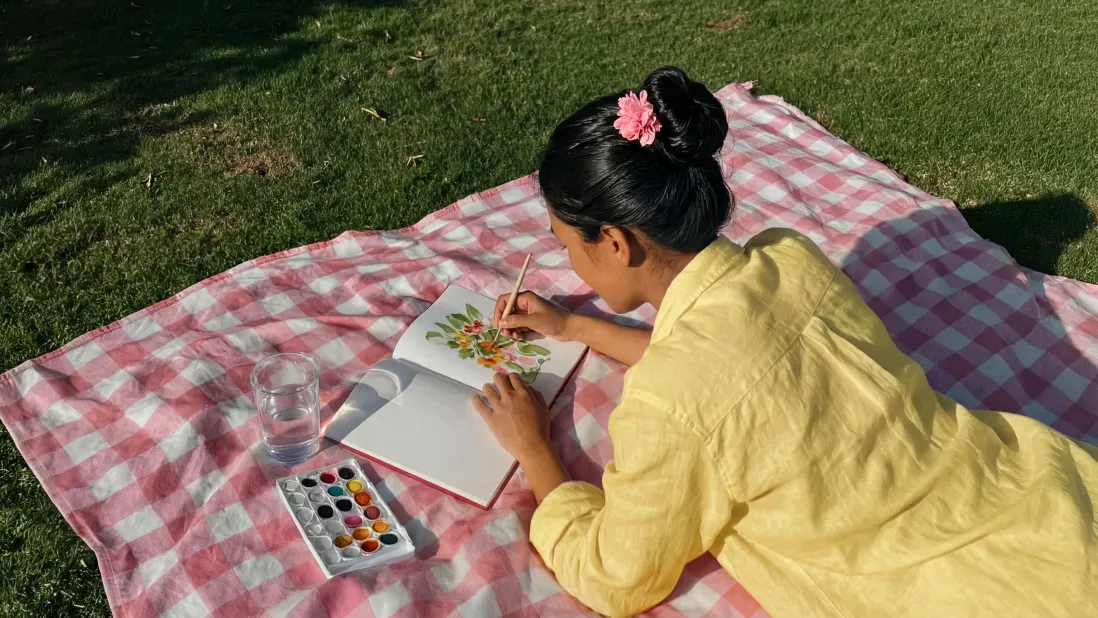



Between work, family, and daily responsibilities, we often push rest to the bottom of the list.
We say, "I have no time."
But rest doesn't have to be hour-long breaks or radical schedule changes. It can be five minutes of sunlight on your lunch break, a quiet cup of tea before your next task, or a short stretch between meetings. Sprinkled throughout the day, these tiny pauses restore energy and focus.
A thoughtful daily self-care checklist helps you refill before you hit empty. Check out the daily self-care habits that you can add to your routine for better mental and physical health and sustained energy.
Key Learnings
- A daily self-care checklist includes small, consistent routines that help you regulate stress and energy daily.
- Physical, mental, and professional habits work best when combined into a single routine you can realistically maintain.
- Small habits practiced consistently create meaningful change.
24 Essential Habits for Your Daily Self-Care
Self-care isn’t only spa days and scented candles. It’s about protecting your mind and body, and your ability to show up for your family, your pet, your work, and yourself.
A good self-care routine with intentional daily habits for physical and mental well-being serves as your personalized dopamine management plan, helping your brain naturally regulate motivation, focus, and emotional energy.
1. Fundamental Physical Habits Behind Stable Energy
Your physical habits regulate your hormones, sleep cycle, and stress response.
Healthy sleep
During deep sleep, the brain clears metabolic waste via the glymphatic system. Meanwhile, sleep loss elevates cortisol levels, the stress hormone, and increases your emotional reactivity.
Aim for 7-9 hours of uninterrupted sleep. One hour before bed, dim the lights, put down your phone, and take a warm shower.
Enough water intake
Your brain consists of 80% water. That’s why even mild dehydration affects mood, energy, and cognitive clarity.
Drink a glass of water right after you wake up and keep one nearby all day. You can also adopt a "drink when you switch tasks" rule. This means you take a drink every time you close a small task or finish a call.
Balanced meals
Stable blood sugar prevents cortisol spikes and energy crashes.
Try the Plate Method: fill half your plate with vegetables, one-quarter protein, and one-quarter complex carbs or healthy fats. Prep simple ingredients ahead to support your physical self, energy, and to avoid decision fatigue.
Also, try to eat at regular intervals so your body learns it can rely on consistent fuel and doesn’t have to run on stress.
Power naps
A short afternoon rest can reset your cognitive load and restore focus better than caffeine.
Even 5–15 minutes can make you feel more awake, improve your mood, boost your memory, and speed up your reaction time. Plus, these benefits can last up to 3 hours.
Between 1–4 PM, when your body naturally feels a “post-lunch dip,” set a timer for 20 minutes. Lie back and allow rest, even if you don’t fully fall asleep. Apps like Insight Timer help master the practice.
Sunlight exposure
Morning sunlight triggers serotonin production in the brain, the neurotransmitter associated with happiness and calm, which also influences melatonin production and sleep quality.
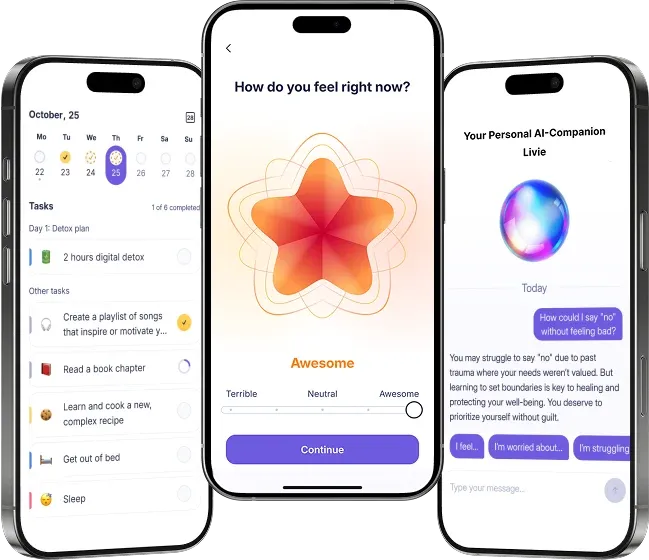
💡 Tip: Use Liven’s To-dos to schedule the moments of self-care so you never forget to take a break from your to-do list and recharge.
2. Mental Habits for Cultivating Inner Peace
Your mental well-being is a basis for how you perceive challenges, connect with others, and recover from setbacks.
Mindful practices
Mindfulness helps build emotional regulation and resilience. Choose some from these beginner-friendly practices to start with:
| Habit | How to Practice | Benefits |
| Emotional Check-Ins | Pause 2–3 times a day and ask yourself: “What am I feeling right now?” and “What do I need to feel better?” | Helps you become aware of your emotions and identify your needs. |
| Journaling | Spend 5–10 minutes writing each morning or evening, freely, to process your thoughts. | Clears mental clutter and supports reflection. |
| Guided Meditation | Start with 3–5 minutes of focused breathing daily; gradually increase duration. | Builds emotional regulation; apps can help beginners. |
| Gentle Stretching or Yoga | Combine movement with slow breathing. | Helps you reconnect with your body and reduce tension. |
| Gratitude Practice | Write down three things you appreciate each day. | Helps shift attention to positive experiences and boosts mood. |
- Creative hobbies
Flow states increase happiness and overall life satisfaction.
Dedicate 15-30 minutes to something "unproductive" but enjoyable with zero goal other than the experience itself. Those might include activities like sketching, playing guitar, baking, gardening, or even simple things like cooking with a family member or playing with a pet.
- Digital detox
“Technostress” increases anxiety and makes you lose your attention span.
| Digital Detox Habit | How to Practice | Benefits |
| Screen-Free Mornings | Go phone-free for the first 30 minutes of the day. | Helps start the day mindfully and reduces early-tech stress. |
| Device-Free Meals | Keep phones and screens away during meals. | Supports mindful eating and meaningful social connection. |
| Social Media Limits | Set daily app timers or intentional usage boundaries. | Reduces technostress and prevents distraction. |
| Digital Sunset | Stop screen use 60–90 minutes before bed. | Supports better sleep quality and circadian rhythm regulation. |
🤔 Did you know? The largest study ever on light and mental health followed nearly 87,000 people. It found that getting more light during the day helps protect mental health, while too much light at night increases the risk of depression and other mental health problems.
3. Professional Habits to Perform Without Burnout
No amount of weekend wellness will compensate if your daily work habits constantly drain your energy.
Prepare boundary phrases
Boundaries are easier when you know what to say. Prepare simple phrases like “I’ll return to this tomorrow” or “I can’t commit today” to protect your time without overexplaining or feeling uncomfortable.
Block your breaks, meals, and personal time
Schedule breaks, meals, and personal time directly in your calendar as non-negotiables. For example, block 12–12:30 PM for lunch, 3 PM for a short walk, and evenings for unwinding or hobbies.
Separate work and rest spaces
Create small distinctions between work and relaxation areas. For instance, reserve a desk for work only, move your laptop off the table afterward, or dim the lights to signal that it's time to wind down.
- Protect your focus and energy
| Practice | How to Implement |
| Prioritize MIT (Most Important Task) | Pick 1–3 key tasks each morning and put them at the top of your daily task list |
| 90-Minute Deep Work Blocks | Schedule 2-3 uninterrupted focus sessions |
| Microbreaks | Take 10-20 minutes every 60–90 minutes to stretch or go for a long walk. |
| Energy mapping | Track your natural energy peaks and schedule demanding tasks accordingly |
| Stretching/Desk Yoga | Stand or sit up straight, roll your shoulders, and stretch arms overhead for 2–3 minutes between work blocks |
An Example of a Daily Self-Care Checklist
Try these small beginner-friendly self-care ideas for your morning, work, and evening routines.
☀️ Morning Practices for Energy and Intention
- Drink 1 glass of water before coffee
- Journal your mood and what you need for the day.
- Use the Plate Method to cook a balanced breakfast.
- Drink your morning beverage outside or while sitting by a bright window.
- Set the top 3 priorities (MITs) for the day.
🕛 Workday Practices to Maintain Focus and Energy
- Add 2-3 90-minute deep focus blocks to your workday.
- Include 10-minute micro-breaks into your routine (and 20-30 minute breaks after deep work sessions).
- Try doing some stretching or “desk yoga” moves to relieve physical tension.
- Play ambient or binaural beats to lock in attention.
- Keep a cup of water on your desk to ensure you sip water regularly.
🌙 Evening Practices to Wind Down and Recharge
- Opt for a screen-free evening walk to let your mind process the day.
- Do calm yoga or stretching for 15-30 minutes before sleep.
- Write down 3 things you’re grateful for that happened during the day.
- Try reading for 15 minutes before bed instead of scrolling.
- Take a warm shower or bath and do your skincare routine.
Final Thoughts
Self-care is not a luxury reserved for people with free time. It's the fundamental infrastructure that makes everything else in your life possible.
You don't need to optimize every hour or nail every habit. Just start with 2-3 habits, track your progress, and let momentum build.
Meanwhile, create and keep your self-care routine consistent with Liven: try the Liven app (Google Play or App Store), discover insights on the Liven blog, and explore your mental health through Liven’s free wellness tests.
References
- George et al. (2024). The science and timing of power naps. 2, 70–84. https://doi.org/10.5281/zenodo.10673171
- Godman, H. (2024). Having a hobby tied to happiness and well-being. Harvard Health Publishing. https://www.health.harvard.edu/mind-and-mood/having-a-hobby-tied-to-happiness-and-well-being
- MacAulay, N. (2021). Molecular mechanisms of brain water transport. Nature Reviews Neuroscience, 22(6), 326–344. https://doi.org/10.1038/s41583-021-00454-8
- Monash University. (2023, October 10). The largest ever study on light exposure proves its impact on mental health. https://www.monash.edu/news/articles/largest-ever-study-on-light-exposure-proves-its-impact-on-mental-health
FAQ: Daily Self-Care Checklist
What is a self-care checklist?
Why should I use a self-care checklist?