A Zeigarnik Effect Example Shows Why Your Brain Doesn't Like Loose Ends




Imagine it’s 10 PM, and you’re trying to unwind, but your brain is still at the office, replaying the half-finished email you need to send tomorrow. That nagging sense of incompletion is partly explained by a well-documented phenomenon called the Zeigarnik effect - though stress, habit, and how much a task matters to us all play a role too.
The constant mental reminders of open loops can chip away at our focus and peace of mind. Research shows that it takes an average of 23 minutes and 15 seconds to fully get back on track after being interrupted, which is a heavy cognitive tax.
Let's figure out together what the first step toward reclaiming your mental space would be.
Key Learnings
- The Zeigarnik effect is your brain’s tendency to remember incomplete tasks more vividly than completed ones.
- Such a state can lead to intrusive thoughts and make it harder to focus on new priorities.
- Making a concrete plan to complete tasks later can quiet the mental noise by up to 51%.
- Strategically leaving a task unfinished can sometimes boost motivation, but chronic incompletion often leads to mental clutter and anxiety.
Why Your Brain Dislikes Unfinished Tasks
Think of your brain as a diligent project manager. When you start a task, it opens a new file and keeps it on the desk, ready to go. When you finish, it files it away. But when a task is interrupted or left incomplete, the file stays open. This creates what psychologists call "task-specific tension." Your brain essentially flags the task with a bright, blinking "still needs attention" sign.
This phenomenon was first observed by psychologist Bluma Zeigarnik in the 1920s. She noticed that waiters in a busy cafe could remember complex, unpaid orders perfectly. Yet, the moment the bill was paid, they forgot the details. The completed task was mentally closed, while the open orders demanded cognitive resources.
A study by researchers Weigelt and Syrek found that employees who left tasks unfinished over the weekend experienced more rumination and found it harder to psychologically detach from their work. This mental residue prevents true rest and recovery, leaving you feeling drained before Monday even begins.
The Cost of Mental Clutter
This constant internal monologue about what’s left undone fragments your attention and depletes your energy. Each unfinished task acts like a background app on your phone, draining your battery.
- Reduced focus: When your mind is partially occupied by an unfinished project, you have fewer cognitive resources available for the task at hand. This is why trying to work on a new proposal is so difficult when you’re mentally stuck on an unresolved issue from this morning.
- Increased anxiety: For many, the weight of unfinished business contributes to a low-grade hum of anxiety. The brain perceives these open loops as unresolved threats or obligations, keeping your nervous system on high alert.
- Procrastination cycles: Ironically, the stress from a mountain of unfinished tasks can be so overwhelming that it leads to even more procrastination. When everything feels urgent, it’s hard to know where to start, so we do nothing at all.
How to Quiet the Noise
The good news is that you can work with your nervous system to reduce mental tension and find clarity. The goal is to signal to your brain that the task is under control.
1. Make a Plan You Can Trust
Research by E. J. Masicampo and R. Baumeister is a game-changer here. They found that participants who were interrupted mid-task performed poorly on subsequent tasks due to intrusive thoughts. But when they made a concrete plan for finishing the task, intrusive thoughts decreased and performance improved considerably - a meaningful shift from simply trying to push the worry aside.
Before you switch tasks or end your day, take two minutes to write down the very next physical action for each major open loop.
- ❌ Don't: "Finish the report."
- ✅ Do: "Tomorrow at 9 AM, open the 'Q3 Data' spreadsheet and find the revenue growth percentage to add to page 4."
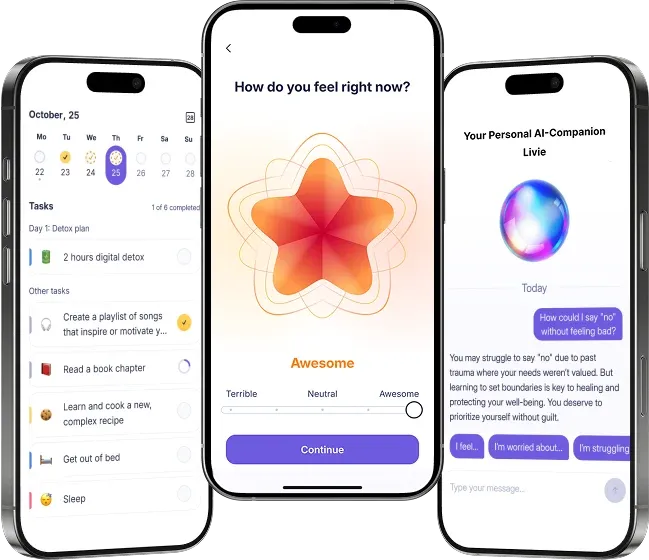
This level of specificity convinces your brain that the task is handled, allowing it to release that cognitive tension. Tools like Liven's smart Journal are perfect for this ritual, providing a dedicated space to capture open loops and create a concrete plan.
2. Start Small to Build Momentum
The Zeigarnik effect can also be a powerful tool against procrastination. The hardest part of any task is often just starting. By committing to work on something for just five minutes, you intentionally open a loop. Once that loop is open, your brain tends to keep the task on its radar - though for some, that pull toward completion can tip into anxiety rather than motivation.
A 2022 study on motivation found that making even little, initial progress toward a goal significantly increased participants' commitment to seeing it through. Taking that first tiny step creates the cognitive itch that your brain will want to scratch.
3. Schedule Your Breaks Intentionally
If you're studying or working on a complex problem, taking a break in the middle can improve your memory and problem-solving ability. The Zeigarnik effect suggests that an interrupted task stays more cognitively accessible. When you return, you'll find it easier to pick up where you left off.
However, the key is to make the break intentional and time-boxed. A five-minute walk is a strategic interruption; mindlessly scrolling for 45 minutes is an accidental derailment.
Living With Your Brain’s Need for Closure
The Zeigarnik effect is a fundamental part of being human. It’s a built-in reminder system that pushes us toward completion. But in a world of constant interruptions and endless to-do lists, it can easily become a source of chronic stress.
By understanding this cognitive quirk, you can shift from feeling haunted by unfinished business to feeling in control of your focus. It’s always about consciously managing your mental tabs, so you can be fully present for what matters most.
By regularly checking in with your emotional state using a tool like Liven's Mood Tracker, you can start to notice the direct link between your mental clutter and your overall well-being.
References
- Fishbach, A., & Woolley, K. (2021). The Structure of Intrinsic Motivation. Annual Review of Organizational Psychology and Organizational Behavior, 9(1), 339–363. https://doi.org/10.1146/annurev-orgpsych-012420-091122
- Mark, G., Gonzalez, V., Harris, J., & Bren, D. (2005). No Task Left Behind? Examining the Nature of Fragmented Work. https://ics.uci.edu/~gmark/CHI2005.pdf
- Masicampo, E. J., & Baumeister, R. F. (2011). Consider it done! Plan making can eliminate the cognitive effects of unfulfilled goals. Journal of Personality and Social Psychology, 101(4), 667–683. https://doi.org/10.1037/a0024192
Wendsche, J., Weigelt, O., & Syrek, C. J. (2026). Unfinished work tasks and work-related thoughts during off-job time: meta-analysis of the Zeigarnik effect in a work-recovery context. Anxiety, Stress, & Coping, 1–23. https://doi.org/10.1080/10615806.2026.2616302
FAQ: Zeigarnik Effect Examples
How do you pronounce Zeigarnik?
Is the Zeigarnik effect good or bad?
How can I stop the Zeigarnik effect from causing anxiety?
Does the Zeigarnik effect apply to relationships?
Why do I feel overwhelmed by my to-do list?