How to Set Boundaries With Your Boss?




Setting boundaries isn't easy, even with family members or friends. But when a person crossing our limits is your boss, things can feel tricky. That's pretty obvious from movies like Devil Wears Prada, and, sadly, many of us recognize parts of ourselves in the main character, even if we’d rather not. We might worry about seeming uncooperative, damaging our reputation, or making the situation a bit awkward. At the same time, constantly saying yes to everything can lead from feeling a quiet sense of resentment to eventually an excessive workload and burnout.
Learning to set boundaries while keeping things civil, or even positive, requires clear communication and openness. In this article, we'll discuss practical, realistic strategies for setting professional boundaries to help you build healthier relationships at work.
Key Learnings
- Understanding your own limits is the first step in setting boundaries, as it allows you to identify pressure points and define realistic expectations for your work.
- Communicating boundaries early helps maintain a positive working relationship while protecting your time.
- Starting with small boundaries and documenting agreements builds consistency and confidence.
Setting Boundaries With Your Boss
Get Clear About Your Own Limits First
Before you can communicate a boundary, you need to understand your limits. Many workplace frustrations arise because people automatically say yes and only realize later that they've taken on too much.
Take a moment to notice the situations that make you feel overwhelmed or frustrated. These patterns often reveal where a boundary might be needed.
Sometimes, checking in with yourself and logging your mood during work hours can be a good first step. For example, using tools like Liven's Mood Tracker can help you notice patterns and identify the moments when your discomfort signals that the lines have been crossed.

Some examples of crossed lines might be after-work messages or calls, constant urgent tasks that interrupt your main responsibilities, or extra duties that pile on top of your existing ones.
Once you identify these pressure points, try to define what a healthier limit would look like. For instance:
- Responding to non-urgent emails during work hours only
- Having clear deadlines before accepting a new task
- Limiting last-minute requests unless something is truly urgent.
It also helps to frame your boundaries around doing your best work rather than avoiding work. For instance, instead of thinking, “I can't handle more tasks,” you might frame it as, “I need realistic timelines to maintain quality.” This keeps the conversation focused on work, not you.
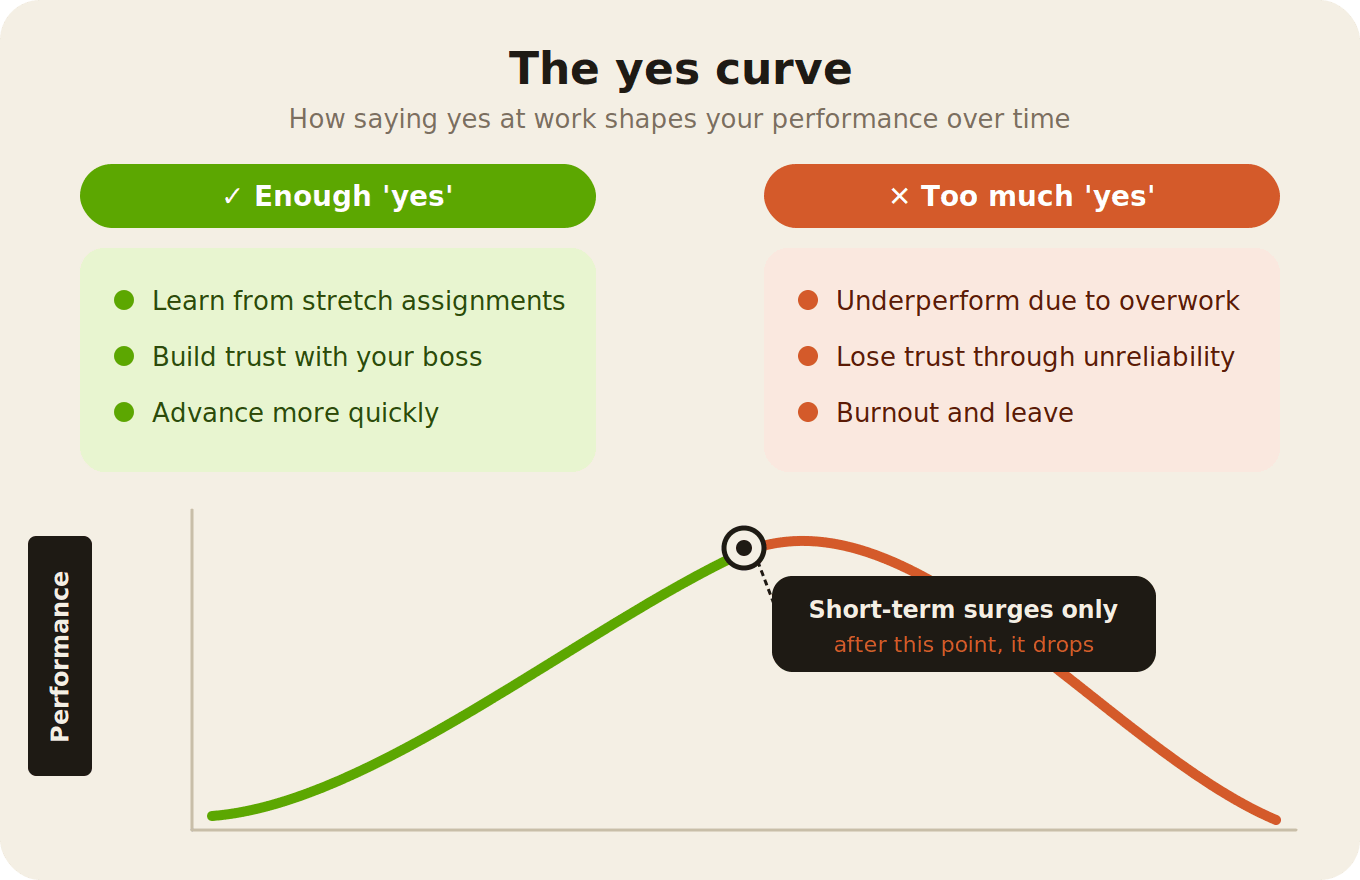
The chart below shows where that balance lives - and what happens when it tips too far:
Communicate Your Expectations
One of the easiest ways to set boundaries with your boss and avoid burnout is to address expectations before a problem grows bigger. We rarely set limits early, but it can backfire. Waiting until you're already overwhelmed often leads to emotional conversations or rushed explanations. You're in reaction mode not resolution mode. By contrast, early communication allows you to stay calm, practical, and focused on the work itself.
It also helps to use clear, neutral language. If you're not sure where to begin, explore another article with examples of boundaries for a healthier life. Instead of framing your boundary as a complaint, you can position it as a way to keep projects organized and realistic.
Think of a moment when a new task lands while you're already busy, you might say: “I'm currently focused on finishing the report due tomorrow. Would you like me to prioritize this new task instead?”
Another helpful strategy is to clarify communication habits early on. If your boss frequently sends messages after work hours, you might establish a simple expectation such as: “I'll make sure to respond first thing in the morning.”
Prioritize Your Tasks Together
Sometimes the real problem is treating everything as equally urgent, which leads to fear of missing deadlines and feedback anxiety.
When new tasks keep appearing on your plate, you can ask your boss to help clarify priorities. This approach keeps the conversation focused on organization and results, rather than on personal limits. It shows that you care about the team's performance but need clarity.
To illustrate, if your manager assigns a new task while you’re already working on something else, you might say, "I'm currently finishing the client report and preparing the presentation. Which of these should take priority?”
These questions shift the decision-making back to your boss while still showing that you're willing to contribute. In many cases, managers may not realize how full your workload already is until you lay it out clearly.
Start With Small Boundaries First
Setting boundaries with your boss can feel intimidating, especially if you're not used to doing it. That's why it can help to start small rather than making big changes all at once.
You might begin with:
- Taking your full lunch break instead of working through it
- Responding to non-urgent messages during work hours rather than immediately
- Asking for a realistic deadline when a task feels rushed
- Politely declining responsibilities that fall clearly outside your role.
These smaller actions may seem minor, but they send an important signal: your time and workload have limits.

Document Agreements
When discussing expectations or priorities with your boss, it can be helpful to follow up with a written confirmation. It helps you keep things organized and gives you something concrete to return to later if expectations start to shift. This also works in intense, busy workplaces where forgetting or losing sight of instructions or tasks is easy.
A quick recap message can make a big difference: "Thanks for clarifying the deadline. I'll plan to send the draft on X."
These short summaries create a shared reference point for both of you. If priorities change later, you'll have a clear record of what was originally agreed upon.
What to Do if They Cross Boundaries?
Even when you communicate clearly, boundaries may still get crossed from time to time. Workplaces are busy environments, and managers often juggle many responsibilities at once. That's why majority of employees experienced their managers ignoring boundaries. While it can be stressful, try to maintain a sense of calm and address the issue without letting frustration take over the conversation. You want to have "your conversation", not theirs, so it can really help to rehearse what you want to say.
Restate the boundary
If your boss forgets or ignores a boundary, the first step is simply to push back assertively but in a neutral, professional way. Consistency and repetition are what make boundaries stick. Think of it as a campaign, not a conversation!
Avoid overexplaining
When people feel uncomfortable setting boundaries, they often add long explanations or apologies. But too much justification can actually weaken the message. You don't need a complicated reason to protect your time. A short, clear response is usually enough.
Refer back to previous agreements
If the issue keeps happening, it can help to politely reference earlier conversations or documented priorities. You can say something like, "Since we agreed that X was the top priority today, I'll continue focusing on that and start this afterward."
Look for patterns
Occasional boundary slips are normal. But if your boss repeatedly ignores clear limits, such as expecting constant after-hours responses or continuously overloading your current workload, it may signal a broader communication issue. In those situations, it can help to request a short check-in conversation to revisit expectations and workload priorities.
Learning how to protect your peace while maintaining positive relationships with your colleagues can be a real test of your patience. If you need more insights, take a quiz and get your personalized plan to protect your peace at work.
Final Thoughts
Setting boundaries with your boss is a key step in safeguarding your time, energy, and overall well-being. Clear limits help you manage your workload effectively, stay focused, and maintain a sustainable approach to your work without sacrificing quality.
Start with small steps. Clarify your limits, communicate them early, and keep the conversation focused on priorities and quality of work. As you practice, these habits can help create a healthier rhythm where your workload feels more manageable. Without clear boundaries, work will nearly always expand to fill all available space. With them, it becomes something you can engage with more intentionally on your terms.
References
- Grotto, A. R., Mills, M. J., & Eatough, E. M. (2021). Switching gears: A self-regulatory approach and measure of nonwork role re-engagement following after-hours work intrusions. Journal of Business and Psychology, 37(3), 491–507. https://doi.org/10.1007/s10869-021-09754-3
FAQ: How to Set Boundaries with Your Boss
Why is it important to set boundaries with my boss?
How can I communicate boundaries without upsetting my boss?
What if my boss keeps assigning tasks after hours?
Should I say no to extra work to set a boundary?
How can I enforce boundaries without coming across as uncooperative?
What are the small boundaries I can start with?
How do I handle repeated boundary violations?