



You know it's hurting you. Maybe even your closest friend has said so out loud. And still, when their name lights up your phone at 11 PM, you open it. Maybe you go back. Maybe you don't, and then you spend the next 3 days wondering if you should have.
That pull is what a trauma bond feels like from the inside, and it's the part that makes leaving so hard. Learning how to break trauma bonds is a slow accumulation of small decisions, each one tilting the floor a little more back toward you. This piece walks through how to recognize the pull and steady the ground under you.
Key Learnings:
- Trauma bonds grow inside cycles where harm and care come from the same person, and the unpredictability deepens the attachment instead of breaking it.
- Breaking the pattern happens in pieces: noticing the cycle, creating distance where you can, riding out the emotional waves when contact changes, and slowly trusting your own read of things again.
- Healing needs safe boundaries, people who show up consistently, and a pace that honors both your emotional capacity and your safety.
How to Break Trauma Bonds and Heal Your Heart
Healing from a trauma bond happens in pieces, and what works will look different from one person to the next. The steps below are the ones that tend to do the heaviest lifting. Use them in whatever order fits where you are right now.
Name Trauma Bonding for What It Is
Trauma bonds are often reinforced through repeated cycles. There may be moments of conflict, emotional pain, or distance, followed by reassurance, affection, or repair. A key step is beginning to recognize that the pattern may be unhealthy for you.
To start bringing awareness to this dynamic, you might try:
- Writing down recurring patterns you notice
- Checking in with your emotional state during and after interactions
- Noticing inconsistencies between what is said and what is done
- Validating your experience instead of explaining it away or minimizing it.
If this feels uncomfortable, that's completely understandable. Naming the pattern can bring up mixed emotions, especially if part of you still feels connected or hopeful. Noticing patterns in your behavior and relationships is one of the first steps toward healing from different types of damage, including childhood and romantic trauma. By becoming more aware, you already take a meaningful step forward.
Limit Your Contact
Creating distance in a trauma bond can feel difficult, especially when the connection still carries emotional weight. Although in many situations, many people find that reducing or eliminating contact is helpful when it is safe and possible. Sometimes you might not feel ready, or you may still be dependent on them in a way that makes it necessary to maintain some semblance of connection.
Even limiting texting or calling hours with your family members, or deciding when to engage (for example, during heated arguments or late at night), can help you re-establish inner peace and boundaries. If you share social media channels, it might be a good idea to limit your exposure at least on certain platforms.
Prepare for Bond Disruption
Leaving a relationship built on trauma bonding is often the hardest part. The pattern gets reinforced through intermittent cycles of harm and reassurance, which strengthen the attachment in ways that make separation feel almost unbearable.
When contact is reduced or cut, the body often goes through something physical. You might feel restless, foggy, or wired in a way that doesn't match the situation. You might catch yourself reaching for your phone at 11 PM, certain that one more conversation would explain everything. The body is registering attachment disruption and a stress system that's still set to alert. The intensity says nothing about your strength or judgment. Coercive control and intimate partner violence are linked with a higher risk of depression and anxiety, and the felt experience of pulling away often looks similar.
- Intense desire to reconnect
- Emotional instability
- A sense of guilt
- Depression
- Anxiety and restlessness
- Sleep disturbances
- Appetite change
- Fatigue
- Physical pain.
Rather than hoping these symptoms won't appear, prepare for them by writing down your reasons to avoid them, redirecting your urges into other actions, and limiting exposure to reminders of this person. These reactions can feel strong, but they tend to pass with time. Don't judge these reactions; allow yourself time to adjust to this change.
Rebuild Trust in Yourself
One of the more subtle effects of a trauma bond is self-doubt. You might find yourself questioning your memory, your reactions, or whether something was really that bad. Rebuilding trust in your own perception is an important part of breaking that pattern, and it will help you develop post-traumatic resilience and growth. You deserve to reconnect with your own experience without others telling you that it's not how it felt.
You could start with:
- Keeping a simple record of interactions to compare what happened with how it's later described
- Noticing moments when your boundaries feel crossed, even if you can't fully explain why
- Paying attention to repeated feelings, like confusion, tension, or emotional exhaustion.
It's normal if clarity comes slowly. Trusting yourself again is re-learning patterns that once felt very real, and it's a challenging process. However, you have the resources and power to restore reality.
Lean on Social Support
Trauma bonds often form alongside isolation tactics, where contact with friends and family can become restricted over time in some relationships. When you try to break a trauma bond, it might feel isolating in a different way. However, having social support is one of the strongest factors that help survivors leave abusive relationships and rebuild afterward.
Friends, family members, or peers who are consistent, nonjudgmental, and supportive can help you process and validate your feelings. Sharing your experience with someone who listens and reflects on what they see can clarify patterns in the relationship. Simply having someone check in on you can strengthen your sense of safety and stability.
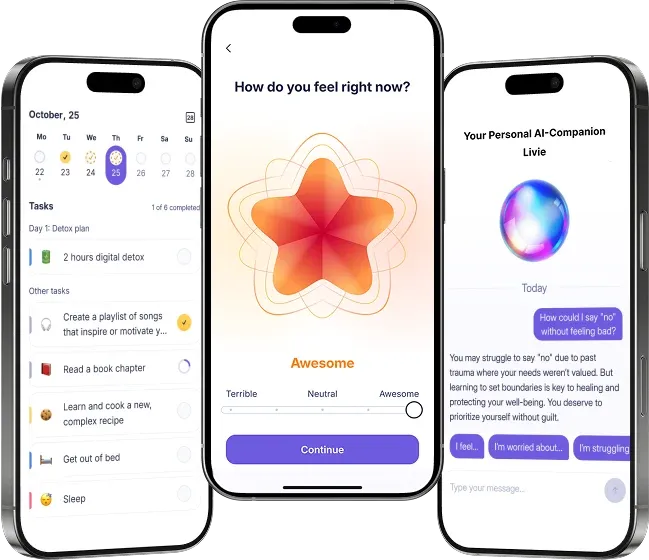
Sometimes, we need more structure to know how to protect ourselves, so we can learn to trust others again. If you feel ready to explore this path, you can take a quiz and get your personalized well-being management plan.
Consider Professional Support
Sometimes social support alone isn't enough, and working with a trained mental health professional can offer additional structure, guidance, and emotional support while you begin to untangle a trauma bond. Therapy can be especially helpful in the context of abusive or high-control relationships and recovery. Trauma-informed professionals can support emotional regulation, coping skills, and self-understanding while helping reduce self-blame and creating a more stable space to process what you've been through.
It might be worth reaching out to a therapist, counselor, or trauma-informed provider if you notice any of the following:
- You feel unsafe or concerned that the other person may escalate their behavior.
- Emotional responses feel overwhelming or hard to manage.
- You struggle to set or maintain boundaries.
- You carry persistent self-blame, guilt, or shame tied to the relationship.
- The relationship is affecting your work, school, or social functioning.
- You want structured support in creating distance or rebuilding trust in yourself.
Moving Forward at Your Own Pace
Breaking a trauma bond is a deeply personal journey, and it's okay for progress to come in small, careful steps. Each moment you notice a pattern, set a boundary, or reach out for support is a sign of your resilience and healing you are slowly achieving.
You have the capacity to build and reconnect with your inner resources, even if it doesn't always feel that way. And, despite what it might seem, healing often begins when you start deciding how and when to take steps that feel safe for you. By honoring your feelings and seeking help when you need it, you are gradually building new patterns that shape your life over time.
References
- Heron, R. L., Eisma, M. C., & Browne, K. (2022). Why do female domestic violence victims remain in or leave abusive relationships? A qualitative study. Journal of Aggression, Maltreatment & Trauma, 31(5), 677 to 694. https://doi.org/10.1080/10926771.2021.2019154
- Kassing, K., & Collins, A. (2026). "Slowly, over time, you completely lose yourself": Conceptualizing coercive control trauma in intimate partner relationships. Journal of Interpersonal Violence, 41(3 to 4), 662 to 684. https://doi.org/10.1177/08862605251320998
- Lesiak, M., & Gelsthorpe, L. (2025). The invisible abuser: Attachment, victimization, and perpetrator perception in repeat abuse. Violence Against Women. https://doi.org/10.1177/10778012251379423
- Lohmann, S., Cowlishaw, S., Ney, L., O'Donnell, M., & Felmingham, K. L. (2024). The trauma and mental health impacts of coercive control: A systematic review and meta-analysis. Trauma, Violence, & Abuse, 25(1), 630 to 647. https://doi.org/10.1177/15248380231162972
- Spearman, K. J., Vaughan-Eden, V., Hardesty, J. L., & Campbell, J. (2023). Post-separation abuse: A literature review connecting tactics to harm. Journal of Family Trauma, Child Custody & Child Development, 20(2), 134 to 155. https://doi.org/10.1080/26904586.2023.2177233
FAQ: How to Break Trauma Bonds
What is a trauma bond?
Why is it so hard to leave a trauma bond?
Can trauma bonds happen in any type of relationship?
What are the early signs that a trauma bond exists?
How can social support help break a trauma bond?
When should I consider professional help?
Is it possible to fully heal from a trauma bond?