Headway vs. Grow Therapy: Which One Is for You?

Finding the right therapist takes time, but it is ultimately worth it. “If someone had told me after that first therapy visit that I’d one day be able to hold my head high against whatever experiences came my way —that I would be able to navigate the mental and emotional ups and downs of life without lashing out self-destructively— I’d have laughed.” This is an inspirational admission from Sarah Williams, a guest author for the National Alliance on Mental Health.
Despite the benefits of therapy, many people never reach out. Some of the most common reasons for it are cost and convenience. That’s where online platforms get their chance to shine. In 2025, the global online therapy services market size is projected to reach around $4.39 billion.
Headway and Grow Therapy are two popular therapist network platforms that help users connect with mental health providers, manage insurance billing, and alleviate the administrative burden for therapists and psychiatrists. Today, we’ll explore both, cover their strengths and areas for improvement, and discuss how your goals align with each.
Key Learnings
- Headway excels at insurance management and large therapist availability, while Grow Therapy shines with Medicare/Medicaid coverage and built-in telehealth tools.
- Headway is best for individuals seeking seamless insurance management and a broad provider network, particularly those with private insurance.
- Grow Therapy is ideal for users seeking greater autonomy and more flexible coverage options, including those with public insurance.
Headway Overview
Headway was founded by Andrew Adams, Daniel Ross, Kevin Chan, and Jake Sussman. Adams emphasizes that the key motivator for the creation of this platform was the inability to afford and find providers when he needed them most: “I couldn’t find a therapist that I could afford because 70% of therapists don’t accept insurance.” He argues that individual providers find accepting insurance complex because the process wasn’t designed for them. Between the need to work with clients who have various health plans and the need to handle their workload across different platforms, they try to find a way to do both.
However, because Headway helps therapists handle insurance documents, users can access a large number of specialists who, in fact, don’t accept insurance on other platforms. The goal of this insurance billing platform is to help people find a provider who accepts their insurance, where they need it, and when they need it.
Headway: Features, Strengths, and More
Headway has established itself as a reliable partner for people seeking affordable, high-quality therapy. Operating in most states, the company has significantly expanded its reach since its inception.
Features
- 60k+ therapists available (speaking more than 50 languages)
- 70+ insurance plans
- Easy insurance credentialing
- Dashboard with benefits, appointments, billing, messages, and FAQ sections
- Therapists’ consent and policies forms, documents, and data for quicker processing
- Payment and billing
- Appointment reminders
- Scheduling
- Calendar synchronization
- In-person and virtual appointments.
Strengths
- A large network of therapists in multiple states
- Most insurance plans covered
- Explanation and help with insurance plans and consent forms
- Built-in EHR features
- Flexibility with appointment options
- Ease of booking
- Cost efficiency
- Language inclusivity.
Things to Consider before Trying
- Some clients report delays in support or billing clarification
- Some claim to face extra charges due to difficulty with insurance verification
- Does not support Medicare and Medicaid.
🤔Did you know? On several platforms, therapists emphasize that Headway does not require them to share session notes with their system for payment, whereas Grow does.
Rating and Customer Feedback
Headway has a high rating on Trustpilot, with a score of 4.0 out of 5. Furthermore, it boasts 509 verified reviews. Most users praise the service’s accessibility, customer service, and timing.
How Does Headway Work?
After you have logged in, you have access to the information necessary to set up your account. Before using the platform to its full potential, you will be asked to add a payment method and to view and agree to multiple privacy policies.
Finding a Therapist
- You can start the search from your account page or the central website page by entering your ZIP code and insurance information. While insurance is optional, adding it from the get-go will already filter out professionals who don’t accept your provider.
- After providing this information, you’ll be sent to the next preview page.
- You will be asked to specify who will receive care. On the same page, you will choose whether you need talk therapy, medication therapy, both, or if you’re not sure.
- Then, you give details about your gender and ethnic preferences for a therapist.
- After that, you choose the best way to meet. Headway offers online and offline options.
- Next, you add details about the concern or subject you would like to focus on.
- Finally, you can incorporate more information about what you search for in a professional.
After you finish filtering, you can review the matches and read about each professional. You’ll see the matching qualities in bold. Additionally, each therapist has a brief section detailing their personality/approach, such as warm, open-minded, or direct. The map will show the approximate locations of the therapists relative to the previously identified ZIP.
You can also access more filters to account for age, day of the week, and time of day, language, treatment approach, and more. Headway also highlights therapists who offer 15-minute free sessions to meet a client and see if there’s a match in communication/vision/vibes.
It's particularly crucial because studies show that a personality match between a client and a provider improves therapy outcomes. This helps you make an informed choice. When viewing brief provider info, you will see the next available appointment date, which is important if you need an urgent meeting.
Grow Therapy Overview
Grow therapy was founded by Alan Ni and Jake Cooper. Similar to Adams, Cooper shares his belief in the need to simplify the process of finding therapists for clients while also creating a suitable platform for mental health professionals: “We founded Grow because our friends were struggling with the complexity of starting their own practices, and our loved ones were priced out of care due to a lack of in-network options.”
People with various health plans often require psychological help, but it isn’t always easy to find the right platform that suits their budget and state. Cooper explains that many people seek a flexible solution to find providers without waiting for months, which is especially troubling if a person requires more urgent support. It also aims to create a supportive and growing community.
Features
- 17k+ therapists
- 70+ insurance health plans
- Quick insurance credentialing
- Dashboard with benefits, appointments, billing, messages, and FAQ sections
- Access to toolkits in the client portal
- Payment and billing
- Appointment reminders
- Scheduling
- Calendar synchronization
- Therapists’ consent and policies forms, documents
- In-person and virtual appointments.
Strengths
- An extensive network of therapists in multiple states
- 70+ insurance health plans
- Covers Medicare and Medicaid
- Language inclusivity
- Built-in EHR features
- Flexibility with appointment options
- Cost efficiency
- Offers a community portal
- Built-in telehealth video platform.
Things to Consider before Trying
- Fewer therapists due to longer verification
- Some users report customer service inefficiencies
- Some claims suggest unclear deductibles for insurance.
Rating and Customer Feedback
Grow Therapy has a remarkably high rating on Trustpilot — 4.7 out of 5. Users appreciate the intuitive design, ease of use, and additional materials that improve their experience.
How Does Grow Therapy Work?
Grow Therapy’s dashboard is quite minimalistic. Before you book an appointment, your profile doesn’t have much information. Set up a meeting or call (it is easy since the website has an intuitive interface), and then you will be directed to a more detailed account setup.
Finding a Therapist
- While you can start your search from either the account page or the company’s home page, the former is easier since it doesn’t require you to log in again.
- From the first page, you can choose between virtual or in-person care. Here, you will also be able to add state, insurance, and topics to address.
- Then, you are directed to a page where you can view your initial results and refine them by adding more details, such as therapy type, treatment method, your age, preferred gender, and the identity of your provider. Just like with Headway, you will be able to choose the time and date. Grow Therapy has a small checkbox “Available in 72 hours” for the fastest appointment arrangement.
Which Platform Fits You Better?
Both Headway and Grow Therapy are excellent platforms with very similar features. Each of them is free to join and work with similar insurance providers. Not sure which one is better?
Choose Headway if you want:
- Seamless insurance management. Headway excels at handling paperwork and billing directly with insurers. It makes things easy and takes the burden of document management off your shoulders. Just pick the basics, and you’re good to go.
- Wider provider availability. With over 60,000 therapists nationwide, it’s better suited for users who want more choice or need bilingual or multicultural options.
- Quick onboarding for insured clients. It is especially beneficial for people using private insurance but not eligible for Medicare or Medicaid.
Choose Grow Therapy if you want:
- More autonomy in choosing your therapist. Grow Therapy’s directory gives detailed therapist bios and includes ratings for many specialists. This provides a more personalized view of each person, making it easier to choose someone whose personality aligns with yours.
- Coverage flexibility. In addition to private insurance, this service supports Medicare and Medicaid, which are regular concerns among many clients. So, if you have a public insurance plan, it’s your pick.
- Built-in telehealth and community tools. Grow’s integrated video platform and resource portal make it more interactive and generally integrated.
How Liven Complements Therapy
Platforms like Headway and Grow Therapy provide access to mental health professionals to direct your healing and in-depth treatment. Therapy is a key approach to treating anxiety, managing ADHD, or healing from grief.
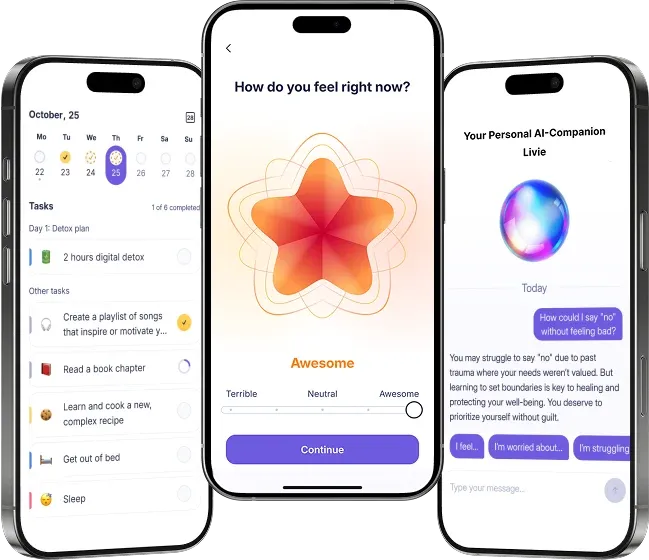
Liven, a self-discovery companion, complements both by encouraging self-discovery and providing practical tools for change. One of the most critical moments in growth following therapy is ensuring the new strategies stick. Liven’s tools make it happen:
- Mood Tracker can serve as a valuable reference for you and your therapist to track and monitor your emotional patterns.
- Routine Builder enables you to develop new habits.
- Bite-sized courses feature scientific insights related to your concern.
- An individualized approach examines what strengths you can use to stay on track. For example, you can take a quiz and get your personalized dopamine management plan to change routines.
- An AI companion can brainstorm new ideas, role-play new communication scenarios, and support you between sessions.
- A to-do list enables you to track your progress and maintain your self-care routines.
- Mental health and personality tests can help you stay informed about your mental and emotional state.
- Journal helps you keep reflections before and after sessions in one place.
- Articles with relevant information and useful content expand your knowledge of psychology.
A therapist can guide you toward understanding yourself, and Liven helps you keep exploring at your own pace. Regular daily practices are key to coping with depression, anxiety, and other mental health disorders.
Our team believes that healing begins with understanding the values we appreciate, the things that hold us back from moving forward, and the inner force we can uncover. By using what you have learned in therapy and forming a system of tools to maintain your efforts on a long-term basis, you develop a continuous dialogue with yourself.
What Your Mental Health Needs Best
Whether you choose Headway or Growth Therapy, it’s the connection with a provider that matters most. Dedicate time to reviewing both options if you’re unsure, and choose the one with professionals who best fit your needs.
If you feel like the first session didn’t work out quite as well as you hoped, you can always try other providers before settling on the final one. Regardless of the platform, the connection you will establish with this person will be unique, so be patient with yourself and take some time before making a choice.
References
- Adams, A. (2020, November 18). Introducing Headway. Headway. https://headway.co/blog/series-a-announcement
- Grow Therapy - 2025 company profile, team, funding & competitors. Tracxn. (n.d.). https://tracxn.com/d/companies/grow-therapy/__Jgzd-gCt4roTSkuUCfH-arN4r01bA3I89mxZSKM-dlA
- Headway - 2025 company profile, team, funding & competitors. Tracxn. (2025). https://tracxn.com/d/companies/headway/__dDPWKU32RSk_Srv-8gIw97NY7cjlJTOGHjrR8NJItic
- Jake Cooper of Grow Therapy - planting the seeds for affordable mental healthcare. Billion Success. (2021, April 4). https://billionsuccess.com/jake-cooper/
- Online therapy services market size, trends, AI integration and companies. Towards Healthcare. (2025). https://www.towardshealthcare.com/insights/online-therapy-services-market-sizing
- Samokhval, V. (2025a, May 27). How therapy helps treat anxiety disorders: Types and benefits. Liven. https://theliven.com/blog/wellbeing/anxiety/how-therapy-helps-treat-anxiety-disorders-types-and-benefits
- Samokhval, V. (2025b, September 12). Coping with depression: Simple strategies for daily life. Liven. https://theliven.com/blog/wellbeing/depression/coping-with-depression-practical-strategies-for-everyday
- Shir, R., & Tishby, O. (2023). Therapy matchmaking: Patient-therapist match in personality traits and attachment style. Psychotherapy Research, 34(3), 353–365. https://doi.org/10.1080/10503307.2023.2195054
- Williams, S. (2020, April). How therapy helped me manage trauma. National Alliance on Mental Illness (NAMI). https://www.nami.org/trauma-and-stressor-related-disorders/how-therapy-helped-me-manage-trauma/
- Zhu, J. M., Renfro, S., Watson, K., Deshmukh, A., & McConnell, K. J. (2023). Medicaid reimbursement for psychiatric services: Comparisons across states and with Medicare. Health Affairs, 42(4), 556–565. https://doi.org/10.1377/hlthaff.2022.00805