Dopamine Addiction Type Test: Why You Crave What You Crave



It’s midnight. You know you should sleep, but the next hit of something interesting, funny, or outrageous feels just a swipe away. So, you keep scrolling because it feels good. Why? Because your brain’s reward system is chasing a hit of dopamine.
Learn about your unique patterns with our dopamine addiction type test and what can help change them.
Key Learnings
- Dopamine is a naturally occurring neurotransmitter that plays a key role in motivation, pleasure, and the brain’s reward system.
- Each dopamine addiction type has different triggers and requires different strategies.
- Dopamine-driven habits do not equal substance use disorder.
Are You Addicted to Dopamine?
Dopamine addiction means compulsive behaviors driven by your reward system. Think of video games, social media, shopping, or gambling, which are all certain behaviors designed to make your brain’s reward pathways release too much dopamine at once.
Repeated exposure leads to weaker dopamine receptors, so you need more dopamine to feel the same level of motivation or pleasure.
These addictive behaviors create patterns where your reward system keeps seeking stimulation, even when there are negative consequences, because instant gratification feels so good to your brain.
How Substance Addiction and Dopamine-Driven Habits Differ
- Substance use disorder and substance abuse involve physical dependence caused by drugs or alcohol that alter the brain’s reward system and dopamine levels.
- Dopamine-driven, aka addictive, habits are behavioral patterns that follow the same reward loop: “anticipation, dopamine release, craving”, but without a substance that causes a full-blown addiction.
How Rare Is Your Dopamine Addiction Type: Test
❗Disclaimer: This addictive personality quiz isn’t a clinical exam and is designed for educational purposes only.
For each question, choose one answer: A, B, C, or D. Keep track of how many times you pick each letter.
1. When you finally get free time, you usually…
- A: Look for something exciting or new
- B: Try to be productive or improve something
- C: Do something comforting or familiar
- D: Escape into screens or distractions
2. What pulls you in the most?
- A: Novelty, risk, intensity
- B: Progress, goals, achievement
- C: Relief, calm, emotional safety
- D: Forgetting stress or boredom
3. When stressed, your first instinct is to…
- A: Change things up or chase stimulation
- B: Work harder or push through
- C: Soothe yourself
- D: Avoid or distract
4. Which feels hardest to resist?
- A: Thrill-seeking or impulsive plans
- B: Overworking or perfectionism
- C: Food, comfort routines, binge-watching
- D: Video games, endless feeds
5. When something feels boring, you…
- A: Get restless fast
- B: Force yourself through it
- C: Feel drained or emotionally flat
- D: Look for instant tech stimulation
6. Your dopamine spikes most when…
- A: You’re exploring or trying something new
- B: You complete or win something
- C: You feel emotionally settled
- D: You disconnect from responsibility
7. If a habit starts causing negative consequences, you…
- A: Tell yourself you’ll “switch it up later”
- B: Push harder to regain control
- C: Feel guilty but keep using it to cope
- D: Numb out and avoid thinking about it
8. Your biggest struggle with balance is…
- A: Too much novelty, not enough follow-through
- B: Too much pressure, not enough rest
- C: Relying on comfort for regulation
- D: Living in distraction loops
Scoring Your Results
- Mostly A’s → The Seeker
- Mostly B’s → The Achiever
- Mostly C’s → The Soother
- Mostly D’s → The Escapist
Most addictive personality types overlap. That’s why it’s okay if you see yourself in more than one type.
An addictive personality means having certain personality traits that make someone more prone to addictive behaviors and obsessive tendencies.
Dopamine Addiction Types: What They Look Like and What Helps
Type A: The Seeker
The Seeker’s brain’s reward system responds strongly to new or unpredictable rewards. This type shows up frequently in creative fields, among entrepreneurs, and among people with high sensation-seeking personality traits.
How the Seeker Type Shows Up
| Common Behaviors | Strengths | When Balance Slips |
| Chasing novelty and excitement | Creativity and innovation | Restlessness and impulsive decisions |
| Thrill-seeking and risk-taking | High energy and curiosity | Difficulty with follow-through |
| Jumping between interests | Adaptability | Overstimulation and burnout |
What Helps the Seeker
1. Schedule novelty instead of chasing it
Plan new hobby sessions, small challenges, or intense focus activities to channel impulsive behavior safely.
2. Use short dopamine resets, not extremes
A dopamine detox (30–90 minutes without stimulation) is more effective than total deprivation.
3. Channel risk into safe challenges
Cold exposure, creative sprints, or moderate physical activity provide natural rewards without negative consequences or increased risk of mental health issues.
Type B: The Achiever
Achievers get dopamine hits from progress and completion. The Achiever is very common in modern work culture, especially among high performers.
How the Achiever Type Shows Up
| Common Behaviors | Strengths | When Balance Slips |
| Overworking and pushing through | Discipline and focus | Burnout and chronic stress |
| Chasing goals and metrics | Reliability | Anxiety and perfectionism |
| Difficulty resting | Strong work ethic | Ignoring physical and emotional needs |
What Helps the Achiever
1. Make recovery a part of your personalized dopamine management plan
Treat rest, sleep, and breaks as markers of progress.
2. Challenge all-or-nothing thinking
Tools from cognitive behavioral therapy help soften rigid standards and prevent burnout.
3. Track mood alongside output
Notice emotional trends to catch stress before it starts affecting your physical health and leads to mental health conditions.
Type C: The Soother
Soothers emotionally regulate with comfort behaviors that increase dopamine release. This reduces stress signals, which explains why such a particular activity feels stabilizing. This is one of the most common dopamine patterns, particularly during stressful life phases, transitions, or emotional fatigue.
How the Soother Type Shows Up
| Common Behaviors | Strengths | When Balance Slips |
| Emotional eating | Emotional awareness | Over-reliance on soothing habits |
| Comfort scrolling | Empathy | Avoidance of difficult emotions |
| Compulsive shopping | Self-protection | Guilt or shame; low self-esteem |
What Helps the Seeker
1. Expand your regulation toolkit
Add activities that support healthy brain function, like stretching, music, warm showers, or brief walks, to your personalized plan for a calmer mind and a more balanced lifestyle.
2. Practice distress tolerance skills
Techniques from therapies like Cognitive or Dialectical Behavior Therapy help you stay present.
3. Replace shame with curiosity
Self-criticism increases stress and reinforces dopamine-driven loops.
Type D: The Escapist (Avoidance-Driven Dopamine)
Escapists get dopamine relief from avoiding discomfort. Over time, avoidance itself becomes the reward, which reinforces these addictive behaviors. This pattern has grown rapidly with digital environments. That’s why we can see it so often in younger adults, where screen use is high.
How the Escapist Type Shows Up
| Common Behaviors | Strengths | When Balance Slips |
| Procrastination | Imagination | Avoidance of responsibilities |
| Excessive video games or streaming | Curiosity | Disconnection |
| Too much social media | Adaptability | Growing stress |
What Helps the Escapist
1. Use intentional escape windows
Decide “I’ll play video games for 30 minutes after dinner.”
2. Focus on start-only goals
Tell yourself: “Open the document.” Not “finish the task” because the first action is simple, therefore, doable compared to completing the entire task.
3. Practice urge surfing
A Cognitive Behavioral Therapy technique: notice the urge, wait 10 minutes, watch it pass.
Understanding Your Brain’s Reward Patterns
Dopamine-driven behaviors reflect how your brain chemistry, life stressors, and your own personality traits interact over time. Luckily, the right tools can help you shift toward healthier habits to maintain balance.
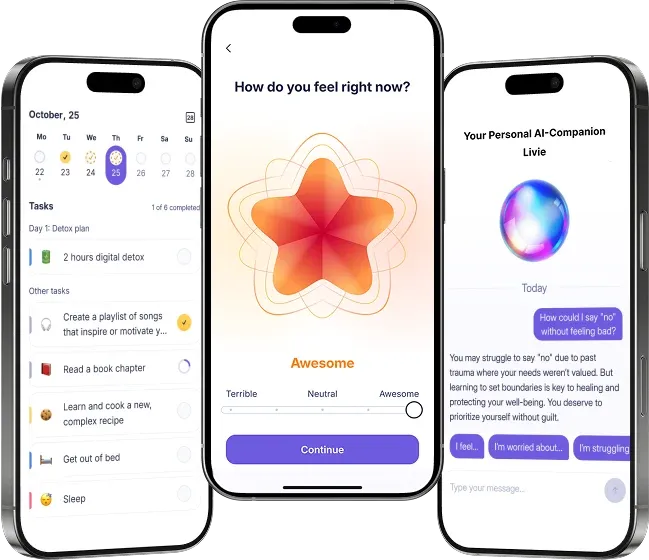
If you’d like support as you explore your dopamine patterns, continue your self-discovery journey with Liven. Try the Liven app (Google Play or App Store), read more science-backed guidance on the Liven blog, or take Liven’s free wellness tests to better understand your current mental health state.
References
- Costas-Ferreira et al. (2024). Alcohol, caffeine, and nicotine combined in releasing dopamine. Biomedicines, 12(11), 2591. https://doi.org/10.3390/biomedicines12112591
- Plaisance et al. (2024). The role of dopamine in impulsivity and substance use behaviors. Health Psychology Research, 12, Article 125273. https://doi.org/10.52965/001c.125273
- Zald, D. H. (2023). The influence of dopamine autoreceptors on temperament and addiction risk. Neuroscience & Biobehavioral Reviews, 155, 105456. https://doi.org/10.1016/j.neubiorev.2023.105456
- Freeman et al. (2024). Dopamine and entrepreneurship. Journal of Business Venturing Insights, 21, e00461. https://doi.org/10.1016/j.jbvi.2024.e00461
FAQ: Dopamine Addiction Type Test
How does substance abuse disorder differ from dopamine addiction?
How to manage addictive behaviors?
What influences addictive behaviors?