What is the Best Parenting Style? A Guide for Modern Parents
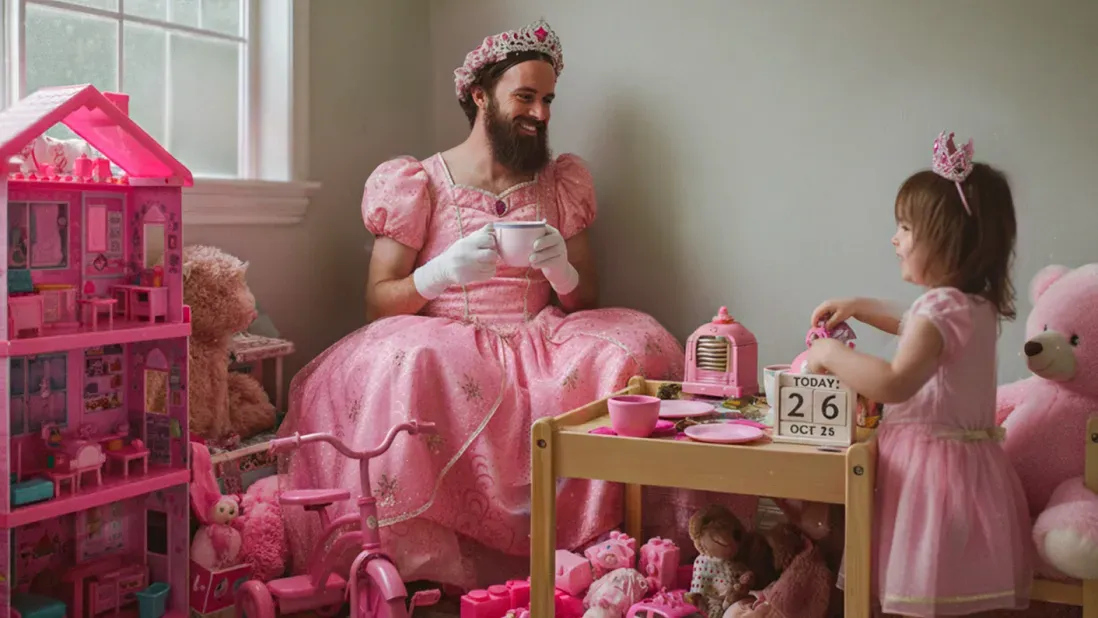


It’s so natural to wonder “What is the best parenting style for my kid?” because the way we raise children can significantly impact their emotional regulation, social skills, and long-term mental health.
This guide will help you understand the main parenting styles, see how they affect children’s behavior and development, and get research-backed insights for raising happy and resilient kids.
What Are Parenting Styles?
Parenting style refers to the approach a parent uses to raise their child. A parenting style includes the way a parent communicates with the child, sets boundaries, rules, and expectations, as well as how they respond to the child's needs.
The “parenting style” theory was developed by psychologist Diana Baumrind, who spent years observing caregiver-and-child interactions and, based on those, identified four core parenting styles: authoritative, authoritarian, permissive, and neglectful.
Key Learning
- Traditionally, there are 4 parenting styles with new ones emerging.
- Authoritative parenting combines warmth and clear boundaries.
- Unhealthy parenting styles, namely, neglectful, authoritarian, and inconsistent permissive, carry various risks.
What Is the Best Type of Parenting Style?
Here are the 4 core parenting styles, plus 3 additional styles that emerged later but are widely practiced today.
1. Authoritative Parenting Style
Authoritative parenting style is actually the most common parenting style today, across different cultures globally, which demonstrates the perfect balance of emotional support and rules and expectations.
Regardless of faith or culture, authoritative parenting is the most effective parenting style in striking a perfect balance between warmth and control
According to the research, authoritative parenting helps teens be more curious, responsible, friendly, and kind. According to another study, students raised with authoritative parenting had higher self-esteem and resilience.
Interestingly, children raised under warm but structured parenting styles have higher emotional intelligence and are less likely to bully others.
2. Authoritarian Parenting Style
Historically, an authoritarian parenting style was prevalent in many societies where the environment heavily emphasized obedience and achievement-oriented values. As a style, it relies on rules, strict discipline, and unquestioned authority.
Children raised under the authoritarian parenting style often grow up with a high level of worry and emotional problems.
In addition, kids and teens who experience parental rejection and abuse (which this parenting style often shows) are highly likely to feel guilt and shame and experience low self-esteem and difficulties when forming relationships as adults.
Authoritarian parents experience more burnout compared to those using authoritative or permissive styles.
3. Permissive Parenting Style
Permissive parenting gained popularity as a response to overly strict parenting. It reduces control and the need for structured environments, heavily prioritizing freedom of choice. The problem? Children often lack proper guidance as there are no clear expectations and boundaries.
Permissive parenting can increase worry, which, in turn, can lead to increased problematic behaviors in preschool kids. Teens with permissive parents have poor self-regulation skills and are more likely to engage in risky behaviors and showcase lower academic performance.
Children raised under permissive parenting are more likely to show narcissistic traits.
4. Neglectful Parenting Style
Neglectful or uninvolved parenting style comes with minimal nurturing and often emerges under extreme stress, mental health challenges, or lack of resources.
Sometimes, neglectful parenting occurs when a parent meets a child's basic needs but fails to offer proper emotional support.
Kids of neglectful parents grow up with low self-confidence because when parents are cold or absent, teens may feel unloved and unimportant. Most of them lack proper emotional regulation skills and effective coping strategies later as adults.
Kids who grow up with neglectful parents are most likely to perform poorly at school.
5. Helicopter Parenting
Helicopter parents closely monitor every aspect of a child’s life. They often step in to solve problems, trying to protect their children from failure. Some studies show that helicopter parenting can increase anxiety and depression in kids. This happens because this style limits a kid's autonomy.
It’s also harder for kids to develop self-regulation and resilience when parents overmanage decisions and shield children from manageable stressors that support healthy coping skills.
6. Free-Range Parenting
The concept was recently developed by American blogger Lenore Skenazy. In her TED Talk, she explains why kids need more freedom to feel less nervous nowadays.
Unlike helicopter parents, those who practice free-range parenting give their kids more age-appropriate freedom to make decisions and explore the world. For instance, a free-range parent might let their child manage their own homework schedule or play outside without constant supervision.
Kids who’ve grown up under free-range parenting are better problem-solvers and showcase higher confidence and resilience as adults.
6 Parenting Styles Compared
| Parenting Style | Main Idea | How Parents Feel | Long-Term Outcomes for a Child | Everyday Example |
| Authoritative | Love + clear rules | Emotionally responsive, generally consistent, reflective | Strong self-esteem, emotional balance, healthy relationships | Child is upset about bedtime; parent listens, explains, and still sticks to the routine |
| Authoritarian | Rules matter most | In control but stressed or distant | Low self-esteem, trouble trusting others | Child talks back; parent punishes without discussion |
| Permissive | Love without limits | Loving but overwhelmed | Poor self-regulation, risky behaviors, and increased risk of entitlement-related attitudes | Child refuses bedtime; parent gives in to avoid conflict |
| Neglectful | Child is on their own | Disconnected or emotionally unavailable | Emotional struggles, difficulty forming relationships | Child is upset; parent is busy or dismissive |
| Helicopter Parenting | Stay involved at all times | Anxious, overprotective | Worry, low confidence, weak coping skills | Parent emails the teacher over a small grade issue |
| Free-Range Parenting | Independence builds confidence | Trusting, observant | Resilience, strong problem-solving skills, and independence | The child walks to a nearby friend’s house after practicing the route |
How to Adjust Your Parenting Style: 3 Core Rules
These 3 reminders will help you stay more grounded on your journey to healthier parenting patterns.
Parenting styles are way more mixed than we think
Let’s say you decide to stick to authoritative parenting because it’s a strong answer to the good old “what is the best style of parenting?” question. Even then, your parenting won’t look exactly the same every day.
Parenting naturally fluctuates. On some days, your style will be highly authoritative — very loving, with clear rules your child understands. On other days, it may be more relaxed and authoritative — still warm and supportive, but a bit less strict. For example, you might allow your child to stay up slightly later on a school night because they had a tough day and need extra connection.
There will also be moments when your parenting leans permissive-focused — still loving, but less consistent. For instance, you might let screen time run longer than planned because you’re exhausted or juggling work and family demands.
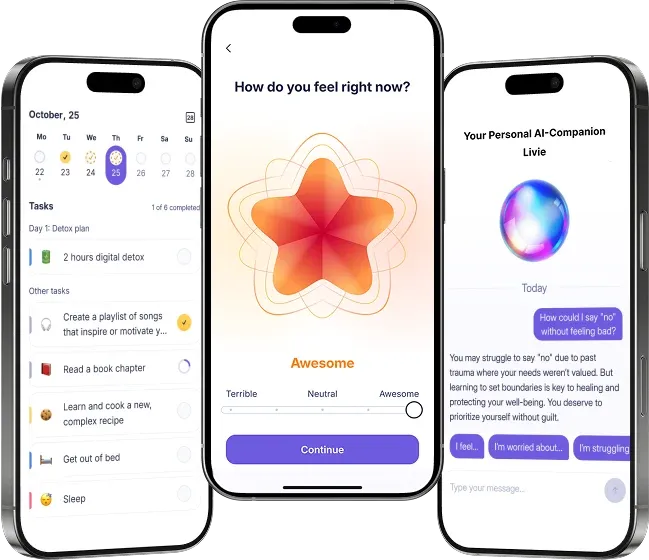
💡 Tip: Use the digital mood tracker and journaling feature in the Liven app to track triggers and make small adjustments that support consistent, warm parenting.
Consider your child’s temperament
A highly sensitive child may need more reassurance and emotional support, while a strong-willed child may need clearer structure and consistency.
Here, remember this simple rule: you can’t be overly strict without also showing care. For each strict rule, there should be an ounce of warmth.
Check in with your own nervous system
If you’re a highly anxious parent, there’s a high chance that free-range parenting might not be the most soothing style for you. In that case, you’ll need to adopt a more structured yet healthy approach, such as authoritative parenting.
Final Thoughts
A healthy parenting style is one that blends warmth, guidance, and consistency while adapting to your child’s needs.
Meanwhile, you can always turn to Liven for continuous support: try the Liven app (Google Play or App Store), or read the blog for practical tips.
References
- Ashraf, A., Khan, M. L., & Atta, N. (2024). Permissive parenting, self-regulation, and risk-taking behavior among adolescents. http://dx.doi.org/10.31703/gssr.2024(IX-I).09
- Chen et al. (2024). Do we know enough about negative parenting? Recent evidence on parenting styles and child maladjustment. https://doi.org/10.5093/ejpalc2024a4
- Ciuhan, G. C. (2024). Relationship between permissive parenting style and atypical behaviour in preschool children. https://doi.org/10.1080/03004430.2021.2017908
- Dabiriyan Tehrani, H., Yamini, S., & Vazsonyi, A. T. (2023). Parenting styles and Big Five personality traits among adolescents: A meta-analysis. https://doi.org/10.1016/j.paid.2023.112421
- Ibrar et al. (2024). Impact of authoritative parenting style on self-esteem and resilience among undergraduate students. https://doi.org/10.62345/jads.2024.13.3.69
- La Rosa et al. (2025). The impact of helicopter parenting on emerging adults in higher education. https://doi.org/10.1080/00221325.2024.2413490
- Mitha et al. (2025). Association between skin-to-skin contact and cognition and behaviour at 5 years in children born at 24–31 weeks’ gestation.
- Patrick, D. (2022, February). Gabor Maté | Parenting, attachment styles, mother-child bond | Ep. 164 [Video]. YouTube. https://www.youtube.com/watch?v=7Ew7-YbJpAg
- Skenazy, L. (2025). Why you should spend less time with your kids [Video]. TED. https://www.youtube.com/watch?v=whaesnYloMQ
- Ulmer-Yaniv et al. (2023). Developmental cascades link maternal–newborn skin-to-skin contact with young adults’ psychological symptoms. https://doi.org/10.3390/biology12060847
- Vasiou et al. (2023). Exploring parenting styles patterns and children’s socio-emotional skills. https://doi.org/10.3390/children10071126
- Wambua, F., & Okul, F. (2024). Influence of neglectful parenting approaches on self-esteem of teenagers. https://doi.org/10.47604/ijp.2648
- Yaffe, Y. (2023). Is authoritative parenting the dominant style in the contemporary Western family? https://doi.org/10.1007/s12646-022-00699-y
- Zhang, R., & Wang, Z. (2025). Effects of helicopter parenting, tiger parenting, and inhibitory control on children’s anxiety and depressive symptoms. https://doi.org/10.1007/s10578-024-01685-3
FAQ: The Best Parenting Style
How do the four main parenting styles differ?
How do different parenting approaches like attachment parenting or free-range parenting impact children?