What Are the Best Mental Health Daily Planner Apps in 2026?



When you’re dealing with anxiety, burnout, or constant distraction, even small tasks can feel overwhelming, and staying organized becomes impossible. But a good daily planner can help you offload mental clutter and achieve clarity. Planner apps now don't just manage tasks; they offer a wide range of features that help you rebuild a sense of control.
In this blog, we'll review the top daily planner apps that accomplish precisely that, so you can pick the best one for your unique needs.
Key Learnings
- The best mental health planners go beyond tasks, helping you manage mood, routines, and self-care.
- Different apps approach daily planning in different ways. Some focus on well-being and mindfulness, while others emphasize speed and automation.
- If your goal is long-term mental well-being, choose a planning app like Liven that supports balance, flexibility, and sustainable daily wins.
Liven: Best Mental Health and Self-Care Planner
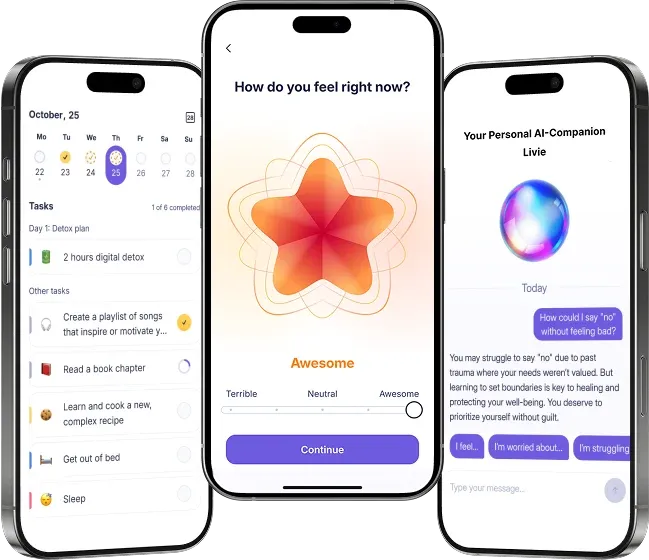
Liven is a self-discovery companion that combines journaling, mood tracking, habit routines, and guided exercises to support reflection, emotional awareness, and personal growth.
Liven’s To-Do list feature helps you plan non-productivity tasks like self-care, mood tracking, and small joys that don’t fit in traditional task lists. Instead of pressuring completion, it encourages curiosity and gentle engagement, which reinforces dopamine through joyful, meaningful actions rather than obligation.
This app lets you acknowledge it’s okay to skip tasks and try again tomorrow, which can be hugely therapeutic for people struggling with perfectionism, burnout, or low motivation. Its interface prioritizes self-improvement and habits for emotional nourishment.
By making space for routines that support mental health (like journaling, mindful breaks, or hobbies), Liven helps create balance. You experience better emotional and dopamine regulation, which is directly linked to your sense of pleasure in everyday life.
Liven is best if you're prioritizing self-care and developing good habits, especially if you find traditional planners too productivity-focused or stressful.
💡 Tip: If you find it difficult to prioritize tasks the right way, or are stuck in a loop of instant gratification, you should try Liven's quick quiz to get your personalized dopamine management plan.
Todoist: The Gold Standard for To Do Lists
Todoist is a classic task management app known for its simplicity, cross-platform availability, and powerful task organization using lists, priorities, labels, and filters. It’s one of the most widely used to-do list apps globally and works well as a foundational planning system.
This app isn’t a traditional time-blocking planner, but it excels at organizing scattered thoughts and tasks into actionable items. Users can set recurring tasks, reminders, and priorities, which help provide structure and reduce mental clutter, a key component of supporting emotional regulation and dopamine balance.
Its Karma system gamifies productivity, helping reinforce dopamine responses through small wins as tasks are completed, but it can sometimes lead to excessive app checking if over-emphasized, so use it mindfully.
Todoist offers a clean, distraction-free list view and intuitive natural-language task entry, making planning feel lighter when focus or task initiation is difficult. With solid calendar and workflow integrations, it suits people who want a simple, reliable system for daily tasks, recurring routines, and gentle habit building.
Motion: AI-Powered Organization System for Everyday Life
Motion uses AI to automate your calendar and task planning, reorganizing your day based on priorities, deadlines, meetings, and personal preferences. It’s marketed as an AI planner that builds and maintains your schedule.
We can experience decision fatigue when we are bombarded with choices and too many tasks, which leads to not-so-great mental health. Motion helps overcome that by letting AI decide when tasks should happen, and this can be really helpful for people who find choice and deadlines stressful. The app automatically time-blocks your tasks and adjusts them when things change, which helps maintain consistency without manual friction.
This automation acts like a digital assistant, helping reduce the need to constantly reprioritize, which can ease worry and frustration for some users. However, for others, relying on automated decisions may increase anxiety due to a sense of lost control, highlighting the importance of balancing autonomy with assistance.
Motion is best suited for organizers who want very low manual planning effort and appreciate AI making decisions, especially professionals with unpredictable schedules or anyone who gets stuck in decision paralysis.
Sunsama: Guided Daily Planning for Focus and Well-Being
Sunsama is a focus planner that uses intentional, mindful daily and weekly planning rituals. It combines tasks and calendar slots to help people thoughtfully prepare for their daily journey rather than rush into execution.
Sunsama’s strength is its ritualized planning: reviewing tasks from other tools in the morning, time-blocking them, and reflecting at day’s end. This not only structures your workflow but also creates a psychological rhythm. This deliberate process helps you manage overwhelm and create realistic daily expectations.
It incorporates focus modes and Pomodoro-style intervals to encourage working in short, manageable bursts rather than long, exhausting stretches. Combined with end-of-day reflection, this approach helps users track what they actually accomplish versus what they planned.
Because Sunsama intentionally limits tasks to what realistically fits, it helps avoid overcommitment, which is directly tied to emotional regulation and burnout prevention.
This app is perfect for people who thrive on reflection, structure, and intention, which is particularly helpful for ADHD, anxiety, and anyone who feels scattered or overwhelmed by unplanned tasks.
Akiflow: Fast Task & Calendar Planner for High Efficiency
Akiflow centralizes all your tasks and calendars (from Gmail, Notion, Todoist, etc.) into a single, fast, keyboard-driven interface with robust time-blocking and scheduling controls.
Akiflow is about high-speed planning and consolidation: capture everything in one inbox, then drag tasks into calendar time slots quickly. This can reduce the mental load of switching apps, which is great if you are prone to overwhelm.
While not explicitly designed for mindful planning, its time slots, priority tags, and daily review workflows help chunk work into digestible segments, which supports dopamine regulation by enabling small, visible wins throughout the day.
Once you master its learning curve, this app's speed and integrations reduce planning friction, helping users quickly build intentional days and overcome procrastination.
This makes it ideal for people who want powerful integration and fast planning — productivity nerds, multitaskers, or anyone who resists traditional planners but still needs structure.
Tiimo: Best Visual Planner for Neurodiverse Minds
Tiimo is a visual planner built to support ADHD and everyday routines through a colorful timeline, AI task breakdown, and reminders designed to reduce planning friction.
Tiimo shines when it comes to making time feel tangible — a huge shift for people struggling with time blindness or motivation dips that accompany depression, anxiety, or ADHD. Its visual scheduling interface transforms a mental to-do list into a clear sequence of activities you can see and feel, greatly reducing overwhelm.
Features like an AI Co-Planner, visual timelines, focus timers, mood tracking, and customizable icons help externalize planning, so your brain doesn’t have to keep everything in working memory. This ease of planning directly links to dopamine regulation: breaking big tasks into smaller visual chunks increases the likelihood of completion and the subsequent reward cascade.
Tiimo's widgets and reminders further reduce friction by keeping your plan visible without overloading attention. This makes the app a great choice for people who want neuroinclusive, visually structured planning, particularly ADHD brains.
Quick Summary to Help You Choose
Here's a quick overview of the apps to help you decide:
| App | Starting Price | Best For | What It Does |
|---|---|---|---|
| Liven | $7.99/week | Well‑being focused planning and self‑discovery | Combines self‑care planning with mood tracking, journaling, and guided reflection |
| Todoist | $7.00/month | Simple task lists and mental clutter reduction | Organizes to‑dos and notes into clear, manageable lists |
| Motion | $49/month | Automated AI‑driven scheduling | Uses AI to automatically schedule and prioritize your tasks and calendar events |
| Sunsama | $25/month | Mindful daily/weekly planning | Guides intentional planning with time‑blocking and reflection |
| Akiflow | $34/month | Power users wanting integrated control | Centralizes tasks and calendar with fast workflows and integrations |
| Tiimo | $12/month | Visual, neuro‑friendly planning (ADHD & executive function) | Visual daily planner with reminders and focus tools designed for time awareness |
If your long-term goal is improving mental health — not just completing tasks — your planner should support well-being, mood, and self-care alongside productivity. In that regard, Liven stands out as the best overall planning system for building sustainable routines, emotional balance, and small daily wins that genuinely improve your life.
FAQ: Best Mental Health Daily Planner
What makes the best mental health daily planner different from regular planners?
Can digital to-do lists actually support mental health?
How do planner apps help with focus and feeling less distracted?
Are mental health planners useful for tracking goals beyond tasks?
How can a self-care planner improve emotional regulation?
Digital planners vs. paper notebook — which is better for mental health?