What Your Fear of Monday Is Trying to Tell You
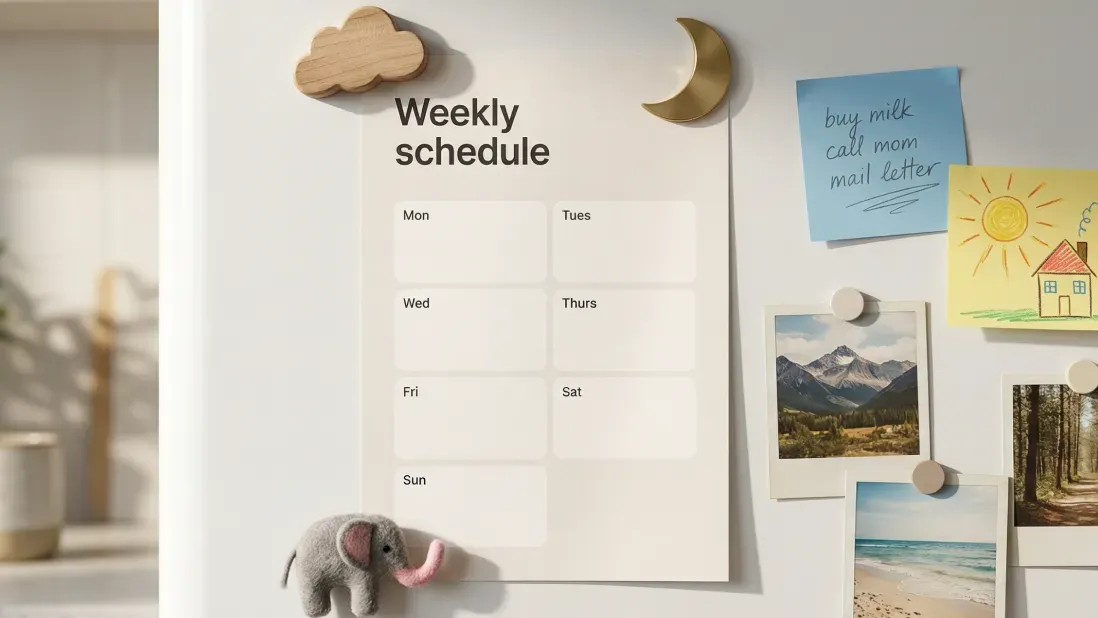



Around 4 PM on Sunday, the weekend starts closing in. Your mind skips past what's left of today and lands squarely on tomorrow: the inbox, the alarm, the week that hasn't started yet.
This feeling has a name: deuterophobia, or more commonly, the Sunday scaries. It's your nervous system responding to a real structural tension built into modern work life. If this sounds familiar, rest assured it's more common than you think, even if you enjoy your job you may experience a version of this.
Before we get practical, it helps to understand what’s really going on beneath the surface. Let's find out how you can do it.
Key Learnings
- The fear of Mondays is a form of anticipatory anxiety, meaning your brain is activating a stress response to a threat that hasn't happened yet.
- For many people, the Monday dread signals a deeper mismatch between how they spend weekends that feel open and spontaneous and their work, driven by external deadlines and a loss of autonomy.
- Small, intentional changes to your Sunday routine can meaningfully reduce how Monday morning feels.
Potential Causes of Why Mondays Feel So Hard
When you understand what’s happening, you can start addressing the root causes rather than treating the symptoms. Here are three potential reasons why you might feel this way:
Anticipatory anxiety
The Sunday scaries are a classic example of anticipatory anxiety, worrying about a future threat before it happens. Your brain’s threat detection center, the amygdala, doesn't distinguish between a looming deadline and an actual predator. It senses a shift from the safety and freedom of the weekend to the demands and structure of the workweek. As a response, your adrenal glands release cortisol and adrenaline. A recent study found that cortisol, the primary stress hormone, spikes by about 23% on Mondays. This hormonal flood is what might cause the racing heart, tight stomach, and restless feeling that make it so hard to relax on Sunday evening. So even if nothing has gone wrong yet, your body is already preparing as if it might.
The weekend-to-work switch
For two days, you are fully in control. You are a friend, a parent, an artist, a gardener, a person who can wear pajamas until noon. Then, on Monday, you switch back to being an employee, manager, or team member. It’s a significant identity shift. The bigger the gap between your weekend self and your work self, the more jarring the transition. This weekly surrender of the self you feel most connected to takes a psychological toll that builds over time.
The loss of autonomy
On weekends, you decide what to do, when to do it, and with whom. The workweek, by contrast, is often defined by obligations, deadlines, and other people’s priorities. This sudden loss of autonomy can trigger a feeling of being trapped. That loss doesn’t always show up as obvious frustration, it can show up as low energy or a sense of disengagement. Research shows that a sense of control is fundamental to well-being.
It's a pattern career coaches see again and again:
Signs You Might Have a Fear of Mondays
Fear of Mondays rarely announces itself loudly. More often, it shows up in small, easy-to-dismiss ways until Sunday night, when your body starts keeping score.
In adults, common signs include:
- Unexplained fatigue on Sunday evenings, even after a restful weekend
- Mood dips like irritability, low motivation, or a vague sense of dread as the week approaches
- Physical tension, such as headaches, tight shoulders, or a heavy feeling in the chest
- Difficulty focusing in the first hours of Monday morning
- Avoidance behaviors, like procrastinating on work prep or arriving late without a clear reason
In children and teens, it tends to look more physical:
- Stomach aches or dizziness on Monday mornings
- Tearfulness or resistance to getting up for school
Anxiety that creeps in as early as Sunday afternoon
- A sudden loss of interest in school or friends
These signs are easy to dismiss in isolation, but together they often point to a pattern worth paying attention to.
How to Reset Your Week
Knowing why is the first step. The next step is taking small, intentional actions to change the pattern. Instead of letting dread dictate your Sunday, you can take back control with a simple, three-part framework: Reclaim, Redesign, and Reconnect.
Step 1. Reclaim: Shift from Dread to Intention
The key to a better Monday is a better Sunday, which means infusing your day with purpose and calm. This isn't creating a whole new Sunday routine, but about making a few small changes.
- Create a shutdown ritual. Before you leave work on Friday, take 15 minutes to clear your desk, write your top three priorities for Monday, and close all your work tabs. This creates a psychological boundary, signaling to your brain that the workweek is officially over, and it's safe to relax.
- Plan something to look forward to. Don’t let your Sunday evening be a space for anxiety to fill. Plan a specific, enjoyable, and low-effort activity. This could be cooking your favorite meal, watching a comfort movie, or taking a warm bath. It gives your brain a positive event to anticipate instead of a negative one.
- Do a brain dump before bed. If your mind is racing with everything you need to do, grab a notebook. Spend 10 minutes writing down every single task, worry, and idea. This simple act of externalizing your thoughts can free up mental bandwidth and significantly reduce rumination.
Step 2. Redesign: Start Your Week with a Win
Often, we make Mondays harder than they need to be by scheduling our most challenging tasks for first thing in the morning. A few small tweaks can change the entire tone of your day.
Schedule a soft start. If possible, protect the first 30-60 minutes of your Monday. Instead of jumping directly into a high-stakes meeting or a difficult project, use that time to plan, organize your thoughts, or tackle a few small, easy tasks.
- Focus on your top priority. Don’t look at your entire to-do list at once. Identify the one thing that, if you get it done, will make you feel the most accomplished. Break it down into the smallest possible first step and do that.
- Put something you enjoy on the calendar. Just as you planned something for Sunday night, put a non-work activity on your Monday schedule. It could be a walk at lunch, a coffee with a coworker you enjoy, or listening to a specific podcast on your commute.
Step 3. Reconnect: Uncover What the Fear Is Telling You
Sometimes, the fear of Monday is a deeper signal that something is out of alignment. Getting curious about it is another step toward meaningful change. Possibly the single best habit we can all develop is to get better at listening to our minds and bodies.
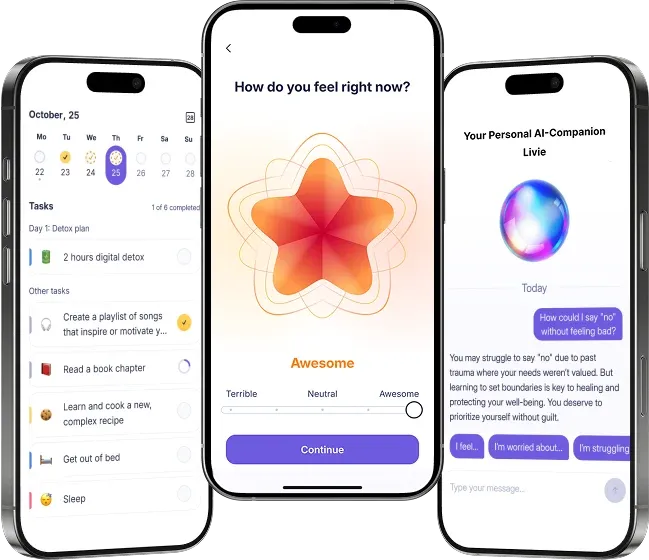
- Track your moods and energy. Is this a constant feeling every single Sunday, or does it get worse after a particularly stressful week? Using a tool like Liven’s Mood Tracker can help you see patterns you might otherwise miss. Maybe you’ll notice your dread is highest when you haven’t had enough time outdoors or when you’ve skipped your workout.
- Ask what instead of why. Instead of asking, "Why do I feel so anxious?" which can lead to self-judgment, ask clarifying questions: What am I specifically dreading about tomorrow? What part of my weekend felt the most restorative? What small thing could make tomorrow 1% better?
- Journal about the feeling. When anxiety hits, open a notebook or use Liven’s Journal to explore it. Self-observability is the key to breaking free from emotional autopilot.
Your Week Doesn't Have to Start with Fear
The fear of Mondays is real, but it doesn't have to be the opening line of your week, every week.
When you understand your triggers, that Sunday dread stops feeling like a personal flaw and becomes useful data. It's your mind asking for more intention, better boundaries, and a little more of what restores you.
Start small this Sunday. Pick one strategy, try it once, and notice what shifts. Because when Sundays feel calmer, Mondays will feel less like something to survive and more like something you can step into.
If you want to go deeper, your personalized plan for a calmer mind can help you build a week that feels less like survival and more like living.
References
- HKU research reveals “Anxious Monday” effect: chronic stress hormone surge linked to start of week in older adults - Press Releases - Media - HKU. (2025). https://www.hku.hk/press/press-releases/detail/28420.html
- Leotti, L. A., Iyengar, S. S., & Ochsner, K. N. (2010). Born to choose: The origins and value of the need for control. Trends in Cognitive Sciences, 14(10), 457–463. https://doi.org/10.1016/j.tics.2010.08.001
- Creative writing as therapy: unlocking emotional health through storytelling | Penn LPS Online. (2025, July 21). Upenn.edu. https://lpsonline.sas.upenn.edu/features/creative-writing-therapy-unlocking-emotional-health-through-storytelling
FAQ: Fear of Monday
What if my fear of Monday is a sign I hate my job?
Can changing my weekend habits really help my Monday anxiety?