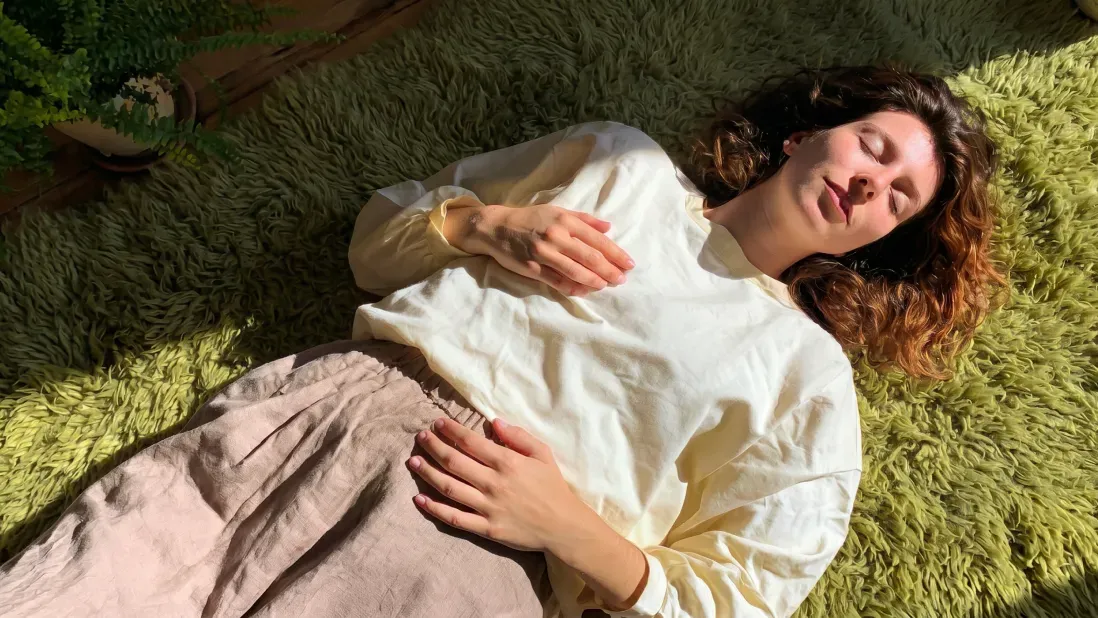



It's 3:00 PM. You have a half-written email on your screen, but you're scrolling through your phone instead. Your heart is doing a subtle, fluttery tap dance in your chest, and your jaw is clenched for reasons you can't name. You're not in danger, but your body is acting like you are.
These are signs that your body's stress response is stuck in overdrive. Your internal alarm system keeps firing as if a threat is present, even when you're safe.
Learning nervous system regulation skills helps your body recover more efficiently after stress and return to a calmer state. Practices like slow breathing increase your heart rate variability (HRV), which signals to your nervous system that it's safe to relax.
Key Takeaways
- Your nervous system has two speeds: sympathetic (fight-or-flight) and parasympathetic (rest-and-digest). Regulation is the ability to move between them smoothly.
- Feeling on edge or shut down is a signal, not a personal failing. Your body is protecting you, often based on past experiences.
- Quick practices such as deep breathing, humming, or a short walk reduce physical arousal and help you settle into calm faster.
- The goal is to build flexibility in how quickly your body recovers after stress.
Understanding Your Body's Internal Alarm System
Think of your nervous system as your body's command center. It has two primary modes of operation, controlled by the autonomic nervous system:
- The gas pedal (sympathetic nervous system). This is your fight-or-flight response. When you perceive a threat, whether a looming deadline or a car cutting you off in traffic, this system floods your body with stress hormones like adrenaline and cortisol, preparing you to react. Your heart rate increases, your breathing becomes shallow, and your muscles tense. It's designed to help you survive danger. The problem is that our modern world triggers this system with non-lethal stressors. Around 75% of Americans report physical or emotional symptoms related to stress.
- The brake pedal (parasympathetic nervous system). This is your rest-and-digest system. It's activated when you feel safe and relaxed. It slows your heart rate, deepens your breath, and aids in digestion and recovery.
Nervous system regulation is the ability to apply the gas when you need energy and the brake when you need to calm down. When we're dysregulated, the pedals feel stuck. You might be stuck on gas (irritability, restlessness, racing thoughts) or stuck on the brake in a different way, leading to a freeze response (numbness, disconnection, fatigue).
For some people, these patterns trace back to earlier life experiences, ongoing stress, or trauma they've carried forward:
- how stress was handled in your home growing up,
- past relationships,
- or seasons when your system learned that staying on alert was safer than relaxing.
Seven Simple Practices for Nervous System Regulation
The key to regulation is sending your body signals of safety. These practices work directly on your physiology to tell your brain, "You can stand down. The threat has passed."
1. Master the Extended Exhale
If you only try one thing, make it this. Slow breathing with a longer exhale is the fastest way to activate your parasympathetic nervous system.
Why it works. Longer exhales tell your parasympathetic nervous system it's safe to settle down. Slow breathing also increases your heart rate variability, which means your body is recovering from stress.
How to do it. Inhale through your nose for a count of four, feeling your belly expand. Then exhale slowly through your mouth for a count of six or eight, as if you're blowing through a straw. Repeat for two to three minutes.
2. Try Humming or Singing
This might feel silly at first. It works fast.
Why it works. Humming activates muscles in your throat that connect to the vagus nerve, which is your nervous system's main calm-down switch.
How to do it. Hum your favorite tune for a minute or two. You can do it in the car, in the shower, or while making coffee. Notice the subtle vibration in your chest and throat.
3. Use Cold Exposure
You don't have to take a full ice bath. A small dose of cold goes a long way.
Why it works. Cold exposure triggers reflexes that shift your heart rate and how your autonomic nervous system responds. Neck cooling has been shown to significantly increase HRV, indicating a shift toward parasympathetic dominance.
How to do it. Splash your face with cold water for 30 seconds. You can also hold a cold pack or a bag of frozen peas to the sides of your neck or your chest for a minute.
4. Practice Grounding With Your Senses
When you're spiraling, your mind is often racing about the past or worrying about the future. Grounding pulls you back to the safety of the present moment.
Why it works. This technique shifts your focus from internal distress to external, neutral sensory information. It interrupts the feedback loop of spiraling thoughts and signals to your brain that your immediate environment is safe.
How to do it (the 5-4-3-2-1 method). Name five things you can see. Four things you can feel (the chair beneath you, your feet on the floor). Three things you can hear. Two things you can smell. One thing you can taste.
5. Engage in Rhythmic Movement
Your nervous system loves rhythm. Predictable, repetitive motion is soothing.
Why it works. Gentle, repetitive movement like slow walking or swaying releases muscle tension and moves your body toward relaxation. Even ten minutes of walking lowers cortisol and lifts mood.
How to do it. Go for a slow, mindful walk. Put on music and sway or dance. Try gentle stretching or rocking in a chair. Focus on the rhythm, not the intensity.
6. Connect With a Safe Person
Humans are social creatures wired for connection. When someone else's calm nervous system settles yours, that's co-regulation. It's a core part of emotional health and strong relationships.
Why it works. Positive social interactions release oxytocin, a hormone that promotes bonding and safety, which dampens the sympathetic stress response. According to Polyvagal theory, your nervous system is constantly reading your environment, assessing whether you're safe or facing a threat.
How to do it. Call a friend you trust. Spend time with a pet. Even being in the presence of someone with a calm demeanor can help your own system settle.
7. Spend Time in Nature
Time outdoors is one of the most reliable ways to regulate your nervous system.
Why it works. Exposure to natural environments lowers cortisol, reduces blood pressure, and decreases rumination. Twenty minutes in a place that gives you a sense of contact with nature is enough to produce a measurable cortisol drop.
How to do it. You don't have to go on a long hike. Sit in a local park, notice the trees outside your window, or listen to bird sounds. Any small dose of nature helps.



Building a Foundation for Nervous System Balance
Regulation is more than in-the-moment fixes. The foundation is a lifestyle that supports a resilient nervous system: consistent sleep, balanced nutrition, and regular movement.
Notice what soothes you and what activates you. The patterns matter, and they're easier to see when you track them over time. When you practice these techniques consistently for weeks, you'll start noticing real shifts in how your nervous system handles stress.
If building that foundation feels like a lot to figure out on your own, take Liven’s quiz - two minutes of questions about where you are right now, and you'll walk away knowing where to start.
References
American Psychological Association. (2023). Stress in America 2023: A nation recovering from collective trauma. https://www.apa.org/news/press/releases/stress/2023/collective-trauma-recovery
- Hunter, M. R., Gillespie, B. W., & Chen, S. Y.-P. (2019). Urban nature experiences reduce stress in the context of daily life based on salivary biomarkers. Frontiers in Psychology, 10, Article 722. https://doi.org/10.3389/fpsyg.2019.00722
- Kinoshita, T., Nagata, K., Sota, T., et al. (2022). Neck cooling increases cardiac parasympathetic nerve activity in a hot environment. Journal of Physiological Anthropology, 41(1), Article 31. https://www.ncbi.nlm.nih.gov/pmc/articles/PMC8978436/
- Mignot-Filippi, C., et al. (2023). Cardiac vagal afferent neurotransmission in health and disease: review and knowledge gaps. Frontiers in Neuroscience, 17, 1192188. https://doi.org/10.3389/fnins.2023.1192188
- Porges, S. W. (2025). Polyvagal Theory: Current Status, Clinical Applications, and Future Directions. Clinical Neuropsychiatry, 22(3), 175–191. https://pmc.ncbi.nlm.nih.gov/articles/PMC12302812/
- You, M., Laborde, S., Ackermann, S., Borges, U., Dosseville, F., & Mosley, E. (2024). Influence of respiratory frequency of slow-paced breathing on vagally-mediated heart rate variability. Applied Psychophysiology and Biofeedback, 49(1), 133–144. https://pubmed.ncbi.nlm.nih.gov/38063977/
FAQ: Nervous System Regulation
How long does it take to regulate your nervous system?
What are the signs of nervous system dysregulation?
Can past experiences cause long-term nervous system dysregulation?
What's the fastest way to calm a dysregulated nervous system in the moment?
Can your nervous system fully heal?
How do I know if I'm in fight, flight, or freeze?