How to Use a Mood Tracker to Calm Your Mind




Sometimes anxiety can feel like it just happens to you. One minute you're fine and going through your day, and the next your chest tightens, your thoughts race, or a wave of irritation shows up without warning. It can feel random and uncontrollable, as if your mood has a life of its own. But our emotional states rarely appear out of nowhere. The challenge is that when we're inside the emotion, it's hard to step back and see the bigger picture.
That’s where a mood tracker becomes a powerful tool for stepping back and viewing your emotions from a distance. Research shows that mood tracking is a healthy habit that helps people reduce stress and develop a positive sense of self.
This article provides a detailed guide to tracking your mood and using this knowledge to drive positive change.
Key Learnings
- Consistent mood tracking helps you recognize hidden mood patterns and external triggers, turning emotional reactions into actionable self-awareness.
- Adding context, evaluating your mood chart, and using simple reflection tricks transform a mood tracker into a practical tool for long-term mental health support.
- By practicing data-driven self-care with an app like Liven, you can reduce anxiety, make clearer decisions, and build a calmer, more present life.
4 Steps to Use a Mood Tracking App
Everyone has their preferred way to track their emotional fluctuations, from a traditional mood journal to mandalas, drawing, or programs.
We'll use Liven's Mood Tracker as an example to explain how logging your emotions helps you recognize mood patterns that affect your life, thereby benefiting your mental health and inner peace.
Step 1. Low Moods vs. Happy Moods
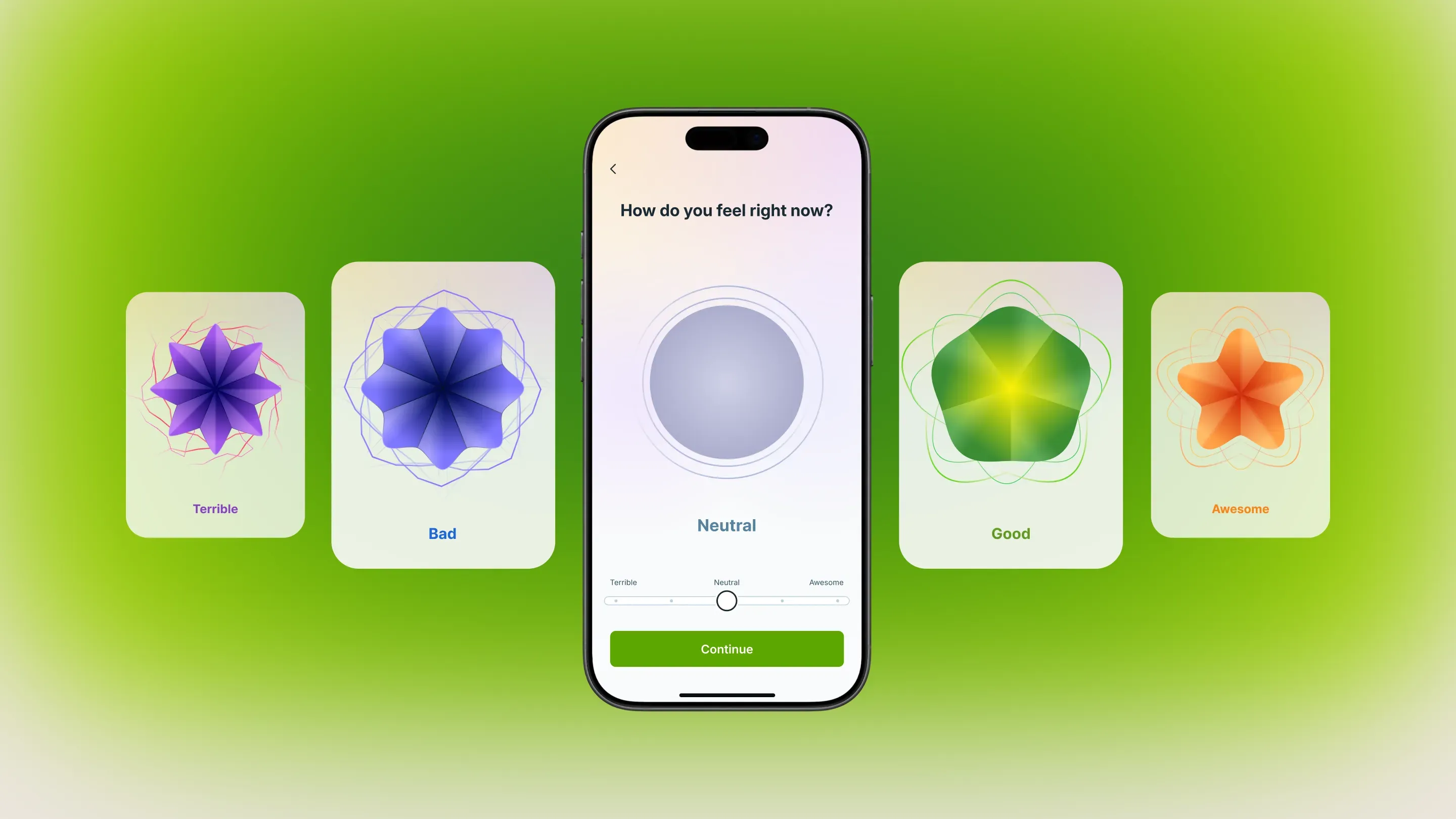
When you open Liven’s Mood Tracker, you’ll see a mood scale. Instead of typing out how you feel, you gently slide the marker along the line to match your current emotional state.
There’s no pressure to overthink it. Just ask yourself: Where am I emotionally right now? Then choose the point that feels closest.
While it may be easier to choose a "moderate" emotion or ignore your negative moods entirely, being completely honest helps you identify patterns more effectively.
Step 2. Add Context and Details
Mood tracking is most effective when you provide detailed information about the emotion. This can be any external factor, such as your work or study environment, social interactions, or a specific event that happened to you on that day.
Example:
- I feel awful (Job; colleagues)
- I feel awful and can't stop overthinking (Holiday; family).
While it'll take only a few clicks and no more than ten seconds, adding these details will help you detect patterns over time.
Step 3. Integrate Into a Daily Life
Anxiety makes habits hard. It affects our bodies, our memories, and even how we perceive tasks. When our mental health hits a bad day, tracking moods regularly feels like a chore. Maintaining a daily journal of your emotions and using a mood tracker even once a day can be draining.
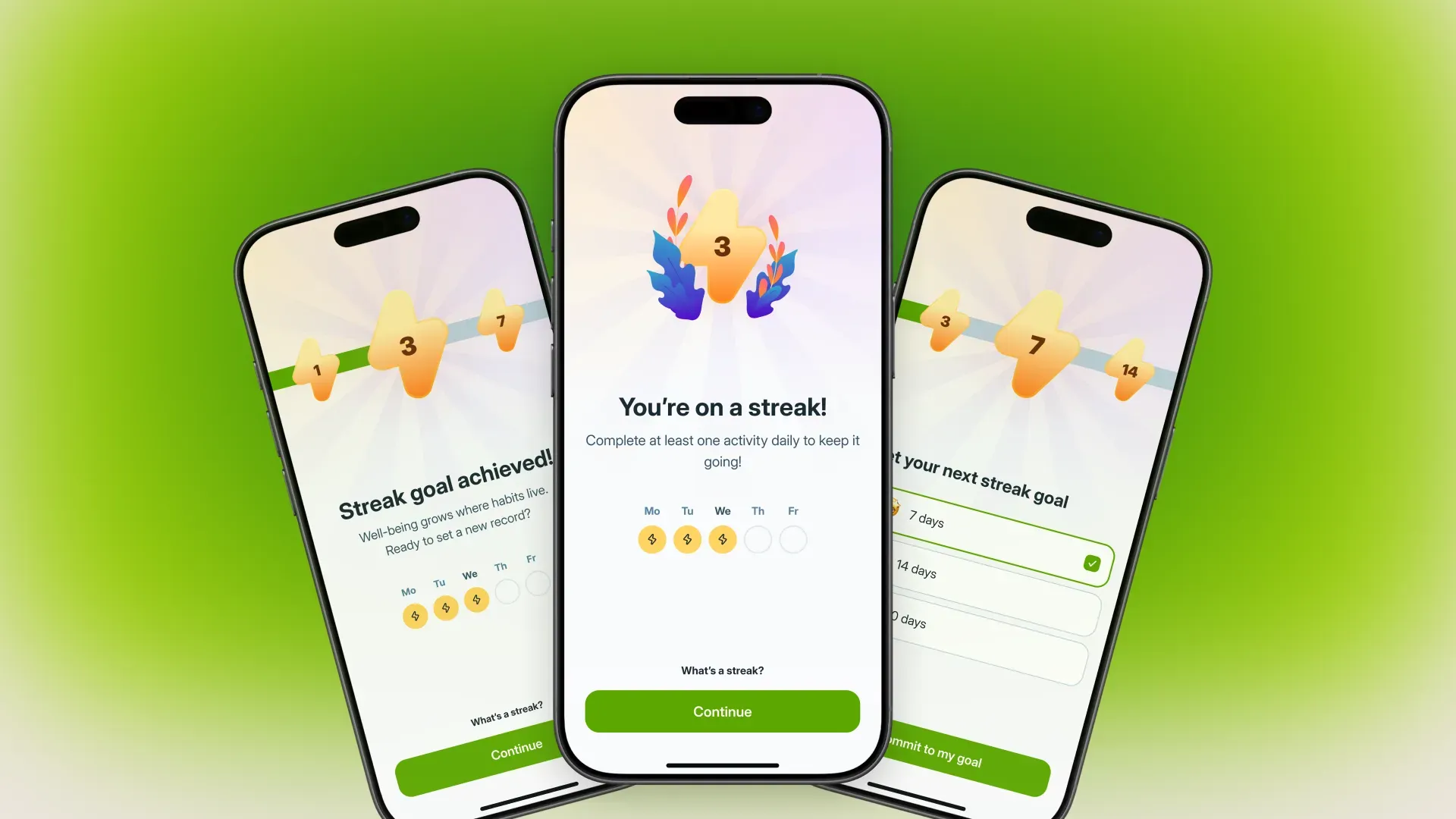
Liven's notifications and UI at least solve this issue. The app lets you set reminders to track your mood and log your feelings in under 30 seconds.
To simplify the process, allow Liven's Mood Tracker to send notifications to perform a quick check-in. This helps you build a daily routine that sticks and gather valuable data.
Step 4. Evaluate the Mood Chart
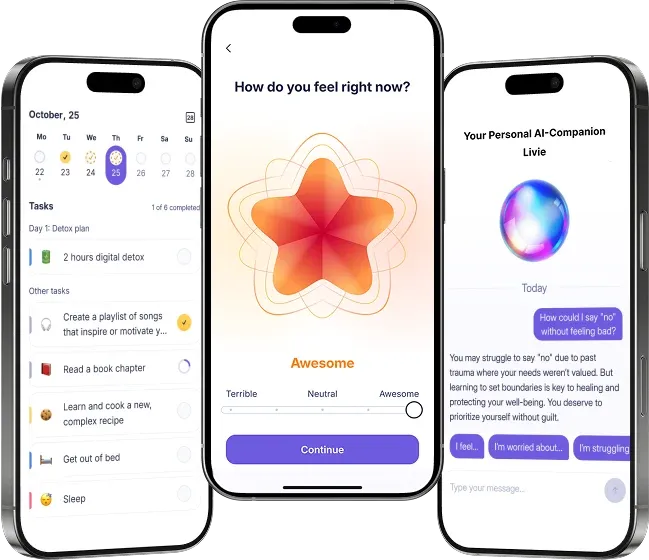
The Mood Tracker helps you build emotional awareness by teaching your nervous system that a tough emotion is just a signal, not a threat. When you avoid your feelings, your brain often finds less healthy ways to cope. By logging your day, you develop self-observability, creating a clear timeline that helps you spot patterns in your behavior and see how far you've come.
Your inputs do more than just sit in a log; they actively shape your experience in the Liven app:
- The app analyzes your mood entries to show you a breakdown of your emotional trends over time.
- Based on how you're feeling, the app automatically suggests articles or exercises that match your current state. For example, if you're feeling overwhelmed, you might see more grounding techniques in your feed.
Your data is stored securely and is visible only to you, giving you a safe space to be honest with yourself.
Sometimes, we notice that our emotions are caused by the lifestyle we choose. If that's your case, take a quick quiz and get your personalized plan for dopamine management.
Tricks to Use Your Mood Tracker for Mental Wellness
Here are a few practices you can implement today to get the maximum out of your mood tracking.
Write to Your Future Me
Each time you log your mood, whether it’s high, low, or somewhere in between, leave a short message to your future self. No need to make it polished or overly beautiful, just be honest.
Example:
- I feel miserable because my boyfriend broke up with me. I hope by the time you read this, you finally feel worthy and steady again.
This builds psychological distance. You begin to understand that feelings are temporary states, not fixed truths.
Use This Mood Journal as a Decision-Making Compass
Before making an important decision (sending a message, applying for a job, having a hard conversation, ending or starting something), log your mood first.
Example:
- Before texting my boyfriend, I felt angry (I was triggered).
- Before texting my boyfriend, I feel calm (I've reflected and want clarity).
Different emotions heavily influence judgment. When you track your emotional state beforehand, you create a pause between impulse and action. Later, you can reflect on whether this decision was fear-based. Ego-driven? Avoidant? Or clarity-based and aligned with my values?
Create a Seasonal Mood Map
Across weeks and months, compare your mood entries with seasons, weather changes, or daylight hours. Identify patterns you notice.
Example:
- I have a bad mood (rainy day, stayed indoors).
- I feel motivated (sunny day, walked outside).
Our nervous system responds to environmental factors more than we realize. Sunlight, temperature, routine changes, and even social rhythms tied to seasons can impact mental health. When you zoom out and observe patterns, you may discover:
- Lower energy in winter
- Irritability during high-stress seasonal periods
- Increased motivation during longer daylight hours.
This insight allows you to take proactive steps before the expected mood changes.
Start Improving Your Mental Health Today
Mood tracking turns emotions into information. Instead of being carried away by every emotional shift, you begin practicing data-driven self-care, using real patterns from your own life to support your well-being and reduce anxiety.
If you're ready to move from guessing to knowing, start tracking your mood today. Download the Liven app and begin building a calmer, more self-aware life.
FAQ: How to Use a Mood Tracker
How does a mood tracker support mental health?
How often should I be tracking your mood?
Can mood tracker apps really improve mood tracking accuracy?
What is the benefit of using a mood chart instead of journaling?
Can a mood tracker help with mental health conditions like bipolar disorder or depressive episodes?
What’s the difference between mood tracking and just reflecting on your feelings?
If I don't want to use an app to track my daily activities and emotions, what alternatives are available?