How to Talk About Sex With Your Partner: 5 Tips to Build Closer Intimacy




A lot of couples fall into the same quiet assumption: If we love each other, we should just know what the other person wants.
Well, sexual needs, preferences, and comfort levels change over time. But to be on the same page, both partners have to talk about these changes.
Still, even couples who love and trust each other deeply can find this topic surprisingly difficult to bring up.
Let’s break down how to talk about sex with your partner, avoid common mistakes, and navigate the most awkward moments with confidence.
Key Learnings
- Loving someone doesn't mean knowing what they want in bed. That part still requires words.
- Where and when you have this conversation matters almost as much as what you say.
- One honest conversation won't fix mismatched needs. But a habit of small, low-stakes check-ins can.
5 Honest Tips for How to Talk About Sex With Your Partner
These tips are designed to make the conversation feel less like a performance review and more like an honest, vulnerable talk.
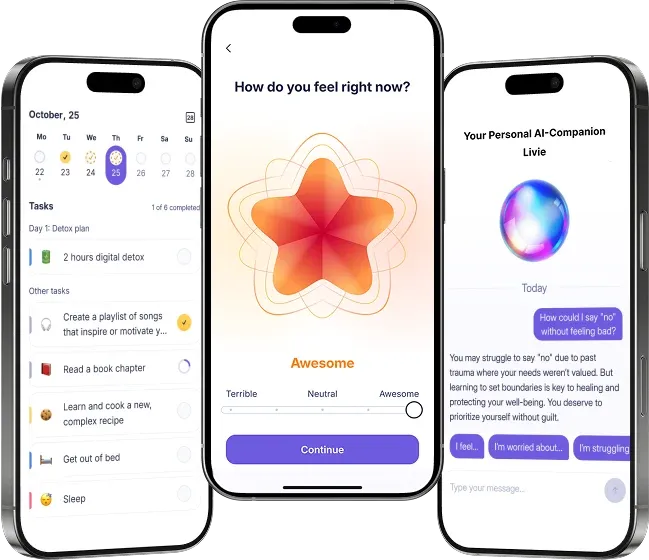
Plus, you can easily make them a part of your personalized plan for healthier relationships.
#1: Acknowledge the Awkwardness
Sex fills ads, music, movies, and social media, yet a deep cultural taboo still prevents open conversations about it with the person you actually have sex with.
So, the best thing to do is name the awkwardness in order to reduce it.
You can open the conversation with something like, "I feel a bit awkward bringing this up, but I think it's important for us. I want us to feel good about this part of our relationship."
#2: Create a Comfortable Environment for the Conversation
It’s not the best idea to talk about sex problems with your partner when they're exhausted or stressed, regardless of how much you want to discuss the issue. The non-negotiables for sensitive topics are a neutral ground and a calm starting point.
What works for you two? Some couples find it easier during a relaxed walk, as side-by-side walking reduces the intensity of eye contact and creates a sense of moving forward together. Others prefer a quiet evening at home with a glass of wine and low lighting.
What doesn't work: right after sex (too vulnerable), right before bed (too tired), or during a fight (way too charged).
You can start with "Hey, I'd love to talk about something kind of personal. Can we find a good moment this week when we're both relaxed?"
#3: Think About the Goals of the Conversation
How to talk about sex with your partner tips often skip this prep step, but it's where a lot of the real work happens.
Some useful conversation topics to explore are:
- What you enjoy. Not just what you're okay with, but what actually feels good and exciting.
- What feels off-limits. Your non-negotiables, gently but clearly stated.
- Sexual health and safety. Contraception preferences, STI testing, and how you both feel about these conversations.
- Frequency and desire. For instance, you might have mismatched libidos.
- Emotional needs around sex. Do you need more connection beforehand? More affirmation afterward?
#4: Communicate Your Needs Respectfully
The “I” language is an especially useful tip on how to talk about sex problems with your partner because it keeps the focus on your experience rather than putting the other person on the defensive.
That’s how the difference looks like: "You never seem interested anymore" vs. "I've been feeling a little disconnected lately, and I miss feeling close to you. I'd love to talk about what we might do differently."
The second one is vulnerable, specific, and actionable.
- Start with your feelings. "I feel…" instead of "You always…" or "You never…"
- Make a request. End with an invitation, not an ultimatum. "I'd love to try…" or "Would you be open to…?" keeps the conversation collaborative.
- Don't weaponize it. "I feel like you're being selfish" is still a blame statement with "I feel" glued to the front. A real "I" statement describes your inner experience, not your partner's behavior.
#5: Invite Your Partner’s Feedback
After you've shared your thoughts, make space for theirs.
Some phrases that keep the door open include:
- "What do you think about what I just said?"
- "Is there something you want to bring up, too?"
- "How do you feel about that, honestly?"
And the hardest part: if their honest answer surprises you or stings a little - don't shut down. Take a breath. Say something like, "That's not what I expected to hear. Give me a second to sit with that."
Common Mistakes Couples Make When Talking About Sex
Check out what to watch out for during your conversation.
Using a Blaming Language
It's easy to slip from "this isn't working for me" into "you don't do this right." Blame can contribute to defensiveness, especially in already sensitive moments. And the moment your partner feels attacked, it gets more difficult for them to really hear you.
Comparing Partners
This one is particularly corrosive. Even if you mean it neutrally ("my ex and I used to talk about this openly"), comparisons almost always land as criticism.
Bringing the Issue Up During a Conflict
Sensitive conversations deserve neutral ground and a calm starting point. Your partner feels already triggered when in a conflict, which means there is a high chance that a sexual complaint won’t land well.
Expecting Mind-Reading
Your partner can’t predict your needs if you don’t express them. No one can, regardless of how much they love you. So, it’s your responsibility to say what you’d like to change (and yes, we know, that might be uncomfortable, but still, worth a try).
Having the Conversation Once and Calling It Done
The couples who stay in sync sexually tend to treat it as an ongoing, low-pressure check-in rather than a rare and weighty event.
You can create a regular weekly or monthly check-in with your partner to briefly talk about how things are going.
The following video introduces John and Julie Gottman’s research-backed approach to couples therapy and ends with six fun, practical exercises you can try with a partner to strengthen your connection during those check-ins.
Know When It’s Time to Talk to a Therapist
A therapist or sex therapist can provide a structured, neutral space to work through deeper issues.
It’s a good idea to reach out if you’re navigating libido mismatch, unresolved resentment, or sexual trauma.
Final Thoughts
Knowing how to talk with your partner about sex doesn’t mean you always have the perfect script or get it right all the time. It means you choose to start a conversation with honesty, patience, and a little humor when things get awkward.
Dive into the Liven blog for more resources, try the Liven app (Google Play or App Store), or start with a wellness test to check in on where your head and heart are right now.
References
- Anya, S. [@StephAnyaLMFT]. (2021, February). Couple's therapy & 6 fun ways to build intimacy | Gottman Method refresher [Video]. YouTube. https://www.youtube.com/watch?v=TzLqQoEQcDE
- Beaulieu, T., Smith, J., & Taylor, L. (2023). Toward an integrative model of intimacy, sexual satisfaction, and relationship satisfaction. The Journal of Sex Research, 60(8), 1100–1112. https://doi.org/10.1080/00224499.2022.2129557
- Levy-Gigi, E., & Shamay-Tsoory, S. (2022). Affect labeling: The role of timing and intensity. PLoS One, 17(12), e0279303. https://doi.org/10.1371/journal.pone.0279303
FAQ
How often should couples talk about sex?
How do I start talking about sex with my partner?
What are the most useful tips for how to talk about sex with your partner without it turning into a fight?
How to talk about sex problems when things feel awkward between us?
Are there practical how to talk about sex with your partner tips that work even when one person shuts down?
What's the best way to figure out how to talk with your partner about sex when you have mismatched desires?