Why Can't I Stay Asleep, and What's the Solution?
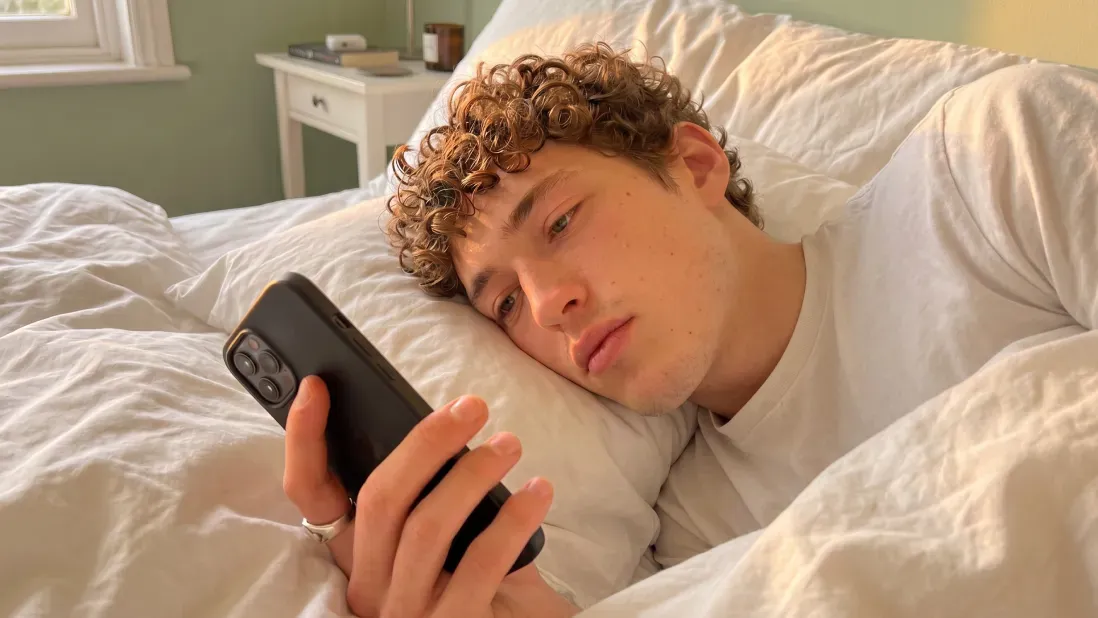



Mornings when we wake up too early can leave our limbs heavy. There's an uncomfortable anxiety that mixes with exhaustion each time we open our eyes and stare at the alarm that hasn't rung yet. We lie there, caught in a lonely limbo between the desire for rest and the racing thoughts that arrive with the moonlight.
If you find yourself watching the shadows move across your ceiling at 3:00 AM, please know you aren't failing at a basic human function. Modern life can be demanding, and often, our bodies carry the weight of the day long after we've turned out the lights. We've been there.
But understanding your middle-of-night waking will help you uncover what might be causing it and, in turn, what you might need to target.
Key Learnings
- Waking up in the middle of the night is often caused by interacting biological and psychological factors, such as anxiety, depression, hormone fluctuations, or cardiovascular strain.
- Certain medical and neurological conditions can fragment sleep and make it difficult to stay asleep even if you spend enough time in bed.
- Because health issues frequently drive persistent nighttime waking, it's important to rule out underlying causes through medical screening before relying on sleep medications.
What May Be Stopping You From Staying Asleep
Challenges with sleep are usually caused by a combination of how our bodies process stress and how our internal systems communicate. Let's look into the most common conditions that may impact your sleep routine:
1. Mental health issues
Trouble sleeping may be caused by depression or anxiety. Anxiety regularly shows up as hyperarousal, a state where your fight-or-flight response stays simmered on low. Even if you manage to drift off, your brain remains on guard for potential threats, making you more likely to wake up at the slightest sound or shift in temperature.
At the same time, clinical depression is often linked to early morning awakening, where the brain's chemical balance shifts, signaling the body to wake up long before it is fully restored. These challenges are also linked and influence each other. When you can't stay asleep, anxiety and depression show up with more intensity, thus renewing the cycle.
2. Cardiovascular strain
Issues like heart disease and fluctuations in blood pressure are deeply intertwined with sleep quality. When the heart has to work harder to circulate blood, or if blood pressure spikes during the night, the body causes a stress response. These moments can trigger your inner alarm.
3. Narcolepsy
It's a chronic brain disorder that makes it hard for the body to control sleep-wake cycles. It is overwhelming, unstoppable daytime sleepiness combined with the brain's inability to keep sleep and wakefulness separated. The brain either leaps into REM sleep too quickly or drifts back into wakefulness without warning, making a solid eight-hour sleep feel almost impossible to achieve.
4. Hormone fluctuations
Our sleep is often at the mercy of shifting chemical messengers that act as the body's internal conductors. In particular, fluctuations in the following hormones can signal the brain to wake up earlier:
- Progesterone. It's a natural sedative that, when low, increases nighttime anxiety and restlessness.
- Estrogen. It is crucial for thermoregulation; its decline often leads to sleep-disrupting night sweats.
- Cortisol. Known as the stress hormone, it can spike too early in the morning, snapping the mind into a state of high alert.
- Thyroid hormones. An imbalance here can overstimulate the nervous system, making it physically impossible for the body to remain in a deep, quiet state.
5. Respiratory disruptions
Sleep disorders, in particular sleep apnea or upper airway resistance syndrome (UARS), can cause sleep issues by creating fragmented, non-restorative sleep.
This leads to severe fatigue. While sleep apnea involves complete pauses in breathing, UARS involves narrowed airways and increased breathing effort. Both cause excessive daytime sleepiness, brain fog, and morning headaches.
Your Action Plan to Reclaim Sleep
Since sleep disruption is rarely caused by a single factor, your solution is also complex. Consider this a tiered strategy to calm your nervous system and build better sleep hygiene.
Step 1: Rule Out the Medical Disruptions
Before overhauling your lifestyle, it is essential to ensure your body isn't fighting an uphill battle. If you wake up tired after eight hours of sleep or cannot even get a few hours of stable rest, rule out potential health conditions first.
- Do a clinical check. Consult a healthcare provider to screen for sleep apnea, have thyroid imbalances, or suspect other health problems.
- Reach out for mental health support. If your 3:00 AM wake-ups are accompanied by a racing heart or a sense of dread, addressing underlying anxiety or depression with a therapist can do more for your sleep than any blackout curtain ever could.
- Hormonal panels. If you suspect perimenopause or cycle-related insomnia, a blood panel can confirm if you need targeted hormonal support.
Should you get sleep medicine? Although some over-the-counter meds can be helpful in the short term, it would be better to discuss your sleep deprivation patterns with your healthcare provider, and they can help you find a solution that will fix the underlying cause.
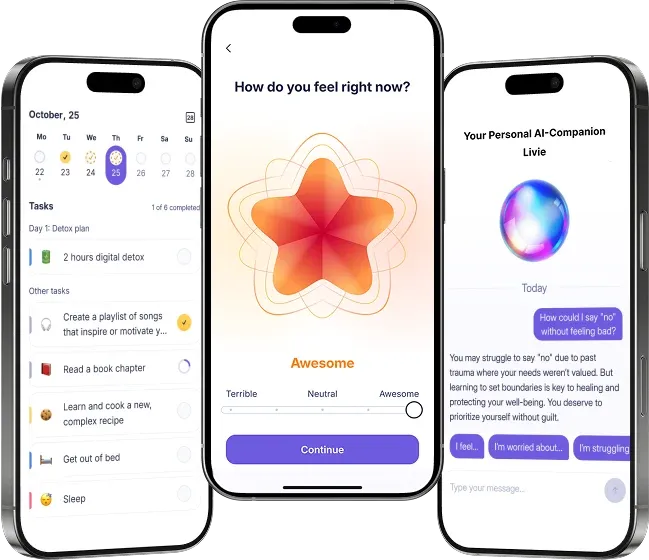
Step 2: Reorganize Your Space
The space where you sleep acts as a subconscious cue to your brain. If your environment is filled with daytime signals, your body will struggle to maintain the hormonal shift required for deep, uninterrupted rest. That's why creating a good bedtime routine can help you relax.
- Change the light spectrum. Your eyes are sensitive to blue light, the short-wavelength light emitted by smartphones, tablets, and LED bulbs. This light signals to the brain that it's midday, suppressing melatonin production right when your body should be winding down. To protect your sleep, dim the lights an hour before bed and swap your phone for a physical book. If screens are unavoidable, use night-shift filters or amber-tinted glasses to soften the impact. Even a bedside light during sleep can subtly affect sleep quality and brain activity, which is why low light across the whole evening matters.
- Cool things down. Biology dictates that your core body temperature must drop slightly to initiate and maintain deep sleep. A room that is too warm is a frequent culprit for middle-of-the-night wake-ups. Open your windows a little before sleep or readjust your air conditioning - just until you feel comfortable. This slight chill mimics the natural drop in evening temperatures, signaling to your metabolism that it is time to power down.
- Cut down small distractions. Small environmental frictions (e.g., a blinking light on a charger, a hum from a noisy street, or scratchy sheets) can pull you out of REM sleep. Consider using blackout curtains or a mask to ensure total darkness, and a white-noise machine or silicone earplugs to drown out unpredictable sounds.
- Timing your sleep to increase sleep pressure is helpful. You may be going to bed too early! Look at sleep scheduling to maintain an uninterrupted night of sleep.
"Some insomniacs see their bedroom as a torture chamber as they prepare to fight sleep every night. Turn it into a sanctuary for sleep that is inviting so you look forward to your nightly rest time. Rearranging furniture, changing colors of bed linen, add a teddy bear, dim salt lamp lighting, add plants, natural scents like lavender oil spray and restful images with a relaxing ambient music playlist. If you work at a desk in the same room, try a folding screen room divider to keep work out of view at bedtime." — Kathryn Remati, Health Educator, Meditation & Sleep Expert
Finding Your Way Back to Rest
If you are reading this in the quiet hours of the early morning, feeling as though sleep is a gift reserved for everyone but you, take a deep breath. Things will get better. You don't need to fix everything at once. Perhaps tonight, the only step is to dim the lights an hour earlier, or to keep a notebook by your bed to catch those racing thoughts so you don't have to hold them.
Tomorrow, it's another small step. Be patient with yourself as you navigate these changes. Sleep is a natural, rhythmic process that wants to return to you. By listening to what your body needs, you are slowly clearing the path for rest to find its way home.
References
- Bigalke, J. A., Cleveland, E. L., Barkstrom, E., Gonzalez, J. E., & Carter, J. R. (2023). Core body temperature changes before sleep are associated with nocturnal heart rate variability. Journal of Applied Physiology, 135(1), 136 to 145. https://doi.org/10.1152/japplphysiol.00020.2023
- Cho, J. R., Joo, E. Y., Koo, D. L., & Hong, S. B. (2013). Let there be no light: The effect of bedside light on sleep quality and background electroencephalographic rhythms. Sleep Medicine, 14(12), 1422 to 1425. https://pubmed.ncbi.nlm.nih.gov/24210607/
- de Havenon, A., Falcone, G. J., Rivier, C., Littig, L., Petersen, N., de Villele, P., Prabhakaran, S., Kimberly, W. T., Mistry, E. A., & Sheth, K. N. (2024). Impact of sleep quality and physical activity on blood pressure variability. PLOS ONE, 19(4), Article e0301631. https://doi.org/10.1371/journal.pone.0301631
- Dressle, R. J., & Riemann, D. (2023). Hyperarousal in insomnia disorder: Current evidence and potential mechanisms. Journal of Sleep Research, 32(6), Article e13928. https://doi.org/10.1111/jsr.13928
- Kashaninasab, F., Alimoradzadeh, R., Alizadeh, M., Mansouri, M., & Naserbakht, M. (2025). Comparison of subjective and objective sleep quality in patients with obstructive sleep apnea syndrome. Brain and Behavior, 15(8), Article e70759. https://doi.org/10.1002/brb3.70759
- Maurer, L. F., et al. (2022). The effect of sleep restriction therapy for insomnia on sleep pressure and arousal: A randomized controlled mechanistic trial. Sleep, 45(1), Article zsab223. https://doi.org/10.1093/sleep/zsab223
- Toynbee, M., Zygmunt, D., Levett, R., Moghaddacy, S., & Pappa, S. (2025). The prevalence of insomnia symptoms in adults with depression: A systematic review. European Psychiatry, 68(Suppl 1), S436 to S437. https://doi.org/10.1192/j.eurpsy.2025.906
- U.S. Department of Health and Human Services. (n.d.). Narcolepsy. National Institute of Neurological Disorders and Stroke. https://www.ninds.nih.gov/health-information/disorders/narcolepsy
FAQ: Why Can't I Stay Asleep?
Is it normal to wake up at the same time every night?
Should I stay in bed even if I can’t fall back asleep?
Can alcohol help me stay asleep?
How does blue light affect my sleep-wake cycle?
Could my diet be causing me to wake up in the middle of the night?
When should I see a doctor about my sleep issues?