15 Weird Facts about Sleep that Explain Your Weirdest Nights
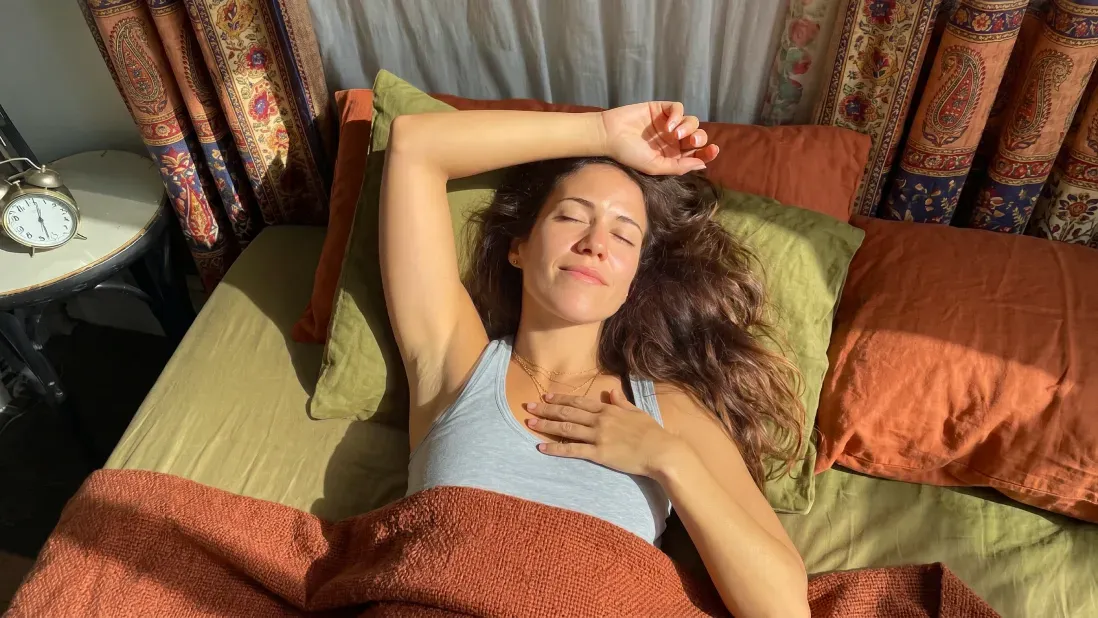


Did you know that during sleep, your brain can become more emotionally reactive than during the day, especially in the early morning hours when stress hormones naturally rise?
That’s one of the weirdest facts about sleep: your sleeping brain doesn’t stay “calm and off.” Instead, it cycles through different states where emotion, memory, and perception shift dramatically.
This is why a small worry can feel huge at 3 AM, even if it seems irrelevant the next day. Let’s explore other weird sleep facts that reveal what your mind is doing while you’re resting.
Key Learnings
- Your brain stays highly active during sleep, processing memories, emotions, and stress from the day.
- Many strange nighttime experiences, like anxiety at 4 AM or vivid dreams, are normal biological responses.
- Poor sleep timing, stress, and overstimulation can disrupt your brain’s natural cycles, making sleep feel unpredictable.
- Small habits, such as consistent routines, emotional awareness, and stress management, can significantly improve sleep quality over time.
Why Your Brain Does Strange Things at Night
While your body rests, your brain runs a whole suite of processes it can't do while you're awake:
- Memory processing. During the night, your brain replays the day’s experiences and moves important information from short-term to long-term storage. Think of it like a meticulous night-shift archivist: filing, organizing, and deleting the junk.
- Emotional regulation. During REM sleep, your brain replays emotionally charged memories, but under lower levels of stress-related chemicals like norepinephrine. This matters because it changes how those memories are stored, allowing the brain to revisit difficult moments with less intensity, thereby reducing their emotional weight. Tracking emotional shifts through your personalized wellbeing management plan can make these overnight changes easier to recognize in real life.
- Threat simulation. One leading explanation for dreaming is the Threat Simulation Theory (TST). It suggests that dreaming acts like a built-in “virtual reality simulator,” where the brain safely rehearses threatening situations so you’re better prepared if they happen in real life. This helps explain why so many dreams involve being chased, showing up unprepared, or losing something important.
15 Random Facts about Sleep that Help You Understand Your Nights
Sleep science is full of things that sound strange until you realize they explain your own nights. The surprising facts below can actually explain patterns in your sleep, mood, and energy that you might otherwise miss.
1. About 18% of U.S. adults report trouble staying asleep, with waking up during the night one of the most common patterns. Between 2-4 AM, cortisol naturally rises as the circadian rhythm prepares the body for waking. If stress is already high, this spike can trigger alertness, making sleep difficult and thoughts more anxious.
2. 40% of people experience revenge bedtime procrastination. If your day is packed from morning to night, you may feel the urge to stay up late just to finally have time for yourself.
"Be careful of this extra me-time at night and try to resist, as those extra hours will accumulate to hundreds of hours awake per year." — Kathryn Remati, Health Educator, Meditation & Sleep Expert
3. Your brain gets emotional and impulsive after dark. The “Mind After Midnight” hypothesis suggests that after a certain hour, the brain shifts away from logical, prefrontal-cortex control toward more emotional, impulsive processing. That’s why decisions made at 2 AM, such as impulsive purchases or emotional messages, often feel irrational in the morning.
4. Your chronotype, or your “body clock,” is mostly genetic and very slightly flexible. You can shift your sleep-wake timing, but only by about 30 to 45 minutes, at most 1 hour.
5. Only about 15% of people are true "larks" and 15% are true night owls. The remaining 70% of the population falls somewhere in the middle, with a slight lean one way or another.
6. 15–30% of people regularly perform below their actual potential, because their weekend sleep schedule and work hours are chronically misaligned with their biology.
7. Obsessing over perfect sleep has a name: orthosomnia. It’s when tracking sleep, worrying about “doing it right,” or treating bad nights like emergencies makes sleep quality worse because the effort to control sleep ends up disrupting it.
8. Sleep talking (somniloquy) usually doesn’t happen during dreams. It most often occurs during transitions between slow-wave sleep stages, when the brain is switching states. It rarely reflects what the person is dreaming about. Sorry to disappoint.
9. Around 70% of people experience hypnagogic hallucinations. As you’re falling asleep, your brain can briefly overlap waking awareness with dream imagery, where you may think you’re awake and can hear sounds, see patterns, or feel sensations that aren’t actually there.
10. Scrolling late at night doesn’t allow you to fall asleep because it keeps your brain focused on hunting for novelty. Blue light from screens also delays melatonin, and the stimulation from the content keeps your brain active.
"Scrolling is draining and will not provide the relaxation you crave, trying a sleep meditation and mindfulness is highly recommended instead." — Kathryn Remati, Health Educator, Meditation & Sleep Expert
11. A problem that felt manageable at 2 PM feels catastrophic at 2 AM because sleep loss weakens the brain's prefrontal control over emotional reactions, while the amygdala, your brain's threat-detection center, stays active.
12. After 24 hours without sleep, cognitive performance, including reaction time, attention, and decision-making, can match a blood alcohol level of 0.10%, above the legal driving limit in many countries.
13. REM sleep is your nightly therapy session. REM stands for rapid eye movement, a sleep stage associated with vivid dreams and emotional regulation. Deep sleep restores the body, while REM helps the brain process experiences and reduce emotional intensity.
14. Research shows that sleeping on it helps the brain make new connections between ideas. During REM sleep, the brain links memories that didn't connect during the day, which can lead to clearer thinking and better problem-solving by morning.
15. Hitting the snooze button can make you feel more tired, not less. Each snooze fragments your last cycle of sleep into short, broken pieces, which can prolong the grogginess of sleep inertia.
“Chronic sleep loss can affect memory, focus, and thinking speed, but the brain can recover once sleep improves. The key priority is getting consistent, protected sleep, when the brain repairs itself, consolidates memory, and clears waste. Sometimes it’s more than “just being tired,” and issues like anxiety, depression, anemia, thyroid problems, or sleep apnea may contribute. Even small sleep improvements can support cognition over time.” — Dr. Christy Kestner, Neuroscientist, PhD
Signs Your Sleep Might Need Attention
It's not always obvious when sleep moves from a rough patch to a pattern worth paying attention to. Here are signs that often mean your sleep is asking for more than a weekend off can fix.
| Sign | What it might mean |
| You regularly take more than 30 min to fall asleep | Possible hyperarousal, anxiety, or poor sleep hygiene |
| You wake at 2-4 AM and lie awake for over an hour | Elevated cortisol, chronic stress |
| You feel unrefreshed even after 7–9 hours | Sleep quality issues (REM disruption, apnea) |
| You can't function without a nap | Likely accumulated sleep debt |
| Your mood is significantly worse after bad nights | Normal, but still worth tracking and addressing |
| You rely on weekends to "catch up" on sleep | Irregular weekend sleep schedule contributing to circadian misalignment |
Build a Sleep Routine That Works for You
Sleep isn't a performance metric. It's not something you're either "good" or "bad" at, even though our culture tends to treat it that way. It's a biological process your brain and body need to do their jobs, and it's deeply connected to your emotional life, your stress levels, and your capacity to show up the way you want to.
Liven (Google Play or App Store) can meet you where you are, whether that's tracking your mood to spot patterns, chatting with Livie when the 2 AM spiral hits, or working through a course on anxiety or burnout at your own pace.
The Liven blog has more to explore, as well as the wellness tests, whenever you're ready.
References
- Abbas, N. H., & Samson, D. R. (2023). Dreaming during the COVID-19 pandemic: Support for the threat simulation function of dreams. Frontiers in Psychology, 14, 1124772. https://doi.org/10.3389/fpsyg.2023.1124772
- Martin, W. (2023). Why morning people should never teach or grade after 6 p.m. Harvard Business Publishing. https://hbsp.harvard.edu/inspiring-minds/why-morning-people-should-never-teach-or-grade-after-6-p-m
- National Institute for Occupational Safety and Health. (n.d.). Risks from not getting enough sleep: Impaired performance. Centers for Disease Control and Prevention. https://archive.cdc.gov/www_cdc_gov/niosh/emres/longhourstraining/impaired.html
- Princing, M. (2024). How to adjust your routine to fit your sleep chronotype. UW Medicine Right as Rain. https://rightasrain.uwmedicine.org/body/rest/sleep-chronotypes
- Robards, K. (2022). The ‘Mind after midnight’: People more likely to make bad decisions late at night. Sleep Education. https://sleepeducation.org/mind-after-midnight/
- Sleep Foundation. (2025). Hypnagogic hallucinations. https://www.sleepfoundation.org/how-sleep-works/hypnagogic-hallucinations
- Bowles, N. P., Thosar, S. S., Butler, M. P., Clemons, N. A., Robinson, L. D., Ordaz, O. H., Herzig, M. X., McHill, A. W., Rice, S. P. M., Emens, J., & Shea, S. A. (2022). The circadian system modulates the cortisol awakening response in humans. Frontiers in Neuroscience, 16, Article 995452. https://doi.org/10.3389/fnins.2022.995452
- National Center for Health Statistics. (2024). Short sleep duration and sleep difficulties among adults: United States, 2024 (NCHS Data Brief No. 559). Centers for Disease Control and Prevention. https://www.cdc.gov/nchs/products/databriefs/db559.htm
FAQ: Weird Facts about Sleep
What are some weird sleep facts about how the body clock works?
Can snoring signal something more serious than just noise?
How does insufficient sleep affect mood and thinking?
Are there weird facts about sleep shared across species?