How Many Hours of Sleep Do Women Need?
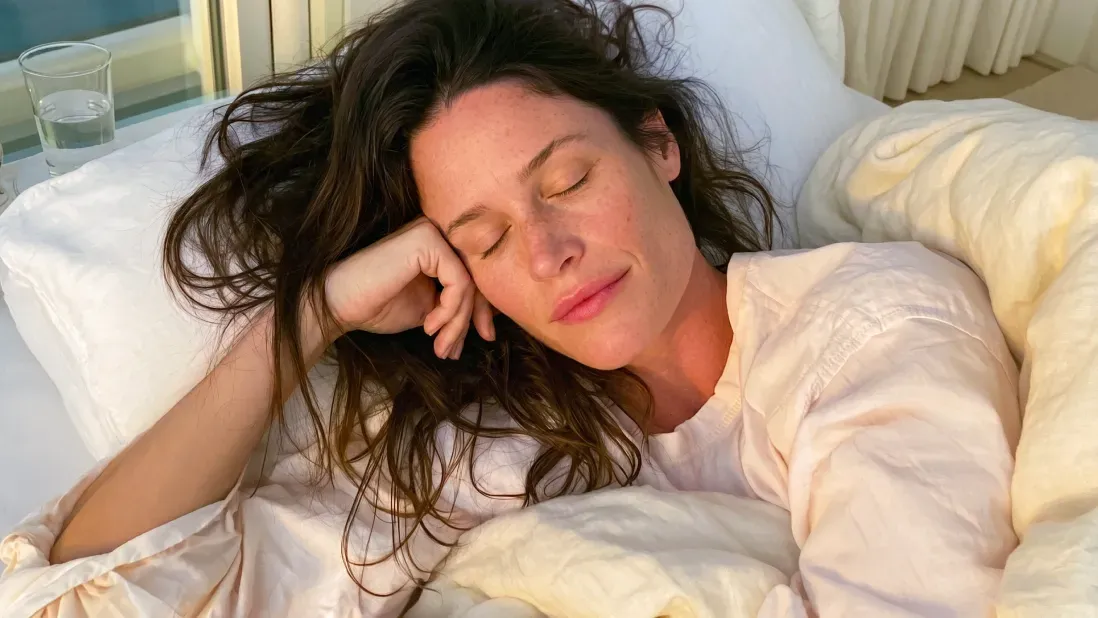



You wake up after what feels like a full night's rest, and you're still exhausted. Your partner, meanwhile, seems perfectly alert for the same number of hours. A growing number of studies confirm that women and men experience sleep differently for reasons rooted in biology.
So, how many hours of sleep do women need? The recommendation is the same as for any adult: 7 to 9 hours per night. But research increasingly shows that women's bodies that are shaped by hormonal cycles, neurological patterns, and social realities may demand more recovery time than that number suggests.
Let’s look at what the science says, why it matters, and what you can do about it.
Key Learnings
- Some research suggests women may need 14 to 32 extra minutes per night compared to men.
- Women are twice as likely as men to develop insomnia, yet remain the most underdiagnosed group for sleep disorders like apnea.
- Sleep-deprived women show twice the neurological stress response of sleep-deprived men.
- Women sleeping 5 hours or fewer face an 82% higher risk of coronary artery disease.
How Hormones Change Sleep
One of the clearest answers to why women need more sleep than men lies in hormones.
- During the menstrual cycle, roughly one in three women reports significant sleep disturbances, including cramps and mood changes that fragment deep sleep.
- During pregnancy, the first trimester alone can push sleep needs toward 10 to 12 hours a night. Restless legs, frequent bathroom trips, and anxiety compound the problem, and around 40% of pregnant women experience insomnia by the third trimester.
- During perimenopause and menopause, estrogen and progesterone, both of which support sleep depth, drop substantially. A review in Frontiers in Sleep found that 40 to 56% of women report sleep difficulties during this transition, and up to 26% develop chronic insomnia.
Sleep apnea also becomes a real risk after menopause, affecting up to 1 in 4 women. The problem is that most go undiagnosed. Their symptoms, like fatigue, morning headaches, and light snoring, don't match the loud, obvious presentation that diagnostic criteria were historically built around, so doctors often miss it.
How Much Sleep Do Women Need at Each Life Stage?
What matters as much as quantity is quality: how much time is spent in restorative deep sleep, and how often that's interrupted. Women sleeping 5 hours or fewer per night showed an 82% increased risk of coronary artery disease compared to those sleeping 8 hours.
| Life Stage | Notes on Sleep Needs |
| Teens (13–18) | 8-10 hours; hormonal changes begin affecting sleep |
| Young adults (18–35) | 7-9 hours; stress and career demands can compress sleep |
| Pregnancy | Up to 10-12 hours in the first trimester; quality often poor |
| Midlife (35–50) | 7-9 hours; perimenopause may begin disrupting sleep |
| Menopause & beyond | 7-9 hours; higher risk of sleep disorders, need for quality focus |
The Mental Load May Disrupt Sleep
Biology is only part of the picture. The social and psychological dimensions of women's sleep are as significant.
Women are statistically more likely to wake up during the night to care for children or other family members. It is a pattern some researchers have called the fourth shift. They also carry a disproportionate share of cognitive labor, which is the mental tracking of schedules, appointments, household logistics, and emotional dynamics that don't switch off when the lights go out.
It's no coincidence that women are significantly more likely than men to experience both insomnia and anxiety disorders. The two often feed each other, with each making the other worse over time. If you've ever lain awake cataloging tomorrow's to-do list, you already know this loop well. Our guide on how overthinking affects sleep dives into exactly why this happens neurologically and how to interrupt it.
5 Practical Ways Women Can Improve Sleep Quality
1. Adjust your environment in the luteal phase. In the week before your period, progesterone drops and raises core body temperature, making deep sleep harder to reach. Lowering room temperature to 65 to 68°F (18 to 20°C), avoiding alcohol, and adding magnesium-rich foods can help reduce cycle-related sleep disturbances.
2. Anchor your wake time. Waking at a consistent hour every day, including on weekends, helps regulate your circadian rhythms. For women, whose melatonin onset runs earlier than men's, an inconsistent wake time is one of the fastest ways to push that rhythm off track.
3. Offload mental loops before bed. If you lie awake running through tomorrow's tasks, keep a notepad by the bed to write them down before sleep. Research shows this reduces sleep onset time by helping the brain register that the information is stored and no longer needs to be held in active memory.
4. Be proactive during hormonal transitions. Hot flashes get most of the attention, but they're only a partial contributor to nighttime awakenings in women entering menopause. Many wake-ups have other causes. During hormonal transitions, maintain consistent sleep and wake times, avoid late-afternoon naps, and try relaxation techniques like deep breathing or meditation before bed.
5. Consider your partner's sleep too. If your partner snores heavily, gasps, or chokes during sleep, they may have undiagnosed sleep apnea. As women are more sensitive to sound during sleep than men, a partner's untreated apnea can quietly become your sleep problem. Encouraging them to get evaluated could meaningfully improve your rest as well.
6. Talk to a doctor if sleep problems persist. If you consistently wake unrefreshed, struggle to fall asleep, or feel exhausted despite adequate hours in bed, it's worth a conversation with your doctor. Women are underdiagnosed for sleep apnea, partly because symptoms present differently: lighter snoring, morning headaches, fatigue rather than obvious gasping. A specialist can rule out conditions like sleep apnea, insomnia disorder, or hormone-related disruption that won't resolve on their own.
When Your Body Is Asking for More, Listen to It
If you've spent years telling yourself you just need to push through on less sleep, this is your permission slip to stop. Women's sleep needs are shaped by measurable biological forces: hormones, circadian patterns, and neurological activity. They're physiological realities that consistently appear in the research.
"During temporary increases in workload, pregnancy, or jet-lag, listen to your tired body and mind. Respond with self-compassion. Be flexible and lighten up on the schedule and on yourself. Naps, guided meditations, and setting social boundaries to protect your sleep at night are useful. Give yourself a break to get back on track. Relax and make your health and sleep a priority." — Kathryn Remati, Health Educator, Meditation & Sleep Expert
What is actionable is how you respond: track your patterns, time your interventions, and push back when your sleep concerns get dismissed. The evidence is on your side.

References
- Benge, E., Pavlova, M., & Javaheri, S. (2024). Sleep health challenges among women: Insomnia across the lifespan. Frontiers in Sleep, 3, Article 1322761. https://doi.org/10.3389/frsle.2024.1322761
- Breton, A., Lecuelle, F., Chaussoy, L., Heitz, M., Leslie, W., Anders, R., Gustin, M.-P., Franco, P., & Putois, B. (2025). Gender inequality in managing childhood sleep: Which parent gets up at night? Children, 12(4), Article 491. https://doi.org/10.3390/children12040491
- Cleveland Clinic. (2024). Why women need more sleep than men. https://health.clevelandclinic.org/why-women-need-more-sleep
- Full, K. M., & Johnson, D. A. (2023). An update on sleep duration, obesity, and mortality risk in women. Sleep Medicine Clinics, 18(4), 415 to 422. https://doi.org/10.1016/j.jsmc.2023.06.015
- Kember, A. J., Elangainesan, P., Ferraro, Z. M., Jones, C., & Hobson, S. R. (2023). Common sleep disorders in pregnancy: A review. Frontiers in Medicine, 10, Article 1235252. https://doi.org/10.3389/fmed.2023.1235252
- Lok, R., Qian, J., & Chellappa, S. L. (2024). Sex differences in sleep, circadian rhythms, and metabolism: Implications for precision medicine. Sleep Medicine Reviews, 75, Article 101926. https://doi.org/10.1016/j.smrv.2024.101926
- National Sleep Foundation. (2025). How much sleep do you really need? https://www.thensf.org/how-many-hours-of-sleep-do-you-really-need/
- Ralston, M., Ehlen, J. C., & Paul, K. (2024). Reproductive hormones and sex chromosomes drive sex differences in the sleep-wake cycle. Frontiers in Neuroscience, 18, Article 1478820. https://doi.org/10.3389/fnins.2024.1478820
- Scullin, M. K., Krueger, M. L., Ballard, H. K., Pruett, N., & Bliwise, D. L. (2018). The effects of bedtime writing on difficulty falling asleep: A polysomnographic study comparing to-do lists and completed activity lists. Journal of Experimental Psychology: General, 147(1), 139 to 146. https://doi.org/10.1037/xge0000374
- Sleep Foundation. (2025). Do women need more sleep than men? https://www.sleepfoundation.org/women-sleep/do-women-need-more-sleep-than-men
- Sung, C.-M., Tan, M., Toh, S. T., & Hsu, P.-P. (2025). Obstructive sleep apnoea in women: What do we know and what don't we know? Respirology, 30(11), 935 to 947. https://doi.org/10.1111/resp.70136
- Troìa, L., Garassino, M., Volpicelli, A. I., Fornara, A., Libretti, A., Surico, D., & Remorgida, V. (2025). Sleep disturbance and perimenopause: A narrative review. Journal of Clinical Medicine, 14(5), Article 1479. https://doi.org/10.3390/jcm14051479
FAQ: How Many Hours of Sleep Do Women Need
Can you catch up on lost sleep over the weekend?
How does poor sleep affect women's weight and metabolism?
What is a normal sleep cycle, and how many should you get per night?
How does sleep deprivation affect women's mental health?
How long does postpartum sleep deprivation last?
Is napping a good solution?
Does quality matter as much as quantity?