Movement Is Medicine: Healing Body and Mind




You finish a long workday with your shoulders glued to your ears, your jaw clenched, and a low hum of tension you can't quite name. You consider going for a walk, but also think about lying face-down on the couch.
The walk wins by a thread, and twenty minutes later, something has shifted. Your shoulders dropped, the hum quieted. Nothing in your life changed, except that you moved your body for a little while.
Researchers and clinicians have a name for this small shift: movement is medicine.
This article unpacks what's happening inside your body when you move, why even tiny doses count, and how to start without overhauling your life.
Key Takeaways
- Physical activity changes brain chemistry within minutes, releasing dopamine, serotonin, and BDNF, a protein that helps the brain grow new connections.
- Exercise snacks of one to five minutes spread across the day produce measurable cardiorespiratory and mood benefits.
- When motivation runs low, shrinking the goal works better than pushing through. Two minutes of any movement can interrupt the pattern, especially when tied to something you already do every day.
What Happens in Your Brain When You Move
When you start walking, cycling, dancing, or stretching with intention, your muscles release brain-derived neurotrophic factor (BDNF), a protein critical for growing new neurons and strengthening the connections between them. People with depression often show reduced BDNF levels, and exercise is one of the most reliable ways to bring those levels back up.
Growing new neurons takes weeks, but the brain also responds in real time. A single workout lifts mood within minutes by raising levels of dopamine, serotonin, and noradrenaline, the neurotransmitters most linked to how we feel and how well we focus.
Over time, this combination of immediate and long-term effects also reshapes the hypothalamic-pituitary-adrenal (HPA) axis, your central stress response system. Moderate exercise of 30 to 60 minutes, three or more times per week, produces the largest reductions in cortisol over time, so the body learns to handle everyday stressors with less reactivity.
Exercise often gets filed under productivity or discipline, but it belongs just as much in the self-care column. This video explains why moving your body counts as caring for it, not just optimizing it:
Movement Is Medicine: What the Research Says
A 2023 umbrella review published in the British Journal of Sports Medicine analyzed 97 systematic reviews covering 1,039 trials and 128,119 participants. The lead researcher, Dr. Ben Singh of the University of South Australia, found that physical activity meaningfully reduced symptoms of depression and anxiety across clinical populations.
The improvements were comparable to medication and psychotherapy, with some groups showing even greater benefit.
What stands out in the data is how quickly the effect shows up. The strongest results appeared in interventions lasting 12 weeks or less, with shorter and more intense programs producing more change than longer, gentler ones.
That challenges the idea that you need months of consistency before movement starts paying back. In fact, the lift begins within the first few weeks.




The Science of Exercise Snacks
If weeks deliver this kind of return, what about minutes? The exercise snack describes brief bouts of movement, anywhere from twenty seconds to five minutes, sprinkled throughout the day. Think of it like snacking, but for your body instead of your appetite. A few ideas:
- Climbing the stairs instead of taking the elevator.
- Doing ten squats while the kettle boils.
- Walking a lap around the block during a long phone call.
Even at this small dose, exercise snacks reliably improve cardiorespiratory fitness, glucose control, and mood across adult populations.
Find Your Type of Movement
Not every form of activity does the same thing. Knowing what each type of movement offers helps you pick something that matches what you need today.
Aerobic Activity: The Mood Lifter
Walking, jogging, cycling, swimming, and dancing can all provide aerobic exercise, but they affect mood through multiple overlapping pathways.
Depending on the intensity and context, aerobic activity can influence arousal, cerebral blood flow, neurochemical signaling, stress physiology, and psychological factors such as mastery and reduced rumination.
Even a 10-minute walk has measurable effects on mood, and when you can take it outside, exposure to green space lowers cortisol independently of the exertion itself, so a walk in a park settles you more than the same walk on a treadmill.
Resistance Training: The Confidence Builder
Strength work, whether bodyweight squats, kettlebells, or resistance bands, meaningfully reduces depressive symptoms in adults with diagnosed depression. Part of the benefit may come from psychological mechanisms such as increased self-efficacy and a sense of mastery, although the exact pathways are not fully established.
Lifting something heavy and seeing yourself do it has a way of changing how you talk to yourself.
Mindful Movement: The Nervous System Soother
Yoga, tai chi, qigong, and somatic stretching combine breath, attention, and gentle motion. These slower practices might reduce symptoms of anxiety and depression, and they're often the better fit when higher-intensity exercise feels too activating during anxious periods.
A short somatic sequence to bring the body out of a stress response is a useful starting point if you're not sure where to begin.
How to Start Moving When Motivation Is Low
On the days when getting up feels harder than the workout itself, the standard advice to just go for a walk can land harder than it's meant to. A gentler approach helps:
- Lower the bar. Two minutes of stretching count. Walking to the end of the driveway also counts. The goal is to interrupt the pattern.
- Anchor movement to something you already do. For example, stretch while the coffee brews, walk during phone calls, or do calf raises while brushing your teeth.
- Pay attention to what shifts. After moving, pause for ten seconds and check in. Did your shoulders soften? Catching the small shifts builds evidence that this works.
- Pick what feels good. Adherence matters more than optimization. The best movement is the one you'll do tomorrow, too.
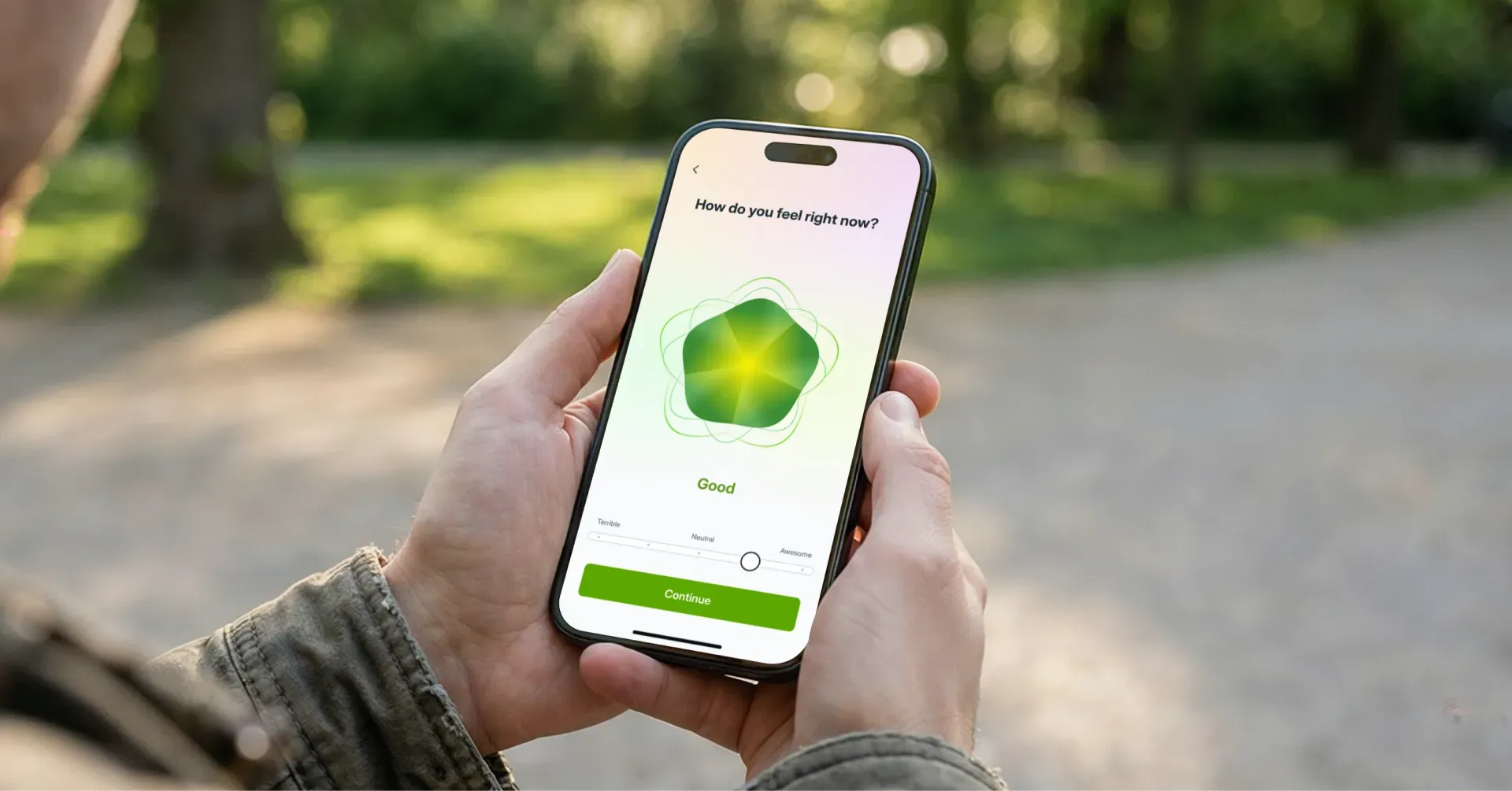
If you want a structured way to bring more of these practices into your week, Liven's quiz can help you figure out where to start based on what you need right now.
Building a Movement Habit That Lasts
The movement is medicine message can tip into pressure if you're not careful. Use a healthier frame: "Movement is one of several tools that support how I feel. Sleep, food, connection, and rest matter just as much."
Some weeks, you'll move a lot. Some weeks you won't, because grief or illness or a deadline made it impossible. What matters is keeping the door open, so you can walk through it whenever you're ready.
References
Alexe, D. I., Saha, S., Choudhary, P. K., Alexe, C. I., Choudhary, S., & Tohănean, D. I. (2025). Exercise snacks as a strategy to interrupt sedentary behavior: A systematic review of health outcomes and feasibility. Healthcare, 13(24), Article 3216. https://doi.org/10.3390/healthcare13243216
American Psychological Association. (2020). Nurtured by nature. Monitor on Psychology, 51(3). https://www.apa.org/monitor/2020/04/nurtured-nature
Chang, Y., Wang, H., Zhang, X., Shan, S., & Liu, H. (2025). Resistance training for depression: A systematic review and meta-analysis of randomized controlled trials. Frontiers in Psychology, 16, Article 1655855. https://www.ncbi.nlm.nih.gov/pmc/articles/PMC12745427/
Exercise is Medicine. (n.d.). Exercise is Medicine: A global health initiative. American College of Sports Medicine. https://www.exerciseismedicine.org/
Li, X., Huang, J., & Zhu, F. (2025). The optimal exercise modality and dose for cortisol reduction in psychological distress: A systematic review and network meta-analysis. Sports, 13(12), Article 415. https://doi.org/10.3390/sports13120415
Murawska-Ciałowicz, E., Wiatr, M., Ciałowicz, M., Gomes de Assis, G., Borowicz, W., Rocha-Rodrigues, S., Paprocka-Borowicz, M., & Marques, A. (2021). BDNF impact on biological markers of depression—Role of physical exercise and training. International Journal of Environmental Research and Public Health, 18(14), Article 7553. https://www.ncbi.nlm.nih.gov/pmc/articles/PMC8307197/
Sanaeifar, F., Pourranjbar, S., Pourranjbar, M., Ramezani, S., Mehr, S. R., Wadan, A.-H. S., & Khazeifard, F. (2024). Beneficial effects of physical exercise on cognitive-behavioral impairments and brain-derived neurotrophic factor alteration in the limbic system induced by neurodegeneration. Experimental Gerontology, 195, Article 112539. https://www.sciencedirect.com/science/article/pii/S0531556524001815
Singh, B., Olds, T., Curtis, R., Dumuid, D., Virgara, R., Watson, A., Szeto, K., O'Connor, E., Ferguson, T., Eglitis, E., Miatke, A., Simpson, C. E. M., & Maher, C. (2023). Effectiveness of physical activity interventions for improving depression, anxiety, and distress: An overview of systematic reviews. British Journal of Sports Medicine, 57(18), 1203–1209. https://bjsm.bmj.com/content/57/18/1203
World Health Organization. (2020). WHO guidelines on physical activity and sedentary behaviour. https://www.who.int/europe/publications/i/item/9789240014886
Xu, X., Abdullah, B. B., Samsudin, S. B., & Tan, Y. (2025). Integrating mindfulness and physical activity: A meta-analysis of mindful movement interventions for symptoms of anxiety and depression among university students. PeerJ, 13, Article e19640. https://doi.org/10.7717/peerj.19640
Xue, P., Du, X., & Kong, J. (2025). Age-dependent mechanisms of exercise in the treatment of depression: A comprehensive review of physiological and psychological pathways. Frontiers in Psychology, 16, Article 1562434. https://www.frontiersin.org/journals/psychology/articles/10.3389/fpsyg.2025.1562434/full
FAQ: Movement is Medicine
Is "movement is medicine" a real medical concept or a wellness slogan?
How much movement do I need for mental health benefits?
Can movement replace therapy or medication for depression?
What if I have an injury or chronic illness that limits how I can move?
How long until I notice mental health improvements from movement?