How a 5-Minute Meditation Calms Your Brain
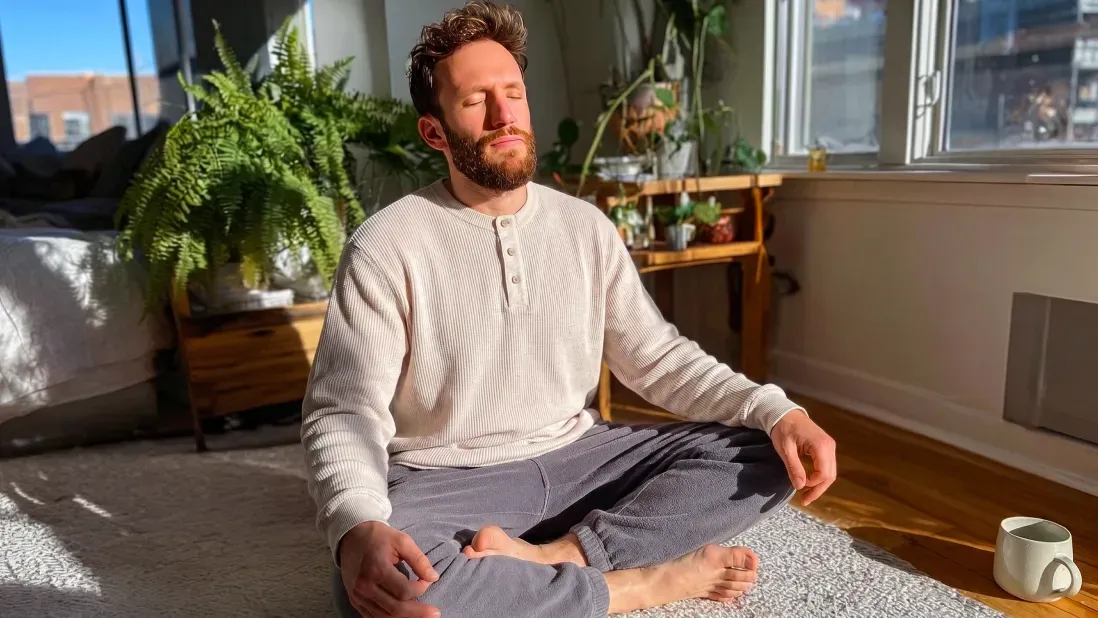



It's 2 PM, and your brain feels like a boiling pot. You've been staring at the same paragraph for twenty minutes, and the idea of pushing through until 6 feels genuinely impossible. This is the moment a 5-minute meditation was built for to help you reset and renew your mind for the next task.
This article will walk you through everything: the science, the method, and which type of short daily meditation fits where you are right now.
Key Learnings
- A 5-minute meditation can calm your nervous system faster than most people expect.
- Consistency matters more than duration. Even brief micro-meditation sessions can improve focus and emotional regulation.
- Meditation doesn’t require silence, perfection, or special skills, just a few minutes and a comfortable space.
- Tools like mood tracking, journaling, and structured routines make it easier to turn practice into a habit.
Does a 5-Minute Meditation Work?
Absolutely. A 5-minute meditation activates the prefrontal cortex, the part of the brain that controls focus, decisions, and emotions. It also calms the amygdala, the brain’s alarm system that reacts to stress or danger. Slow, steady breathing during meditation signals the vagus nerve to tell the heart and stomach to relax.
Studies show that even 10-20 minutes of mindfulness practice can significantly improve emotional well-being and moment-to-moment awareness, especially for beginners.
And surprisingly, longer sessions don’t necessarily produce better results. In one randomized trial comparing 10-minute and 30-minute meditation sessions and different meditation styles, all groups improved at similar rates. This means simple daily consistency matters more than duration.
How to Do a 5-Minute Meditation
For a five-minute practice, you don't need anything elaborate. Check out this simplest method that can easily be added to your personalized plan for a calmer mind.
- Sit comfortably on a chair, a floor cushion, or the edge of your bed. Aim for an easy posture: upright enough to stay alert, relaxed enough that you're not fighting your body. Your hands can rest in your lap or on your knees. Close your eyes.
- Take one slow breath in through your nose. Exhale slowly through your mouth. A simple rhythm that works for most people: inhale for 4 counts, exhale for 6 counts.
- Notice distractions. Within thirty seconds, your mind will wander. You'll think about something you forgot to do, a conversation from earlier, or what's for dinner. This is completely normal.
- Return attention. Gently redirect your focus back to the breath. No frustration, no inner commentary about how bad you are at this. The moment you notice your distraction and still choose to return is what builds the skill of relaxed focus.
- Finish gently. When your timer goes off, don't jump up immediately. Take one more slow breath. Notice how your body feels: maybe a little heavier, a little calmer, maybe not that different at all. Open your eyes slowly. Let yourself sit patiently for a few seconds before re-entering whatever's next.




5 Types of 5-Minute Meditation Depending on Your Goal
Different situations call for different approaches, just like stretching before a run feels different from stretching before bed. All you need is the right tool for the moment.
5-Minute Meditation for Anxiety
When anxiety kicks in, it can affect both the body and mind, leading to changes in breathing, heart rate, and thought activity.
Try this:
- Sit comfortably and place one hand on your chest.
- Inhale slowly through your nose for 4 seconds.
- Exhale gently through your mouth for 6 seconds.
- Repeat for 5 minutes.
- Focus only on the rhythm of your breath.
This works especially well before stressful conversations, during moments of panic or worry, when thoughts won't slow down.
5-Minute Meditation for Focus
This type of meditation trains the brain to return to one task - the same skill that makes it easier to stay present with your work, your family, or anything else that matters.
Try this:
- Set a 5-minute timer.
- Choose one point of focus, which can be your breath, listening to the sounds around, or simply focusing on a neutral word like "here."
- Each time your mind wanders, gently bring it back.
- Continue until the timer ends.
5-Minute Meditation for Sleep
The goal of a pre-bedtime meditation is to release the physical and mental tension your body has been holding all day, and let your nervous system shift into rest mode.
Try this:
- Lie down comfortably and close your eyes.
- Slowly scan your body from head to toe, focusing on each muscle group.
- Consciously relax each area as you reach it.
- Breathe slowly and deeply, letting your exhale be longer than your inhale.
Focus especially on softening your forehead, lowering your shoulders, and relaxing your jaw, as these are the three places where people unconsciously hold tension all day.
5-Minute Meditation for Stress
A quick meditation helps release the built-up daily pressure before it turns into burnout.
Try this body-based grounding technique:
- Sit comfortably with your feet flat on the floor.
- Take one slow breath and let your eyes close.
- Bring your attention to your body and notice, silently:
- 5 muscle groups you can feel (hands, jaw, shoulders, belly, feet)
- 4 physical sensations (warmth, heaviness, tingling, pressure)
- 3 sounds you can hear without opening your eyes
- 2 smells or tastes you can detect
- 1 emotion that's present right now - simply name it, don't judge it.
5-Minute Meditation For Morning Energy
Morning meditation helps your brain wake up gently rather than react immediately to stress, notifications, or responsibilities. It helps you create a sense of control before the day begins.
- Before you pick up your phone, sit up and plant both feet on the floor. This simple act signals to your brain that you're choosing how the day starts.
- Take three steady breaths. Inhale for 4 counts, hold for 2, then exhale for 4.
- Set a quiet intention for the day. Something like being present, steady, or patient. Hold it in mind for a few breaths.
- Do a quick meditation head-to-toe scan. Notice where you're holding tension and consciously release it before you stand up.
- Open your eyes slowly. Before reaching for your phone or coffee, take one more breath and carry that intention into the first thing you do.
This Is What Showing Up for Yourself Looks Like
Five minutes isn't nothing. In a world that constantly pushes you toward more, faster, bigger, choosing to stop and breathe for five minutes serves as a moment of self-regulation and attentional reset. It's also, increasingly, one of the most evidence-supported things you can do for your mental health, focus, and long-term wellbeing.
The Liven app (Google Play or App Store), our blog, and wellness tests are all designed to meet you where you are, whether you're just starting out or building on years of practice. Each one is a different door into the same thing: a better understanding of yourself.
References
- Fincham, G. W., & Mavor, K. (2023). Effects of mindfulness meditation duration and type on well-being. Mindfulness, 14(5), 1–12. https://doi.org/10.1007/s12671-023-02119-2
- Palmer et al. (2023). The effect of ten versus twenty minutes of mindfulness meditation on state mindfulness and affect. Scientific Reports, 13(1), 20646. https://doi.org/10.1038/s41598-023-46578-y
- University of Bath. (2025). Just 10 minutes of mindfulness daily boosts wellbeing and fights depression. https://www.bath.ac.uk/announcements/just-10-minutes-of-mindfulness-daily-boosts-wellbeing-and-fights-depression/
FAQ: 5-Minute Meditation
How long does a 5-minute meditation take to show results?
Can I do a 5-minute meditation at work?
What is the best short daily meditation for sleep?
What if my mind won't stop during a 5-minute meditation?