Social Rejection: Why It Hurts and What the Research Tells Us
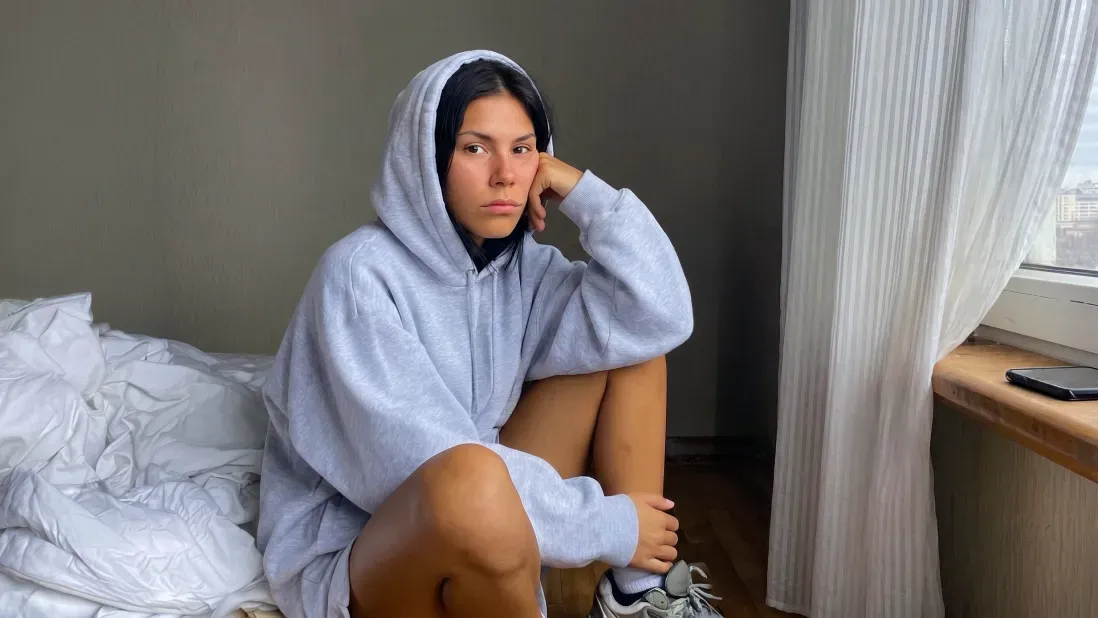



You didn't get a callback after the interview. A close friend stopped responding. You walked into a room, and the conversation shifted. Whatever the situation, the feeling was the same: a sharp, sinking weight that was hard to shake for hours, sometimes days.
That response is your nervous system doing exactly what it was built to do.
Social rejection is one of the most researched experiences in psychology, precisely because it affects virtually everyone and its consequences go well beyond a bruised ego. Understanding what is happening when you feel rejected, and why some people feel it far more intensely than others, is the first step toward handling it with less collateral damage.
Key Learnings:
- Social rejection activates the same brain regions as physical pain.
- Social isolation is associated with a 32% higher risk of all-cause mortality across a pool of more than 2.2 million people.
- Rejection sensitivity predicts the development of anxiety, depression, and relationship difficulties through a self-reinforcing cycle of rumination and avoidance.
- Childhood maltreatment is robustly linked to elevated rejection sensitivity in later life.
- Putting feelings into words measurably reduces emotional reactivity by modulating amygdala activity.
Your Brain Processes Rejection the Same Way It Processes Physical Pain
That hollow, sinking feeling after being left out? It is not just in your head. Brain imaging confirms that social exclusion activates overlapping neural patterns with physical pain, including regions tied to threat detection, emotional distress, and bodily awareness. Wider neuroimaging research has since mapped those patterns across the whole brain, showing just how far the ripple goes.
The pain of being left out is a neurological reaction.
So the next time someone tells you to just get over it, know this: asking your brain to brush off rejection is a bit like asking it to stop registering a burn. The feeling does not respond to willpower. It responds to the right kind of care.
Why Rejection Is Wired So Deeply
Your brain developed this way for a reason.
For most of human history, losing your place in a group could mean losing your life. No tribe meant no food, no shelter, no protection from predators. The brain developed a fast-acting system to monitor social bonds and detect threats to belonging early.
That alarm is still running today. And it struggles to tell the difference between a threat that once meant death and a text left unread in 2026. Both are registered as social danger. Both fire the same response.
The stakes are higher than most people realize. Across 90 studies covering more than 2.2 million people, social isolation was tied to a 32% higher risk of all-cause mortality, and loneliness to a 14% increase. Your body knows the difference between connection and isolation.
That is also why even a small rejection from a stranger stings more than it logically should. The social pain system is fast, broad, and not particularly interested in whether the threat was proportional.
Rejection Sensitivity: When It Hits Harder Than It Should
Most people shake off a minor social rejection within a day. For others, even ambiguous signals, a flat tone, a slow reply, a greeting that goes unanswered, can set off a wave of distress that takes much longer to pass.
Psychologists call this rejection sensitivity: the tendency to anxiously expect, readily perceive, and overreact to social rejection. People who experience it are not simply more emotional. Their threat radar fires at a lower threshold, reading neutral situations as hostile and generating responses that feel far bigger than the moment seems to warrant.
The consequences build over time. Rejection sensitivity uniquely predicts the growth of social anxiety symptoms, and the pattern follows people into adult relationships, workplaces, and everyday social life. Many cope by pulling away, and over time, that isolation leaves its own mark on the body.
Proteins associated with loneliness and social isolation have been linked to inflammation, immune dysregulation, and higher rates of cardiovascular disease and stroke. Feeling chronically unwanted leaves a measurable biological trace, not only an emotional one.
Do You Recognize Yourself in This?
Most people do not walk around thinking, "I have high rejection sensitivity."
They know that certain things hit harder than they probably should. A slow reply from someone they care about can ruin an afternoon. They rehearse conversations before having them, bracing for the moment it goes wrong. They sometimes pull back first, before anyone has the chance to push them away.
The pattern shows up differently in different people, but it tends to cluster in recognizable ways.
You build the worst-case story before anyone confirms it. A friend seems quieter than usual. Your manager doesn't respond to your message by the end of the day. Your partner gives a one-word answer. The brain stitches these into a narrative quickly: something is wrong, and it's probably about you. The verdict starts forming before any evidence has actually arrived.
You notice cues most people miss. A shift in tone. Less eye contact than last time. A shorter hug than usual. People high in rejection sensitivity have a lower perceptual threshold for social threat: the nervous system flags subtler signals, faster. What can feel like paranoia is often a nervous system that learned to pay close attention.
You people-please to stay safe. Agreeing when you disagree. Saying yes when you mean no. Softening your opinions before sharing them. Shrinking in ways you don't notice until later. Research links people-pleasing directly to rejection sensitivity, especially in adults who learned early that being themselves carried social risk.
You pull away before anyone else can. Ending things first. Going quiet when you sense distance. Withdrawing emotionally as a protective move. The logic, usually unconscious, is simple: it hurts less to leave than to be left. The move designed to avoid rejection often creates the disconnection it was trying to prevent.
Reassurance doesn't quite land. A partner says everything is fine. A friend says of course I want to spend time with you. The words register for a moment, then the doubt creeps back in. You hear them. Something in you can't quite believe them.
You feel it in the body. A tightness in the chest. A drop in the stomach. A spike of heat when you sense rejection coming. The body responds to perceived social threat the same way it responds to physical danger, which is why fearing rejection can leave a measurable trace.
Jealousy flares fast. Especially in romantic relationships. A partner's attention toward someone else can register as an early warning of abandonment. The jealousy itself isn't the point. Underneath it is usually a quieter fear: of being replaceable.
These are patterns the nervous system developed in response to real experiences, usually early in life, when staying alert genuinely mattered. The trouble is that it doesn't always know when to stand down.
Where Rejection Sensitivity Comes From
Rejection sensitivity has a history.
Research on maltreatment has found robust links between childhood experiences, including emotional abuse, physical abuse, neglect, and witnessing family violence, and elevated rejection sensitivity in later life. The proposed mechanism is that unpredictable rejection from caregivers teaches the nervous system to stay on high alert, even in situations that are actually safe.
Peer experiences add to it. Being excluded, bullied, or treated as an outsider during childhood or adolescence can deepen the pattern, regardless of what home life looked like. The social threat system is a fast learner.
For people with ADHD, there is an extra layer. Adults with ADHD frequently link criticism to feelings of failure and low self-esteem, even when the feedback is mild or well-meaning. Another study of ADHD has identified three recurring themes in how it is experienced: withdrawing from others, masking emotional reactions to seem socially acceptable, and intense physical sensations of distress. For many people, the fear of rejection steers major life decisions, away from opportunities, relationships, and situations where being turned down feels like too large a risk.
How to Cope With Social Rejection
The most common advice about rejection is to reframe it. Remind yourself it was not personal. Tell yourself it says more about them than you.
That is not useless advice. But it has limits. The brain's social pain response does not calm down because you have found a rational explanation. It responds to physiology, not perspective alone.
Name what you feel. Affect labeling works best early, before distress peaks. Combining it with stepping back to reappraise the situation lowers activity in the amygdala and strengthens its connection to the prefrontal cortex. Simply putting words to what you are feeling, rather than suppressing it or spinning it into a bigger story, genuinely shifts how the brain processes the experience.
Be kind to yourself, specifically. Self-compassion measurably reduces the emotional reactivity and aggression that social exclusion tends to trigger. This means acknowledging that the pain is real, recognizing rejection as part of the universal human experience, and offering yourself the same gentleness you would offer a good friend going through the same thing. It works better than trying to feel good about yourself, because it does not require anything to be different from what it is.
Ask whether this is a pattern or just an event. High rejection sensitivity has a way of turning single moments into evidence of something much larger. Say your friend takes six hours to reply to a text. Before settling on "they're pulling away," try a quick reality check: how often does this actually happen? What was going on in their day? Have they shown up for you in other ways this week? One slow reply is an event. A consistent shift over weeks is a pattern. The distinction is harder to see in the moment, which is why naming it matters.
Work on anxiety more broadly. When background anxiety is already elevated, the threshold for reading social situations as threatening drops further. Addressing anxiety as a whole, rather than waiting for specific rejection events, lowers the baseline so that individual moments land with less force.
None of these is an overnight fix. But the evidence behind them is considerably stronger than the advice to simply move on.
When the Coping Strategies Are Not Enough
If rejection sensitivity is regularly costing you opportunities, straining your relationships, or making everyday social interactions feel like something to survive rather than enjoy, that is worth bringing to a professional. A good therapist who understands rejection sensitivity will do more for you than self-guided work alone.
A few signs it might be time:
- You recognize the patterns but cannot interrupt them
- Avoiding rejection has started shrinking your life
- The distress feels more constant than situational
Sources
- Babür, B. G., Leong, Y. C., Pan, C. X., & Hackel, L. M. (2024). Neural responses to social rejection reflect dissociable learning about relational value and reward. Proceedings of the National Academy of Sciences, 121(49), e2400022121. https://www.pnas.org/doi/10.1073/pnas.2400022121
- Beaton, D. M., Sirois, F., & Milne, E. (2022). Experiences of criticism in adults with ADHD: A qualitative study. PLOS ONE, 17(2), e0263366. https://doi.org/10.1371/journal.pone.0263366
- Gao, Y., Assink, M., Bi, S., & Chan, K. L. (2024). Associations between childhood maltreatment and rejection sensitivity: A three-level meta-analysis. Trauma, Violence, & Abuse. Advance online publication. https://pubmed.ncbi.nlm.nih.gov/37036152/
- Lei, Q., Wang, L., Lin, X., Zhang, K., Xiao, Q., & Wang, Z. (2024). Self-compassion defuses the aggression triggered by social exclusion. PsychJ, 13(6), 1014–1025. https://pmc.ncbi.nlm.nih.gov/articles/PMC11608801/
- Levy-Gigi, E., & Shamay-Tsoory, S. (2022). Affect labeling: The role of timing and intensity. PLOS ONE, 17(12), e0279303. https://www.ncbi.nlm.nih.gov/pmc/articles/PMC9799301/
- Morley, E., & Tyrrell, A. (2023). Exploring female students' experiences of ADHD and its impact on social, academic, and psychological functioning. Journal of Attention Disorders, 27(10), 1129–1155. https://doi.org/10.1177/10870547231168432
- Noda, S., Masaki, M., Kishimoto, T., & Kaiya, H. (2022). Effect of rejection sensitivity on the development of anxious-depressive attack in Japanese outpatients: The mediating roles of rumination, social anxiety, and depressive symptoms. Frontiers in Psychology, 13, 1016879. https://www.ncbi.nlm.nih.gov/pmc/articles/PMC9749812/
- Shen, C., Zhang, R., Yu, J., Huang, J., Guo, T., Miao, X., Wu, X., Zhao, Y., Yue, W., Zhang, D., Chen, Y., & Ma, X. (2025). Plasma proteomic signatures of social isolation and loneliness associated with morbidity and mortality. Nature Human Behaviour. https://www.nature.com/articles/s41562-024-02078-1
- Shin, J., Han, K. S., & Shin, H. J. (2024). Rejection sensitivity: A concept analysis. Journal of Korean Academy of Psychiatric and Mental Health Nursing, 33(3), 253–261. https://doi.org/10.12934/jkpmhn.2024.33.3.253
- Wang, F., Gao, L., Han, S., Liu, Y., Zeng, N., Zheng, Z., & Cao, F. (2023). A systematic review and meta-analysis of 90 cohort studies of social isolation, loneliness and mortality. Nature Human Behaviour, 7, 1331–1347. https://www.nature.com/articles/s41562-023-01617-6
- Yoshimura, S., Nakamura, S., & Morimoto, T. (2023). Changes in neural activity during the combining affect labeling and reappraisal. Neuroscience Research, 190, 51–59. https://pubmed.ncbi.nlm.nih.gov/36473523/
- Zhang, X., Qing, P., Liu, Q., Liu, C., Liu, L., Gan, X., Fu, K., Lan, C., Zhou, X., Kendrick, K. M., Becker, B., & Zhao, W. (2025). Neural patterns of social pain in the brain-wide representations across social contexts. Advanced Science. https://www.ncbi.nlm.nih.gov/pmc/articles/PMC12079339/
FAQ: Social Rejection
What is social rejection?
What is the meaning of social rejection in psychology?
Does social rejection cause physical pain?
What is the difference between social exclusion and rejection?
Why does social rejection hurt so much?
What is rejection sensitivity?
Is rejection sensitivity a disorder?
What causes high rejection sensitivity?
Can rejection sensitivity improve?
How is rejection sensitivity related to ADHD?