How to Stop Excessive Eating and Listen to Your Body




Food is one of the few things that's supposed to be uncomplicated. Butter on toast. Pasta on a Tuesday. The first bite of something you've been craving all day. It's where pleasure and survival overlap, which is exactly why, for a lot of people, eating eventually stops feeling simple.
You notice yourself eating when you're not hungry. Reaching for snacks out of boredom, or finishing a meal because you started, not because you wanted more. The line between fuel and feeling gets blurry, and shame moves in.
Overeating is rarely a willpower issue. The real cause is usually underneath: stress, boredom, exhaustion, or a brain that's learned to use food as comfort. Below are practical strategies for how to stop excessive eating without treating food like the enemy.
Key Learnings
- Overeating is often influenced by habits, emotions, and environment rather than a lack of willpower, which means small practical changes can make a real difference.
- A meal that doesn't satisfy you keeps you snacking for hours. Flavor, texture, and a real sense of pleasure do more for portion control than any rule.
- Most cravings are emotions in disguise. Boredom, stress, and exhaustion drive more snacking than actual hunger does - and naming the feeling beneath the urge often makes it pass.
Easy Tips to Deal With Overeating
None of these requires restriction, calorie tracking, or willpower. They're small shifts in conditions that make overeating more likely.
Make Your Food Enjoyable
If you have ever tried dieting or tried eating healthier to an obsessive degree when everything felt bland, you probably remember looking for palatable food to satisfy this inner itch for more taste. Often, we eat more than we plan because the meal we have already consumed didn't feel good enough. That's why most people don't feel much joy when eating unsalted rice and chicken, even if they are technically full.
- Add flavors, textures, and seasonings you genuinely enjoy, or even introduce exotic takeouts or cooking to keep things interesting.
- Serve food on plates or bowls you like (even buy something nice specifically!) instead of eating from packages.
- Sit down and treat the meal as a real break, even put on some music for the vibes.
Satisfaction plays a big role in appetite: if a meal doesn’t feel rewarding, your brain may keep searching for that missing sense of pleasure.
Try Volume Eating When Hungry
If you finish a meal and still feel physically hungry, your portion sizes might be too small. In this case, many people want to reduce their calorie intake while still feeling a sense of fullness. A relatively new concept, volume eating, is aimed at helping with weight loss and compulsive eating. It focuses on foods that take up more space in the stomach while providing steady energy.
Aside from searching for some of the most exciting recipes on TikTok with this tag or finding more tips online, you can readjust your diet a little.
- Add more veggies to your meals, but make them tasty by cooking them the way you like
- Play around with soups and salads
- Combine a desert with a good piece of fruit.
This suggestion is for those of us who like to have a more filling meal, but do so mindfully. If you notice disordered eating patterns, it might be a wise choice to talk to a mental health professional first.
Eat Regular Meals
Although social media is excessively highlighting the benefits of intermittent fasting, it's not always a good solution. Many people, especially women, tend to struggle with going long hours without eating and might notice their cortisol levels rising. This hardly reduces the potential of overeating.
From a biological perspective, hunger is regulated by a complex system of hormones that signal when your body needs energy. When you delay eating for too long, these signals can become stronger and more urgent, which often leads to eating quickly and in larger amounts. For many people, this can also create a sense of urgency or survival mode around food, making it harder to slow down and recognize fullness cues.
A regular eating pattern helps stabilize these signals and keep your energy levels more consistent throughout the day. As a result, it becomes easier to notice when you feel satisfied and naturally stop eating.
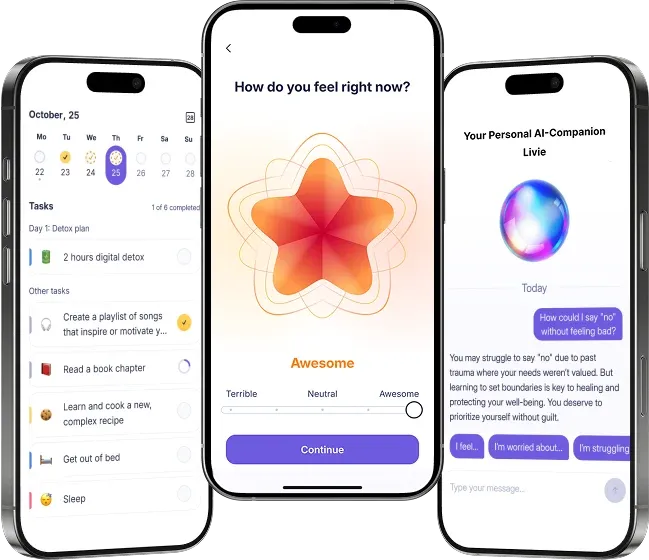
If you feel anxious and want to build a better routine, take a quiz to identify your main needs and get your personalized plan for a calmer mind.
Notice Emotional or Boredom Triggers
Negative emotions often precede a binge eating episode. In a U.S. national study of 5,863 adults, 20.5% reported emotionally eating "often or very often".
Hunger often isn't the reason. You're stressed, bored, tired, or overstimulated - and eating is the fastest way to feel different.
The first helpful step is simply learning to recognize these patterns. When you feel the urge to snack, pause briefly and ask yourself a few simple questions:
- "Am I physically hungry right now, or just looking for stimulation?"
- "What was I doing right before I wanted to eat?"
- "How do I actually feel right now: stressed, lonely, overstimulated, emotionally drained?”
- “What do I notice in my body right now: tension, restlessness, heaviness, numbness?"
You don't need to analyze the situation deeply. Even a short pause can interrupt the automatic habit of reaching for food. If you're not sure what can be affecting you, a quick chat with Liven's smart companion Livie can help you explore the possible causes.
It can also help to keep a small list of non-food responses that work for you when the urge appears. For example:
- Taking a short walk or doing a micro-meditation
- Drinking water or tea and stepping away from your workspace
- Switching tasks if boredom is the trigger
- Sending a quick message to a friend if you’re feeling restless or lonely.
These small shifts give your brain another way to reset your mood. Often, the urge to snack fades once the underlying feeling changes.
For a quick walkthrough, psychotherapist Sarah Dosanjh explains why willpower tends to backfire with emotional eating, and what helps instead:
Make Healthy Foods the Easiest Option
People tend to choose whatever requires the least effort in the moment. If healthier foods require preparation while highly processed options are ready to grab, the brain will usually choose convenience. And yet, processed foods can disrupt your bedtime routine and even interfere with sleep.
To curb mindless eating, pre-cut your favorite snacks, or at least wash the fruit or vegetables you plan to use. This prep makes it easier to grab them, even when you're in the mood to munch.
You can also put yogurt, berries, and anything else that you like on a visible shelf in the fridge. If you're particularly committed to not eliminating your entire stash of chips and cookies, put them on a high shelf. Check how it feels the next day.
Finally, prep ingredients ahead: washed veggies, chopped onions, or portioned grains. When a good meal takes ten minutes instead of forty, you'll make it instead of grabbing whatever's quickest.
Keep a Simple Food Diary
Skip the calorie math. A food diary is just a way to notice what you eat, and how you feel before and after.
Note four things each time:
- What you ate
- When
- How hungry you were going in
- How you felt afterward
Patterns show up faster than you'd expect. Writing things down is its own small intervention. You'll catch yourself before the second helping more often than you used to.
Enjoy Each Bite
Food is one of the most deeply human parts of daily life. It nourishes the body and also brings comfort, connection, and moments of genuine enjoyment. Learning how to stop overeating is all about slowly rebuilding awareness: you learn to notice hunger, create satisfying meals, and make small adjustments that matter for you.
The more shame enters the eating experience, the harder it becomes to hear the body clearly. Curiosity tends to create more lasting change than punishment. With a little time and curiosity, many people find their way back to a more natural rhythm with food, where eating feels both nourishing and enjoyable.
References
- Garg, D., Smith, E., & Attuquayefio, T. (2025). Watching television while eating increases food intake: A systematic review and meta-analysis of experimental studies. Nutrients, 17(1), 166. https://doi.org/10.3390/nu17010166
- Elran Barak, R., Shuval, K., Li, Q., Oetjen, R., Drope, J., Yaroch, A. L., Fennis, B. M., & Harding, M. (2021). Emotional eating in adults: The role of sociodemographics, lifestyle behaviors, and self-regulation - Findings from a U.S. national study. International Journal of Environmental Research and Public Health, 18(4), 1744. https://doi.org/10.3390/ijerph18041744
- Reichenberger, J., Schnepper, R., Arend, A.-K., & Blechert, J. (2020). Emotional eating in healthy individuals and patients with an eating disorder: Evidence from psychometric, experimental and naturalistic studies. Proceedings of the Nutrition Society, 79(3), 290–299. https://doi.org/10.1017/s0029665120007004
FAQ: How to Stop Excessive Eating
Why do I keep eating even when I'm not hungry?
How can I tell the difference between hunger and emotional eating?
Can eating too quickly cause overeating?
Is it better to skip meals if I want to eat less?
What is volume eating, and does it actually help?
How can I make healthier foods more appealing?