Feeling Calm, Overwhelmed, or Numb? The Window of Tolerance Explains All Three



Reviewed by
Tara Passaretti, M.S., LMHC


You had plans. A full to-do list, good intentions, maybe even a coffee waiting. And then... nothing. You sat down, stared at the screen, and felt completely blank. Like someone unplugged you. That flat, disconnected feeling has a name, and understanding it might be what finally helps you work your way back.
In this piece, we'll get into the window of tolerance, how to spot when you've drifted outside of it, and a few small things that can bring you back to steadier ground.
Key Learnings
- The window of tolerance describes the range in which your nervous system can handle stress without panic or shutdown.
- Chronic stress, trauma, burnout, and poor sleep can narrow this window and push the body into hyperarousal (overwhelm) or hypoarousal (numbness).
- Simple body-based techniques like breathing, somatic movement, and social contact can help bring your nervous system back into balance.
What Is the Window of Tolerance?
The window of tolerance is a term coined by psychiatrist Dan Siegel to describe the zone of arousal in which you can function well without feeling overwhelmed or completely shut down. Inside this window, your nervous system is regulated: you can process stress, experience changing emotions, and handle challenges without losing the plot.
Everyone has a distinct window, shaped by their history, biology, and life experiences. However, factors like trauma, chronic stress, and burnout can easily narrow that window.
Hyperarousal vs. Hypoarousal vs. Inside the Window
When you’re outside that optimal zone, your body and nervous system shift into either a hypoarousal state (too shut down) or a hyperarousal state (too activated and overwhelmed).
The table below shows how these states compare to when you’re inside the window.
| Aspect | Hyperarousal | Inside the window | Hypoarousal |
| What it feels like | Flooded, panicky, on edge | Grounded, present | Numb, flat, foggy, disconnected |
| Nervous system state | Sympathetic nervous system overdrive | Balanced, regulated | Collapse, shutdown |
| Thinking | Racing, scattered, catastrophizing | Clear, flexible | Slow, foggy, hard to access |
| Body signals | Elevated heart rate, tension, trembling | Relaxed alertness | Heavy limbs, shallow breathing, low energy |
| Emotional experience | Rapidly changing emotions, overwhelm, anxiety | Full range of emotions accessible and manageable | Emotional numbness |
| Behavior | Snapping, fleeing, overreacting | Responsive, thoughtful, engaged | Withdrawing, shutting down, freeze |
Quizz: Are You Outside Your Window of Tolerance?
For each question, choose the answer that feels most true today.
How to Regulate Hyperarousal
When your system is running hot, you've moved into what the window of tolerance model calls hyperarousal. The aim here is to help your nervous system ease down. Willpower and thinking your way through it tend to fall short.
- Physiological sigh: Try a double inhale followed by a long exhale. The shift in breathing can take the edge off how activated you feel.
- Orienting: Slowly look around your space. Your attention lands on what's in front of you, and the inner threat-scanning quiets down.
- Cold water exposure: A splash of cold water on your face wakes up the mammalian diving reflex. For some people, that triggers a parasympathetic response and eases the heart rate down.
- Rhythmic movement: Walking or another gentle, repeating motion helps the nervous system regulate. The activation can soften with it.
- Containment imagery: Picture your distressing thoughts or feelings held safely in a contained space. It can help you ride out a moment when there's no room to fully process them yet.
In case you want to learn more about the containment imagery technique, here is a beautiful video by Emma McAdam, a Licensed Marriage and Family Therapist (LMFT) with 20 years of experience:
How to Regulate Hypoarousal
When you're below the window, the challenge is to wake up slowly.
- Bilateral stimulation (like alternating tapping or eye movements side to side) shows up in EMDR and other trauma-focused therapies. It can support emotional processing and ease distress, though how it works is still being studied.
- Gentle movement like stretching, walking, or shifting your posture can bring you back into your body and gradually lift arousal. Brief cold exposure can also wake up your alertness in the short term through sympathetic activation.
- Breathing patterns that pick up the pace or depth (within what feels comfortable) can nudge your body toward more activation and a sharper sense of alertness.
- Social cues like a warm facial expression, a familiar voice, or a back-and-forth conversation are linked to parasympathetic regulation and can help you settle into a more grounded state. Supportive relationships and positive social moments are consistently tied to better mental and physical health over the long haul.
Your Window of Tolerance Can Expand Over Time
Hyperarousal and hypoarousal both describe stretches when your body and emotions are turned up or down. Noticing where you are can sharpen how you recognize what you're feeling and shape a response that fits. The more often you practice these strategies, the more natural they tend to feel. And the more you check in with yourself, the clearer the picture you get of your patterns and what helps you cope. For more on emotion regulation and stress management, extra psychoeducational resources can help you go further.
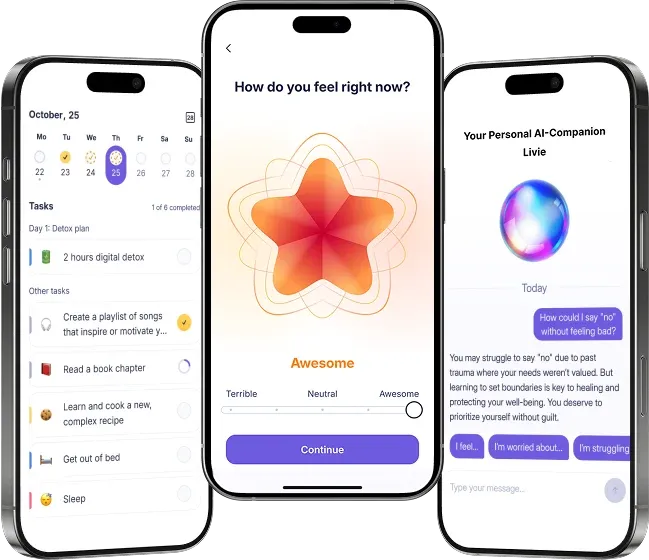
If you want to keep building on this, your personalized wellbeing management plan in the Liven app gives you space to track emotional patterns, build small routines, and try practical tools that can widen your window of tolerance over time. The Liven blog is there too, with more on emotion regulation and stress management whenever you want to read further.

References
- Leitch, L., & McCaw, B. (2024). Time to move forward: Resilience and trauma-informed care. The Permanente Journal, 28(1), 188–192. https://doi.org/10.7812/TPP/23.076
- Stingl et al. (2025). Bilateral stimulation: Differential effects in EEG and peripheral physiology. BJPsych Open, 11(6), e278. https://doi.org/10.1192/bjo.2025.10887
- Therapy in a Nutshell. (2025). The container method for processing trauma, PTSD and intense emotions [Video]. YouTube. https://www.youtube.com/watch?v=8VKDNS1AaKo
FAQ: Window of Tolerance
What is the window of tolerance, and why does it matter?
How does trauma affect your window of tolerance?
Is the window of tolerance the same for everyone?
Can you actually expand your window of tolerance?