Why Do People Stay in Abusive Relationships Even When It Hurts?
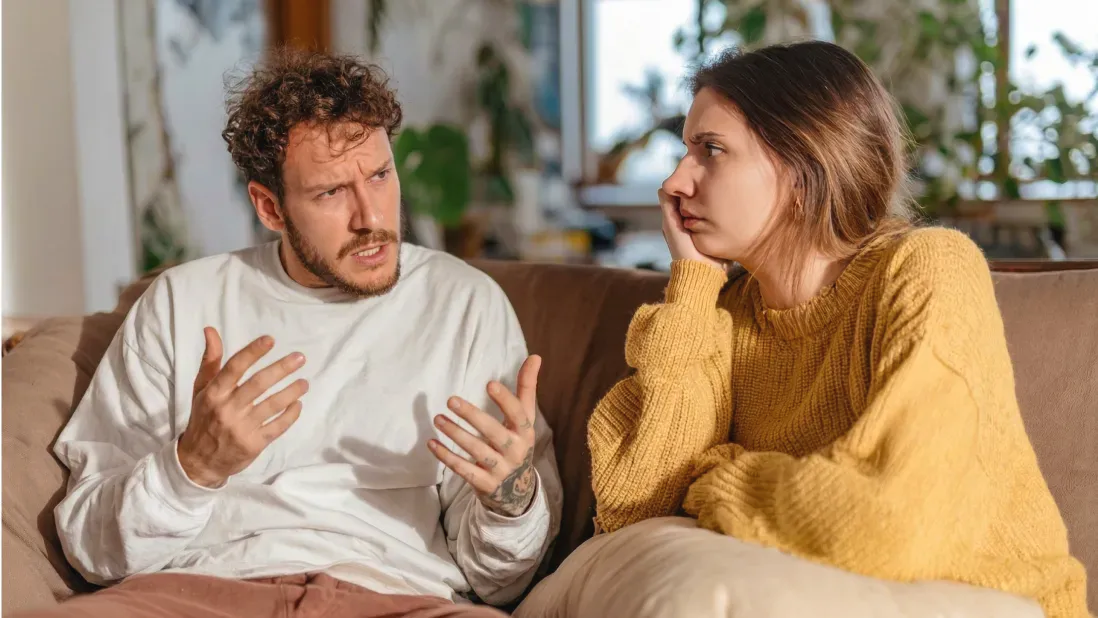



You’re good at reading the room. You know which topics to avoid and the right tone to choose, so there are fewer fights. From the outside, the relationship can look stable. From where you're standing, it feels unsafe most days.
If any of that resonates, this article isn't here to judge you or tell you to just leave. We’re here to answer “Why do people stay in abusive relationships?” and offer realistic steps you can take to protect yourself and regain a sense of control, even while still in the relationship.
Key Learnings
- People stay in abusive relationships because the brain adapts to survive fear and stress, not because they want the abuse.
- Leaving is often the most dangerous moment in the relationship, which is why it needs planning and support.
- Trauma bonding, financial control, children, love, shame, and culture all create real barriers.
- Naming what's happening - trauma bonding, gaslighting, learned helplessness - can loosen its grip.
7 Reasons Why Leaving Is Not That Simple
Psychological, financial, emotional, and cultural factors all make leaving much harder than it looks from the outside.
Understanding what's happening can put some of the ground back under your feet.
1. Your Brain Adapts to Unhealthy Patterns
Meeting the same stressor over and over can quiet the body's alarm response, until what once felt urgent starts to feel ordinary. All in all, your nervous system can't stay in high-alert mode forever.
This is especially true for people who experienced childhood trauma. If our earlier relationships with parents or caregivers included chaos and fear, the brain learns to associate closeness with unpredictability.
So when you encounter a partner who feels familiar, aka controlling and hot-and-cold, your nervous system doesn't register an alarm because everything feels like home (pun unintended).
2. Safety Feels Uncertain
Abusers use fear as a tool of control. They might threaten to take away custody, cut off access to bank accounts, bring harm to the victim, their family, or pet, or self-harm.
When you feel scared, try these:
- Name it out loud (or in writing). "I'm scared right now" creates a small distance between you and the feeling.
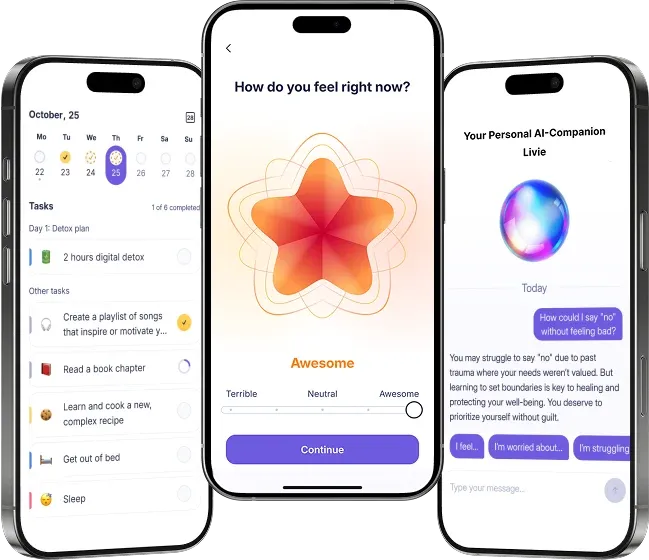
- Write it down privately. Liven's Journal is a secure, personal space to put words to what you're experiencing - no one else sees it.
- Identify one safe person, even loosely. You don't have to tell them everything. Just knowing there's someone helps.
- Contact a hotline anonymously. You don’t have to commit to anything right now - just talk to them. The National Domestic Violence Hotline is available 24/7 at thehotline.org or 1-800-799-7233. The domestic violence hotline also offers live chat if calling feels too risky.
3. The Information Gap Keeps People Stuck
Domestic violence shelters, legal aid organizations, and crisis networks are often underpublicized. And if you grew up in an environment where domestic abuse was common or kept quiet, you might genuinely not know that dedicated resources exist.
- National Domestic Violence Hotline (US): thehotline.org | 1-800-799-7233
- Violence hotline via text: text START to 88788
- Refuge (UK): refuge.org.uk | 0808 2000 247
- Love Is Respect (for young people): loveisrespect.org | Text "LOVEIS" to 22522
- White Ribbon (global): whiteribbon.org
- UN Women: unwomen.org
- Local health organization services - many have domestic abuse coordinators.
These resources can actually become a foundation of your personalized plan for healthier relationships because they give you information, support, and a sense of direction, even if you’re not ready for big decisions.
4. People Hold On to the Good Moments
Abusers are genuinely convincing when they apologize. However, that remorse is a part of the toxic cycle: tension is building → the abusive event occurs → reconciliation (this is where the apologies and promises happen) → calm → tension starts building again.
The relief after tension during the reconciliation stage, combined with warmth and closeness, activates the brain's reward system. The brain begins to associate the abuser with both the pain and the relief from it.
Please remember that genuine change requires more than promises. So, the next time they promise something, ask yourself: What have they actually done to change things last time?
5. There Is Self-Blame and Shame
You might feel ashamed that your relationship didn't work out. Like you should have seen it earlier, left sooner, or somehow prevented it. But hear this: it takes two to make a relationship, and only one person is causing harm here.
The responsibility for abusive situations sits with the abuser - not with you.
If shame surfaces, here are some ways to work with it:
- Write a letter to yourself as if you were writing to a close friend in your exact situation. What would you say to them?
- Talk to Livie. Sometimes it's easier to process shame with someone who won't judge - Liven's Smart Companion is that kind of space, available any time.
- Seek out survivor communities online. Hearing others' stories quietly dissolves the isolation that shame feeds on.
- Remind yourself: leaving is a process, not a moment. There's no shame in where you are right now.
6. Leaving Feels Financially and Emotionally Impossible
If your partner controls the money, you may have no independent access to bank accounts, no savings, a limited work history, or nowhere to go.
Emotional resources matter just as much. If you've experienced social isolation, there might be no one to lean on. Please remember that it’s not your fault.
Try these practical steps:
- Open a private bank account in your name only, even with a small initial deposit. Some banks have programs specifically for survivors.
- Document safely - photos, notes, screenshots stored somewhere your partner can't access (a trusted person's home, a private email they don't know about).
- Local shelters often provide far more than housing: financial counseling, legal support, childcare, and job assistance.
- Legal aid organizations can help with restraining orders, custody, and housing rights - often for free.
7. The World Around Says “Stay”
In many traditional societies, abuse is normalized to the point of being expected, minimized, or even defended. One might face social stigma or be seen as someone who "gave up" or "broke the family."
If your friends or relatives don’t support you, it can feel incredibly lonely. But your experience still matters, even if others don’t understand it.
In situations like this, it can help to seek support outside your immediate circle (online communities, counselors, or hotlines).
You deserve support, even if it doesn’t come from the people you expected.
Where to Get Help Right Now
United States
- National Domestic Violence Hotline: 1-800-799-7233 or text "START" to 88788 | thehotline.org
- Love Is Respect (for young people): 1-866-331-9474 or text "LOVEIS" to 22522 | loveisrespect.org
- StrongHearts Native Helpline: 1-844-7NATIVE
- The Deaf Hotline: video phone 1-855-812-1001
United Kingdom
- National Domestic Abuse Helpline: 0808 2000 247 (24/7) | refuge.org.uk
- Men's Advice Line: 0808 801 0327
- Galop (LGBT+): 0800 999 5428
International
- UN Women
- Hot Peach Pages - directory of domestic violence resources by country
- White Ribbon - global
Final Thoughts: Start With What Feels Possible
Why do people stay in emotionally or physically abusive relationships? Because they're human. Because the brain adapted to protect them. Because they love a person who is also hurting them. Because they have children, debts, fears, and faith. Because leaving is dangerous and complicated, and it rarely happens in one moment.
There's no right moment to act, and no shame in where you are right now.
If you'd like to understand the patterns shaping your relationships a little better, Liven's relationships quiz is a gentle place to start. No pressure, just a few questions and a clearer picture of where you are.
References
- Connections for Abused Women and Their Children (CAWC). (2024). Socioeconomic risk factors for domestic and intimate partner violence.
- Stahl et al. (2025). Childhood trauma may explain gains in relationship satisfaction after integrative couple therapy. Journal of Loss and Trauma, 30(8), 1230–1245. https://doi.org/10.1080/15325024.2025.2481408
- Therapy in a Nutshell. (2025). How to heal from shame, guilt and regret [Video]. YouTube. https://www.youtube.com/watch?v=H95xEa3XjG4
- Yıldız-Akyol, E., & Öztemel, K. (2025). From abuse to resilience in romantic relationships of women. Journal of Family Violence, 40, 1563–1578. https://doi.org/10.1007/s10896-024-00725-9
FAQ: Why Do People Stay in Abusive Relationships
Why don't people just leave abusive relationships?
What is trauma bonding, and why does it make leaving so hard?
Is it dangerous to leave an abusive relationship?
Do abusers ever change?
Why do some people return after leaving?
How does financial abuse keep people from leaving?
Does staying mean a person is weak or that they love the abuse?
How can I support someone who is staying in an abusive relationship?
How can someone safely plan to leave?
Where can someone get help right now?