Posture Correction Exercises, A Mind-Body Approach to Standing Taller
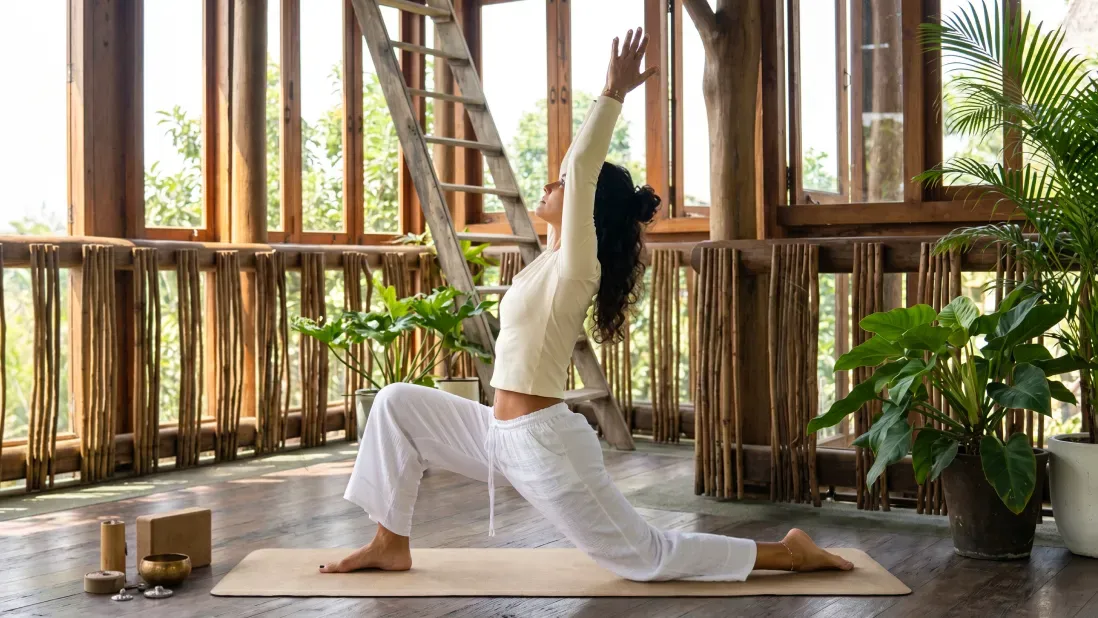



Take a moment and notice how you're sitting. Are your shoulders rounded forward, collapsing your chest? Is your head drifting toward the screen? We often think of posture as a purely physical issue, a bad habit to correct with brute force. What if your posture is a story? A physical reflection of your stress, your mood, and your history.
The way you hold yourself is a constant feedback loop between your body and your brain. A study of nearly 10,000 participants found that upright and expansive postures reliably increased self-confidence and improved mood. This is about gently and intentionally realigning your body to support your mental well-being, not forcing yourself into a rigid, unnatural position.
These posture correction exercises are designed to do more than strengthen your back. They help you listen to your body and rewrite its story from the inside out.
Key Takeaways
- Posture is emotional: upright positions link to confidence and positive thinking, while slumped ones tilt toward more negative thoughts.
- Posture and mood form a two-way loop, where stress collapses the body, and a collapsed body reinforces the stress.
- Mindful, somatic movement releases chronic tension more effectively than forcing positions.
- Simple, consistent mobility and chest-opening exercises shift both alignment and emotional state, no gym required.
Why Your Body Remembers What Your Mind Forgets
Think of your posture as your body's default setting. Over time, that setting gets shaped by your experiences. Long hours at a desk, daily stress, moments of worry, or periods of low confidence all create subtle patterns of muscular tension.
A study of office workers found that individuals with high work-related stress were significantly more likely to report chronic neck and shoulder pain, a common symptom of poor posture.
When you feel stressed or threatened, your body instinctively curls inward, a protective mechanism that rounds the shoulders and tightens the chest. When you feel down, your energy drops, and your posture often follows. Over time, these positions become locked in as chronic tension. Your body essentially learns to hold onto these emotional states.
This is where the idea of a body signature comes in. Liven's self-discovery quiz walks you through identifying the specific body signature your past experiences have left behind, starting with where you tend to hold tension.
Is it in your jaw? Your shoulders? Your lower back? Awareness is the first step toward releasing those patterns. The goal is understanding what your body is trying to tell you, not blaming yourself for slouching.
Somatic Exercises: The Art of Listening to Your Body
Unlike traditional exercises that focus on sets and reps, somatic exercises are about internal awareness. They're slow, gentle movements designed to reconnect your brain with your muscles, releasing tightness at the source. Mindful movement changes how your body holds tension, both the muscle patterns you can feel and the nervous-system signals underneath.
Here are 3 simple somatic exercises to help you tune in and release postural tension.
1. The Cat-Cow Flow
This classic yoga pose is perfect for improving spinal mobility and developing awareness of your back's position.
How to do it: Start on your hands and knees, with your wrists under your shoulders and your knees under your hips.
Inhale (Cow): As you inhale, drop your belly toward the floor, lift your chest and tailbone, and look slightly forward. Feel the gentle arch in your spine. Notice which muscles are engaging.
Exhale (Cat): As you exhale, press into your hands and round your spine toward the ceiling, tucking your chin to your chest. Feel the stretch between your shoulder blades.
The somatic twist: Don't just go through the motions. Do this for 60 seconds and focus entirely on the sensation of each vertebra moving. Where do you feel stiffness? Where does it feel fluid?
2. The Mindful Chin Tuck
Forward head posture is incredibly common in anyone who spends time at a screen. This exercise helps reverse it.
How to do it: Sit or stand tall, looking straight ahead. Gently place two fingers on your chin. Without tilting your head up or down, guide your chin backward, creating a double chin. You should feel a stretch at the back of your neck. Hold for 5 seconds, then release.
The somatic twist: As you hold the tuck, notice the subtle release of tension at the base of your skull. Imagine you're lengthening the back of your neck. Repeat 10 times, attending both to the sensations of release and to the quality of the controlled movement that creates them.
3. The Constructive Rest Pose
This restorative pose allows your nervous system to down-regulate and your muscles to release without active effort.
How to do it: Lie on your back with your knees bent and your feet flat on the floor, about hip-width apart. Rest your arms comfortably by your sides or on your belly.
The somatic twist: Lie here for 5 to 10 minutes. Your only job is to notice. Feel the contact points between your body and the floor. Notice your breath. As you exhale, imagine your muscles getting heavier and softer, releasing their grip. This practice helps your body find its natural alignment without force.
Strengthening Exercises to Support Your New Posture
Once you've started to release chronic tension, build strength in the muscles that support an upright, open posture. A structured exercise program tended to reduce pain, disability, and job stress in office workers with chronic neck pain, with meaningful shifts showing up within 8 weeks.
Incorporate these gentle moves into your routine three to four times a week.
1. The Doorway Chest Opener
This stretch counteracts the rounding of the shoulders that comes from sitting, driving, and looking at phones.
How to do it: Stand in a doorway and place your forearms on the frame, with your elbows bent at a 90-degree angle. Step forward with one foot until you feel a gentle stretch across your chest. Hold for 30 seconds, breathing deeply. Avoid arching your lower back. Imagine your shoulder blades sliding down your back as you stretch.
2. The Resistance Band Row
This move strengthens the rhomboids and trapezius muscles in your upper back, which are crucial for pulling your shoulders back and down.
How to do it: Sit tall with your legs extended. Loop a resistance band around the soles of your feet. Holding the ends of the band, pull your elbows straight back, squeezing your shoulder blades together. Pause for a moment, then slowly return to the starting position. Aim for two sets of 12 to 15 repetitions.




Putting It All Together: Your Daily Posture Reset
Lasting change comes from small, consistent actions, not a one-time fix. Instead of aiming for perfect posture, aim for moments of postural awareness throughout your day.
- Set a reminder. Use your phone or a sticky note to prompt a posture check every hour. When the reminder goes off, take one deep breath, roll your shoulders back and down, and gently lengthen your spine.
- Breathe into it. When you feel stressed, notice if your posture has collapsed. Take 30 seconds to sit upright and take a few deep, diaphragmatic breaths. Sitting tall and breathing slowly shifts your autonomic nervous system toward a calmer state, which is how physiological arousal comes down.
If you want a daily structure that supports the kind of awareness this work asks for, Liven's short quiz puts together your personalized well-being management plan with daily check-ins that can help you notice your patterns sooner.
Try One Move This Week
Your posture is a part of you to be understood. Blending mindful awareness with gentle movement does more than help you stand up straighter. It releases old patterns of tension, supports your emotional well-being, and lets you carry yourself with a little more ease and confidence.
Pick one exercise from this list to try today. The doorway stretch before you sit down at your desk. A 60-second Cat-Cow before bed. One mindful chin tuck, the next time your phone alerts you to a posture check. Noticing matters more than getting it right.
Three weeks of one consistent practice tells you more about your body than any amount of reading does. Start there.
Sources
1. Alshehre, Y. M., Mohamed, S. H. P., Nambi, G., Almutairi, S. M., & Alharazi, A. A. (2023). Effectiveness of physical exercise on pain, disability, job stress, and quality of life in office workers with chronic non-specific neck pain: A randomized controlled trial. Healthcare, 11(16), Article 2286. https://doi.org/10.3390/healthcare11162286
2. Karatrantou, K., & Gerodimos, V. (2024). A comprehensive workplace exercise intervention to reduce musculoskeletal pain and improve functional capacity in office workers: A randomized controlled study. Healthcare, 12(9), Article 915. https://doi.org/10.3390/healthcare12090915
3. Körner, R., Röseler, L., Schütz, A., & Bushman, B. J. (2022). Dominance and prestige: Meta-analytic review of experimentally induced body position effects on behavioral, self-report, and physiological dependent variables. Psychological Bulletin, 148(1-2), 67–85. https://doi.org/10.1037/bul0000356
4. Rios-Peralta, K. N., Silva, A. J. C., Alves-de-Sousa, R. J., Curran, K. M., & MacManus, D. B. (2025). A computational study of forward head posture biomechanics. Journal of the Mechanical Behavior of Biomedical Materials. https://www.sciencedirect.com/science/article/abs/pii/S1751616125004047
FAQ: Posture Correction Exercises
How long does it take to correct your posture?
Can you correct posture at any age?
What are the best posture correction exercises for office workers?
How often should I do posture exercises?
Are posture correctors and braces actually useful?
Does posture really affect mood and confidence?
Can poor posture cause headaches and neck pain?
Do I need a physical therapist to fix my posture?
What's the difference between somatic and traditional posture exercises?
Can I correct my posture without going to the gym?