Somatic Awareness Practices to Reconnect With Your Body
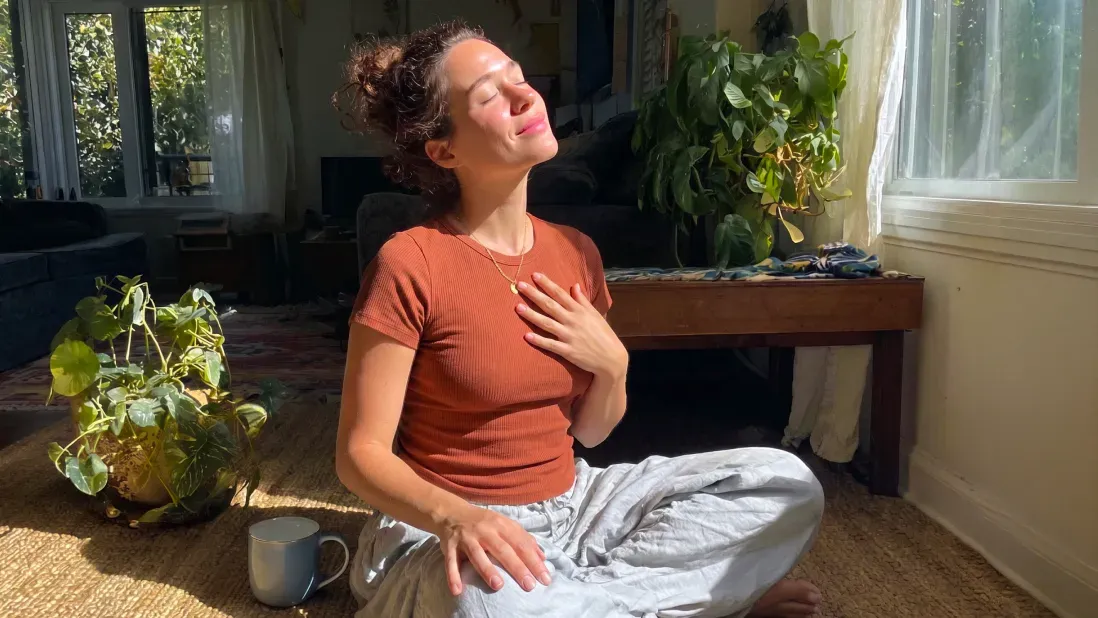



Most of us deal with stress the same way: in our heads. We reason through it, distract ourselves, and wait for the feeling to pass. But a lot of what we experience doesn’t start in the mind.
It shows up in the body first. Tight shoulders, shallow breathing, a constant sense of restlessness. The nature of modern life can make it worse for many people. Screens, schedules, and the pressure to stay connected keep attention firmly above the neck. Over time, your body's signals fade into the background, even though they’re still shaping how you feel.
Somatic awareness is all about reversing that pattern. Instead of staying only in your thoughts, you begin paying attention to physical sensations as they happen. This kind of awareness, often called interoception, plays a role in how your body regulates stress and emotion.
It doesn’t require complex techniques, as it’s basically a shift in attention. And once that shift happens, you start noticing things earlier, before they build into something harder to manage.
Key Learnings
- Somatic awareness helps you notice stress in your body early, like tight shoulders or shallow breathing, before it escalates.
- You don’t need complex techniques. Somatic awareness starts with simply paying attention to physical sensations as they are.
- Some stress needs movement, not stillness. Somatic exercises like shaking or slow stretching help release built-up tension.
- Start small and stay consistent. Even a minute of somatic awareness each day can improve how you handle stress over time.
What Somatic Awareness Practices Look Like
Somatic exercises are usually simple and low-intensity. They involve noticing sensations, breathing, or moving in a slow and intentional way. The focus is on how your body feels in the moment, not on performance or outcomes.
These practices take just a few minutes during the day, yet their impact can build over time. Body-based awareness can improve emotional regulation and support mental health recovery, especially in trauma contexts.
The Body Scan
The first practice we have on our list is the body scan. This is one of the most accessible ways to reconnect with your body. It helps you notice what’s already happening without immediately trying to change it.
You might start at your feet and slowly move your attention upward. Along the way, you notice sensations like tension, warmth, heaviness, or even areas that feel neutral.
While you're doing this exercise, instead of focusing on the details, try to stay with the act of noticing itself. There's no urgency here or any need to fix anything or change how your body feels. You’re giving yourself a moment to observe what’s already there.
That alone can create a shift. Noticing something clearly changes your relationship to it, even when it doesn't immediately change the sensation itself. You’re no longer disconnected from what’s happening.
Slow, Intentional Movement
Most movement is goal-oriented. You exercise to achieve something, or you move quickly to get somewhere. Somatic movement works differently.
It focuses on how movement feels rather than what it achieves. This might mean stretching slowly, rolling your shoulders, or walking at a slower pace while paying attention to each step. These kinds of movements are designed to improve body awareness and release tension through mindful attention.
Over time, this helps retrain the connection between your brain and body. You begin to notice where tension builds and how your body holds stress.
Breath Awareness
Breathing is often the first thing people turn to in somatic exercises, but it can feel mechanical if approached as something to control.
A better place to start is simple observation, like with most other somatic practices. Notice where your breath sits. Is it shallow or uneven? Are you holding it without realizing? This kind of awareness matters because your breath is closely tied to your nervous system.
From there, you can guide it gently. Letting your exhale last slightly longer than your inhale is often enough to create a sense of slowing down.
The key is to keep it simple. You’re not trying to perform a technique. You’re staying with the sensation of breathing and letting your body respond.
Somatic Orienting
Orienting is a subtle somatic experiencing practice that helps your nervous system shift out of a perceived sense of threat, in everyday situations that are actually safe. It involves looking around your environment and taking in what's around you without analyzing it. Which sounds easy, until you realize your eyes went straight to your phone.
You might notice the light in the room, the shape of objects, or something familiar in your space. There's no need to label or interpret anything. You're simply letting your attention land.
According to Dr. Stephen Porges' polyvagal theory, your nervous system is constantly running a background check on your surroundings, a process he called neuroception, scanning for cues of safety or threat before you're even consciously aware of it. When you take in your environment in a calm, deliberate way, you're essentially feeding that system the information it needs to downshift to a safer mode.
Over a few moments, you might notice your breathing soften, or your body feel slightly more settled.
Butterfly Hug
The butterfly hug is a simple self-soothing technique drawn from EMDR therapy, originally developed by therapist Lucina Artigas while working with child survivors of a hurricane in Mexico.
This practice is a simple way to create a sense of comfort when emotions feel heavy or difficult to process. It involves crossing your arms over your chest so your hands rest near your shoulders, then gently tapping in an alternating rhythm.
The light, repetitive tapping creates a steady rhythm that your body can follow. Over time, this can help your system settle and feel more grounded.
What matters is not doing it perfectly, but noticing how it feels. The contact of your hands, the rhythm of the movement, and the response in your body. Sometimes this can bring up emotion, including the urge to cry. If that happens, it’s part of the process.
The aim is to support your body in releasing what it’s holding in a safe and steady way.
The butterfly hug is easier to do than to describe. Watch this 3-minute video, and you'll have it straight away:
Wiping and Shaking
Not all stress responds well to stillness. Some of it feels like energy that needs to move. In those moments, more active practices like wiping motions or shaking can help.
The wiping motion is less about the movement itself and more about the intention behind it. Lean slightly forward and use both hands to make broad sweeping gestures, from your shoulders down to your fingertips, or from the center of your body outward, as if brushing something off your skin. It gives your body a physical way to process frustration or mental clutter, shifting you out of thinking and into action.
Shaking works similarly, but with more intensity. Start with your hands and let the movement travel up through your arms, shoulders, and torso. Keep it loose and uncontrolled. It mirrors a natural discharge response seen in animals after stress. Even a short period of shaking can help release tension that’s been held in the body.
Afterward, come to stillness and notice how your body feels once that energy has moved through.
If you're not sure what somatic shaking actually looks like, this short video makes it easy to follow along:
The Power Stance
Some practices calm the body. Others help you reconnect with a sense of presence and strength. This one is the second kind.
Stand with your feet wider than your hips. Lower into a soft squat and raise your arms out to your sides, like you're taking up more space than usual. Hold for a few breaths and notice what shifts.
The change runs deeper than the body. How you carry yourself shapes how you feel, and the link between posture and felt confidence is one of the more reliable findings to come out of this research.
There's no rush. Moving at your own pace and staying with the sensation is what makes the difference. Over time, this kind of standing helps you settle into a state that feels both active and grounded.
Every practice here works differently. This table helps you match the right one to how you're actually feeling:
| Practice | What you do | Best for | Time needed |
|---|---|---|---|
| Body scan | Move attention slowly through your body, noticing sensations without trying to change them | Anxiety, disconnection, difficulty sleeping | 5-20 min |
| Slow, intentional movement | Stretch, roll your shoulders, or walk slowly while focusing on how each movement feels | Chronic tension, mental fatigue, stiffness | 5-10 min |
| Breath awareness | Observe your breath without controlling it, then gently extend the exhale | Stress, shallow breathing, feeling overwhelmed | 2-5 min |
| Somatic orienting | Look around your environment slowly, taking in light, shapes, and familiar objects | Hypervigilance, feeling unsafe, low-grade anxiety | 2-5 min |
| Butterfly hug | Cross arms over chest and tap alternately near shoulders in a slow rhythm | Emotional heaviness, grief, feeling destabilized | 2-5 min |
| Wiping & shaking | Use sweeping hand motions or full-body shaking to physically move built-up tension | Restlessness, frustration, stuck energy | 2-5 min |
| The power stance | Stand in a wide stance, lower and raise your body with arms open and engaged | Low energy, feeling small or disconnected from your body | 3-5 min |
Turning Awareness Into a Daily Habit
You don’t need to do all of this at once. And that's good, because reading seven new practices and immediately doing all of them is its own kind of stress. In fact, it’s better to start with one practice that feels simple enough to try without overthinking.
That might be a short body scan before bed or a minute of noticing your breath during the day. The aim here is to build familiarity and the habit of checking in with your body. As you continue to practice somatic exercises, the awareness you find makes it easier to notice stress earlier and respond before it builds.
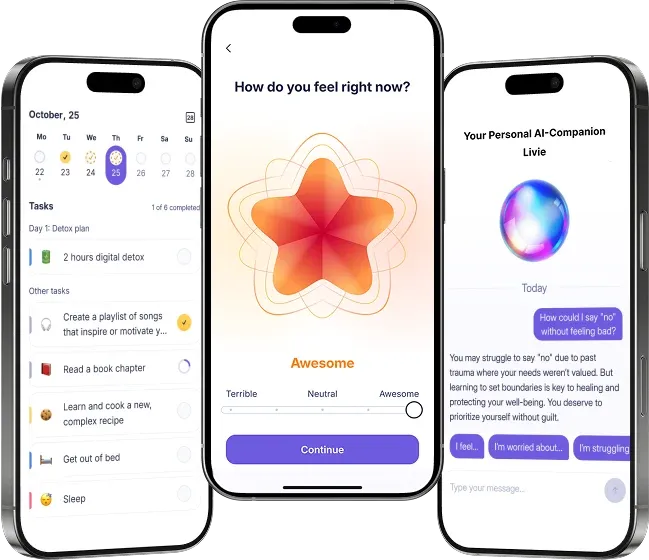
If you want support along the way, Liven can help you stay consistent with this process. Its Mood Tracker and Journal make it easier to connect patterns between your thoughts, emotions, and physical sensations, and build a rhythm that feels more grounded over time.
For Those Who Want to Dive Deeper
If you want to go deeper into somatic awareness and the body-mind connection, these are worth your time.
- The Body Keeps the Score by Bessel van der Kolk. The most cited book on how trauma and chronic stress get stored in the body, and what it actually takes to release them. Dense in places, but full of insights that reframe how you think about your own nervous system.
- Waking the Tiger by Peter Levine and Ann Frederick. Written by the founder of Somatic Experiencing, this book makes the science of body-based healing genuinely readable. A good starting point if van der Kolk feels like too much.
- YouTube channel by Irene Lyon, Master of Science and a nervous system expert. Free, practical, and grounded in nervous system science. Lyon breaks down somatic concepts without the spiritual fog that sometimes surrounds this topic - good for people who want to understand why these practices work, not just how to do them.
- The Wisdom of Trauma by Gabor Maté. In this documentary, Maté explores how unprocessed emotion and stress shape physical health, with real stories that make the theory feel human and recognizable.
- Heal (2017) on Netflix. A broader look at the mind-body connection, lighter on depth but easy to watch, and a good entry point for anyone new to this space.
References
- Elkjær, E., Mikkelsen, M. B., Michalak, J., Mennin, D. S., & O'Toole, M. S. (2022). Expansive and contractive postures and movement: A systematic review and meta-analysis of the effect of motor displays on affective and behavioral responses. Perspectives on Psychological Science, 17(1), 276–304. https://doi.org/10.1177/1745691620919358
- Leech, K., Stapleton, P., & Patching, A. (2024). A roadmap to understanding interoceptive awareness and post-traumatic stress disorder: A scoping review. Frontiers in Psychiatry, 15, 1355442. https://doi.org/10.3389/fpsyt.2024.1355442
- Nicholson, W. C., Sapp, M., Karas, E. M., Duva, I. M., & Grabbe, L. (2025). The body can balance the score: Using a somatic self-care intervention to support well-being and promote healing. Healthcare, 13(11), 1258. https://doi.org/10.3390/healthcare13111258
- Porges, S. W. (2022). Polyvagal theory: A science of safety. Frontiers in Integrative Neuroscience, 16, 871227. https://doi.org/10.3389/fnint.2022.871227
- Sparacio, A., IJzerman, H., Ropovik, I., Giorgini, F., Spiessens, C., Uchino, B. N., Landvatter, J., Tacana, T., Diller, S. J., Derrick, J. L., Segundo, J., Pierce, J. D., Ross, R. M., Francis, Z., LaBoucane, A., Ma-Kellams, C., Ford, M. B., Schmidt, K., Wong, C. C., . . . Jiga-Boy, G. M. (2024). Self-administered mindfulness interventions reduce stress in a large, randomized controlled multi-site study. Nature Human Behaviour, 8(9), 1716–1725. https://doi.org/10.1038/s41562-024-01907-7
FAQ: Somatic Awareness Practices
What are somatic awareness practices?
What does somatic actually mean?
Do somatic practices actually help with stress or anxiety?
Why do emotions show up in the body?
What are some simple somatic exercises I can try daily?
How often should I practice somatic awareness?
Is it normal to feel emotional during these practices?
Can I practice somatic awareness on my own?