
Examples of Emotional Intelligence in Everyday Life



Written by
Nadine M., Editorial Team Lead at Liven

Reviewed by
Tara Passaretti, M.S., LMHC


Emotional intelligence (EI) shapes how we move through everyday life: how we respond to stress, handle conflict, and build relationships. It influences the tone of our words, how we interpret others' behavior, and even the decisions we make in high-pressure moments.
If you’ve ever taken a deep breath instead of reacting impulsively, checked in on a struggling teammate, or paused to understand your emotions before speaking, you’ve shown emotional intelligence.
This article shares practical examples of emotional intelligence and how developing it through consistent reflection and the right tools can strengthen your relationships, leadership, and overall well-being.
Key Learnings
- Emotional intelligence shapes how you manage emotions, handle conflict, and build strong relationships in everyday life.
- High EI involves self-awareness, self-regulation, empathy, and effective social skills.
- Low EI often leads to impulsive reactions, defensiveness, and strained interpersonal relationships.
- Emotional intelligence can be developed over time through reflection, mindful pauses, and consistent practice.
What Emotional Intelligence Looks Like
Daniel Goleman, the psychologist who popularized the concept of emotional intelligence, broke it down into five core components:
- Self awareness
- Self regulation
- Motivation
- Empathy
- Social skills
High emotional intelligence means responding appropriately instead of reacting impulsively. It’s the difference between managing stress constructively and having emotional outbursts that damage your interpersonal relationships.
Low emotional intelligence often shows up as defensiveness, difficulty handling feedback, strained relationships, or an inability to remain calm in stressful situations.
The encouraging part is that emotional intelligence is a skill. And like any skill, it can be strengthened with certain practices.
💡 Tip: To get instant help with managing stress and developing emotional awareness, take Liven's quiz to get your personalized plan for a calmer mind!
High vs Low Emotional Intelligence
Now that we understand what emotional intelligence means, let’s look at some practical examples of how people with high or low EI tend to behave.
| High Emotional Intelligence | Low Emotional Intelligence |
|---|---|
| Self-aware and reflective | Frequent emotional outbursts |
| Manages emotions effectively | Difficulty handling feedback |
| Shows empathy and strong social skills | Struggles with social awareness |
| Responds appropriately in conflict | Escalates conflict unnecessarily |
| Creates a positive culture within teams | Damages relationships through impulsive reactions |
Self-Awareness: Recognizing Your Own Emotions
Self-awareness is the foundation of all examples of emotional intelligence. It’s the ability to notice what you’re feeling in the moment and understand why you're feeling that way.
A self-aware person would think:
- I’m irritated because I feel ignored in this meeting.
- I’m overwhelmed because I’ve taken on too much.
- I’m reacting strongly because this reminds me of a past experience.
Instead of letting their emotions unconsciously drive their behavior, emotionally intelligent people pause and reflect. In everyday life, this might look like recognizing stress before snapping at a loved one, or noticing jealousy rather than projecting it outward.
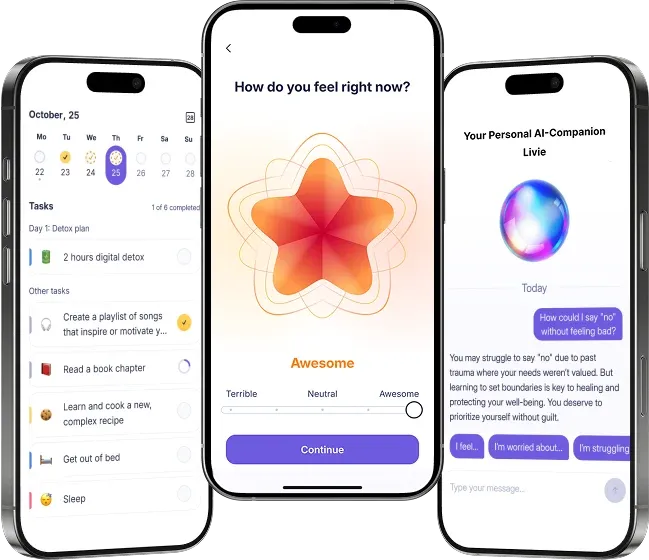
This is where structured reflection becomes powerful. Apps like Liven support self-awareness by offering mood tracking and guided journaling prompts. By regularly checking in with your feelings, you build a clearer understanding of patterns, when stress peaks, what triggers frustration, and what improves your positive mood.
Over time, this awareness gives you greater emotional control.
Self-Regulation and Self-Management: Handling Emotions Effectively
Self-regulation is the ability to manage your emotions effectively, especially in tense or challenging moments. It builds on self-awareness by helping you turn emotional insight into thoughtful, constructive actions.
Examples of emotional self-regulation:
- Taking a deep breath before responding to criticism.
- Choosing to remain calm instead of escalating a conflict.
- Stepping away briefly to prevent emotional outbursts.
High emotional intelligence doesn’t mean you don’t feel anger, disappointment, or stress. It means you manage those negative emotions so they don’t dictate your behavior.
Low emotional intelligence, on the other hand, often leads to impulsive responses, such as harsh words, defensive reactions, or prolonged resentment. Practicing self-regulation consistently builds resilience.
You can use guided exercises to slow down emotional reactions by creating intentional pause points. When you build the habit of checking in before responding, you strengthen your ability to handle conflict and stressful situations with clarity.
Social Awareness and Empathy in Everyday Interactions
Social awareness is the ability to understand what others are feeling, even when they don’t say it directly. It involves paying attention to tone, body language, and subtle shifts in behavior. Empathy is a key part of emotional intelligence. It means recognizing someone’s feelings and responding with understanding.
Emotional intelligence examples of empathy:
- Noticing a team member seems withdrawn and asking how they’re doing.
- Acknowledging someone’s frustration instead of dismissing it.
- Saying, “That sounds difficult,” rather than minimizing their experience.
Emotionally intelligent people understand that human beings want to feel heard. Showing empathy strengthens interpersonal relationships and builds trust.
In the workplace, empathy improves team collaboration and cohesion. In leadership, it helps guide employees toward a common goal without ignoring individual needs.
When you build awareness around how your words and tone impact people, you naturally respond in more constructive ways.
The communication coach Alexander Lyon explains how to communicate more empathetically with some clear examples in this video:
Handling Conflict and Strengthening Bonds
Relationship management is where emotional intelligence becomes visible to others. It’s the ability to resolve conflicts, communicate clearly, and maintain healthy connections.
Examples of Emotional Intelligence in Conflict:
- Using calm, measured words instead of attacking character.
- Asking clarifying questions to understand the other person’s perspective.
- Focusing on solving problems instead of assigning blame.
High EI individuals don’t avoid conflict; they handle it constructively. They remain calm, even when discussions become emotionally charged. Low EI behaviors, by contrast, often escalate disagreements, e.g., interrupting, dismissing, or reacting defensively.
When you manage emotions effectively during disagreements, you can preserve relationships. Over time, this creates stronger bonds, healthier teams, and more collaborative environments.
Developing emotional intelligence in this area often requires reflection after challenging interactions. This is where journaling comes in handy.
Daily journaling can help you revisit a conflict, identify what triggered your reaction, and think through how you might respond differently next time. That reflective practice strengthens relationship management skills in a very practical way.
Motivation and Emotional Intelligence in Life and Work
Motivation is another pillar of emotional intelligence. It's the ability to stay committed to your goals even when you don't feel like your best self. Emotionally intelligent people understand that feelings pass and moods shift, so they don't let a bad afternoon derail a project they've been building for months.
Examples of Emotional Intelligence and Motivation:
- Viewing failure as feedback rather than proof of inadequacy.
- Maintaining focus during organizational stress.
- Adjusting strategies instead of giving up entirely.
High emotional intelligence supports better decisions under pressure because emotions are acknowledged without being allowed to take control. Leaders who can do this steer people through uncertainty without adding to the chaos. In daily life, it shows up as: keeping promises to yourself, maintaining habits when motivation dips, and not letting one rough patch poison a relationship.
Being aware of how your emotions work will help you become more emotionally intelligent. Notice when your energy drops. Track what precedes it. Set small, specific goals and review whether you hit them. The more you understand your own patterns, the earlier you catch yourself sliding, and the easier it becomes to choose a more intentional response.
📚 If you want to go deeper into this topic, Daniel Goleman's book Emotional Intelligence is a great read!
Developing Emotional Intelligence Over Time
Developing emotional intelligence is a gradual process. It requires consistent awareness and intentional practice. You can begin by:
- Paying attention to emotional triggers
- Practicing mindful pauses in stressful situations
- Reflecting on how your emotions impact others
- Asking for honest feedback
- Tracking patterns in your moods and reactions
Small improvements compound over time. Each moment of awareness strengthens self-regulation. Each empathetic response builds trust. Each constructive conversation reinforces relationship management skills.
Tools like Liven can support this growth by combining mood tracking, journaling, and structured reflection, turning emotional intelligence from an abstract idea into a daily practice. What matters most is not perfect control, but the willingness to pause, understand your feelings, and choose responses that strengthen your relationships and overall well-being.
FAQ: Examples of Emotional Intelligence
What are the five components of emotional intelligence?
Can emotional intelligence be learned or improved?
What are the signs of low emotional intelligence?
Why is emotional intelligence important in the workplace?
How does emotional intelligence affect relationships?
What is the difference between IQ and EQ?
What is the difference between EI and EQ?