How to Recover from Burnout And Get Your Energy Back




Burnout is exhaustion that sleep can't fix. You wake up already drained, your brain feels heavy before the day starts, and answering a handful of emails takes the energy a whole afternoon used to.
After a while, you start to notice it doesn't feel like normal fatigue. It's what happens when stress never turns off, when you're always low-key thinking about something, always partly working in your head. Eventually, your body and mind start saying no for you.
A lot of people read this and think they just need more discipline. But burnout has nothing to do with willpower. It's about a capacity you've already spent. Recovery starts the moment you stop trying to force your way through it.
This piece walks you through what burnout is and what you can start doing today to feel like yourself again.
Key Learnings
- Burnout is what happens when stress stops switching off, even when you do.
- Recovery happens through small daily shifts, the kind that feel almost too small to matter.
- Real rest means actually disengaging, not half-working in the background.
- Easing your expectations of yourself for now is how you make room to recover.
Burnout and Depression Are Not the Same Thing
Before we move forward, let's note that burnout and depression are not the same thing. It’s easy to confuse burnout with depression because they can feel similar on the surface. Both can involve low energy, lack of motivation, and a sense of detachment.
Burnout is usually tied to a specific context, most often work or prolonged stress. It tends to improve when the source of pressure changes. Depression, on the other hand, is more pervasive. It affects how you feel across all areas of life, not just one.
That difference matters. Depression often needs treatment. Burnout often needs a change in the conditions causing it. Knowing which one you're in tells you where to put your energy.
What Burnout Is Doing And Why Rest Alone Doesn't Fix It
Burnout changes how your day feels. Mornings start foggy, you take longer to get moving, and small tasks feel heavier than they should.
Alongside that, your focus thins out, and a kind of distance settles in. You're getting things done, but you're not really there with them.
This is what burnout looks like when you live inside it. It builds when the demands keep outrunning your capacity. And when the pressure doesn't shift, the feeling tends to stay where it is.
Where to Start Your Burnout Recovery
Recovery starts when what drains you weighs less than what refuels you. It happens slowly, with good days and harder ones along the way.
Look at your week as it runs. Not the planned version. The Tuesday-afternoon-three-tabs-and-a-Slack-ping version. Most people are bouncing between tasks, answering as messages land, saying yes when they should be saying "next week."
Pick one thing to ease. A cutoff time for emails. A non-urgent task pushed back a day. An extra day asked for. Small changes like these create the bit of space where recovery can start.
Relearning How to Rest
A lot of what we call rest doesn't quite count. Scrolling on the couch, half-working from bed, leaving a tab open just in case. Your body is still, but the system stays switched on. Real rest happens when your brain actually disengages, even for a little while. A walk without your phone. An hour spent on something that doesn't matter. A few minutes of micro-meditation to give your mind a place to set things down.
At first, this can feel uncomfortable, especially if you’re used to being constantly active. But it’s necessary. Recovery depends on giving your mind and body a chance to slow down.
Healing Your Body's Basics
Burnout tends to throw off the basics: how you sleep, how you eat, how much you move. Sleep may become inconsistent. Meals can become irregular. Movement seems to drop off.
It’s not complicated, but it matters. Your physical state directly affects your mental state. Getting back to consistent sleep, regular meals, and some form of daily movement can stabilize your energy more than you’d expect.
Establishing a consistent rhythm and getting back into routine can be one of the fastest ways to recover from burnout, as Kati Morton, a licensed therapist, explains in her video:
Creating Boundaries that Protect Your Energy
Burnout can grow in environments where there’s no clear boundary between work and everything else. Messages come in at all hours, and work spills into personal time. Your mind never fully switches off.
Introducing boundaries helps create separation. That might mean defining when your workday ends, limiting how often you check messages outside of that time, or creating a physical shift between work and rest.
During COVID-19, many people were pushed to work from home, which blurred the line between work and personal time for them. Research from that time showed us that when these boundaries break down, people experience lower happiness and struggle to maintain healthy routines. This ultimately accelerates burnout.
Setting clear boundaries, then, acts like a protective reset: it creates space to restore energy, rebuild healthy routines, and interrupt the stress cycle that burnout feeds on.
Getting Out of Constant Reaction Mode
Burnout has a sneaky companion: constant reactivity. You spend your days responding. To pings, to requests, to whatever lands in front of you next. By the time the day ends, you've been busy for hours and can't quite say what you actually chose to do.
A small return of agency goes a long way here. Mapping out tomorrow before tomorrow happens. Carving out a couple of hours that aren't open to interruption. Naming the tasks that don't actually need doing this week. These won't transform your week on their own. They give you back the feeling that you're shaping the day, not just absorbing it.
Reconnecting with Something Outside of Work
Burnout makes your world smaller without you noticing. Your week starts revolving around what's due, what's owed, and what's still on the list. Eventually, you start to feel like you only count when you're producing something.
Recovery means letting your life get a little wider again. Doing something that doesn't show up on any to-do list. Cooking a slow dinner on a Tuesday for no reason. Drawing in a notebook you're not planning to show anyone. Seeing a friend with nothing on the agenda except being seen. None of this is impressive on paper. That's the point. It reminds you that you're a whole person, not a delivery system for outcomes.
Adjusting Your Expectations of Yourself
This part is genuinely hard. If you've spent years being the person who delivers, who shows up, who handles it, accepting that you can't hold that line right now feels like losing something. It isn't, but it feels that way. Recovery still asks for it.
Trying to run at full capacity while you're burned out usually just stretches the cycle out. The way out is quieter than it sounds. Easing the bar for a while. Focusing on what genuinely has to happen today, instead of what you'd be doing if you were at your best. That softer pace is the room your nervous system has been waiting for.
Turning Burnout Recovery Into Something Sustainable
The kind of recovery that lasts is built from small adjustments you can actually keep doing. You don't need to overhaul anything. You don't need a perfect plan. You need one shift, and then another a week later. Pull one source of pressure out of your day. Put one form of real rest in. Set one boundary that gives you ten more minutes of breathing room. Over time, the cycle starts to loosen on its own.
The improvements show up quietly. Tasks feel a little less heavy. Your focus comes back in flashes, then in stretches. The small things stop landing as hard as they used to. You won't notice it day to day. You'll notice it one Tuesday when something that would've flattened you last month barely registers.
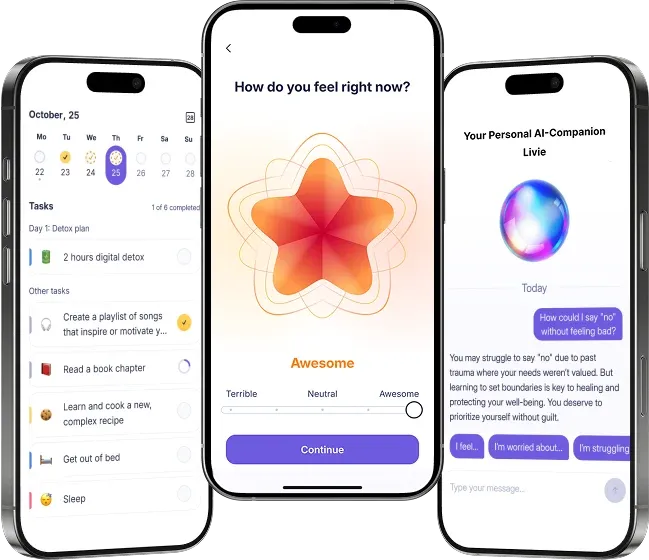
If you want some company in the process, Liven is built to make staying consistent feel less like willpower. The Mood Tracker and Journal help you spot what's draining you, name the patterns underneath, and find a rhythm that fits your real life instead of your imagined one.
References
- Pluut, H., & Wonders, J. (2020). Not able to lead a healthy life when you need it the most: Dual role of lifestyle behaviors in the association of blurred Work-Life boundaries with Well-Being. Frontiers in Psychology, 11, 607294. https://doi.org/10.3389/fpsyg.2020.607294
FAQ: How to Recover from Burnout
What are the common symptoms of burnout?
What is burnout, exactly?
Is burnout a medical diagnosis?
How long does it take to recover from burnout?
Why can burnout feel more intense with ADHD?
How can you recover from burnout while still working?