
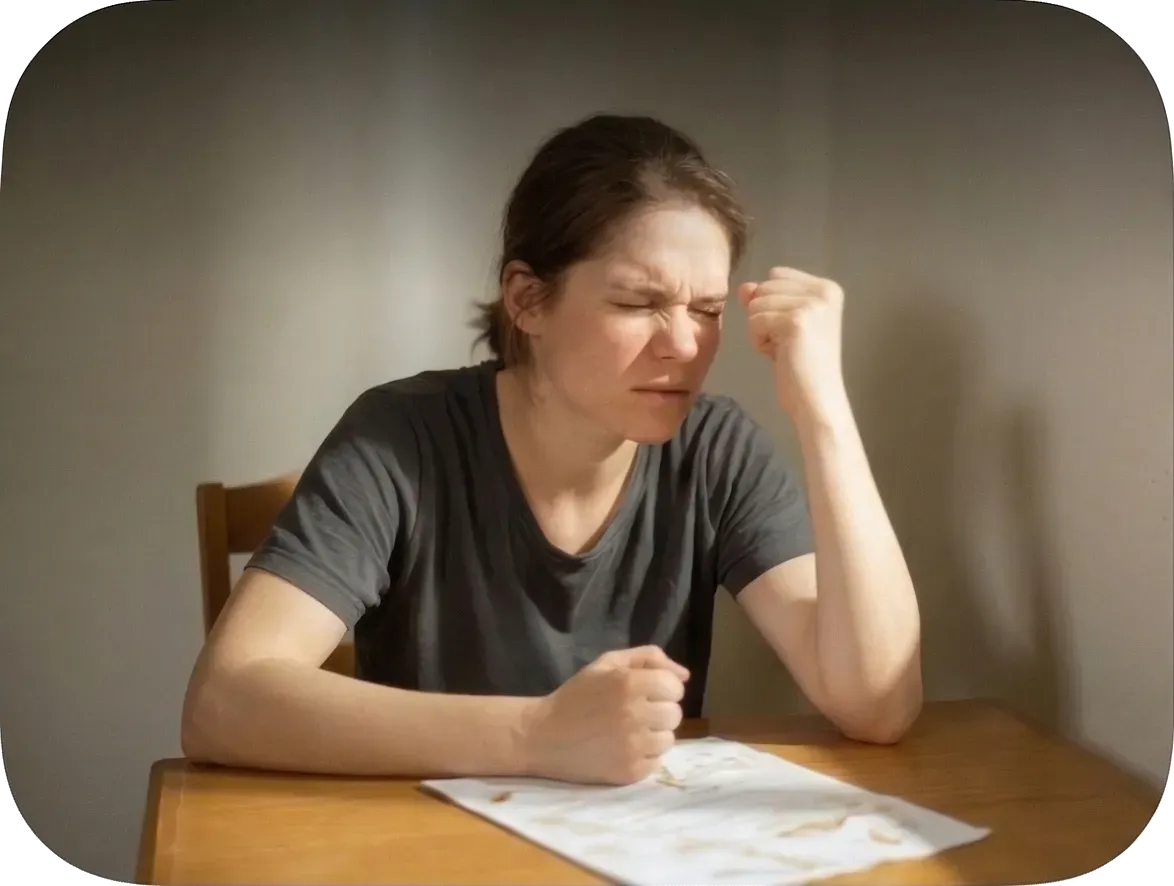
Cortisol & stress test
Understand how chronic stress and cortisol may be affecting your body and mind, and find strategies for better balance.
By clicking "Take test", you agree to the Terms of Use, Privacy Policy, Subscription Policy and Cookie Policy
Feeling constantly exhausted, on edge, or unable to sleep? These can be signs that chronic stress is keeping your cortisol, the hormone your body releases in response to stress, elevated.
Cortisol is essential for survival. It helps you respond to threats and regulate energy. But when stress is chronic, cortisol stops being a short-term helper and starts becoming a long-term problem. Elevated cortisol over weeks or months can disrupt sleep, heighten feelings of unease, in some cases contribute to weight gain, and affect your immune system.
This free stress test is designed to help you understand where you stand. It looks at your stress signs, patterns, and daily behaviors to give you a clearer picture of how cortisol may be showing up in your life. It takes around three minutes and provides personalized feedback based on your responses.
What Is Cortisol and Why Does It Matter?
Cortisol is a glucocorticoid hormone produced by the adrenal glands. When your brain perceives a threat, the hypothalamus activates the HPA axis: a communication chain that runs from the hypothalamus to the pituitary gland to the adrenal cortex. The result is a rapid release of cortisol into the bloodstream.
Briefly, this is exactly what you want. Cortisol sharpens focus, increases blood sugar for quick energy, and suppresses non-essential functions like digestion so your body can deal with the threat at hand.
According to Harvard Health Publishing, it's the hormone behind the fight-or-flight response that has kept humans alive for thousands of years.
The problem arises when the stress doesn't stop. Deadlines, financial pressure, relationship conflict, and chronic sleep deprivation all activate the same HPA axis as a physical threat. When the system stays switched on, cortisol levels can remain elevated for hours, days, or even months.
One scientific review found that chronic HPA axis activation is associated with disrupted glucose metabolism, suppressed immune response, cardiovascular strain, and significant changes in mood and cognition. Research from Frontiers in Endocrinology further linked prolonged cortisol dysregulation to burnout and disrupted sleep.
The American Institute of Stress reports that around 75% of U.S. adults experience significant stress, and that's not due to a lack of resilience. It's a physiological system under sustained pressure, with real consequences for a person's health.
Signs Commonly Linked With Chronically High Cortisol
When cortisol stays elevated, the effects tend to build up quietly across your body, your mood, and your sleep over time. Here's what to look out for.
Physical signs
Unexplained weight gain, especially around the abdomen. Cortisol increases appetite and promotes fat storage, particularly in the belly. According to the Mayo Clinic, it stimulates cravings for high-calorie foods and makes it harder for the body to metabolize stored fat efficiently.
Persistent fatigue that sleep doesn't fix. When cortisol is chronically elevated, the body's energy regulation can get thrown off. You may feel exhausted but unable to fully rest, a pattern sometimes called "wired and tired."
High blood pressure and a racing heart. Cortisol increases cardiac output and promotes vasoconstriction, preparing the body for action. Sustained elevation puts continuous strain on the cardiovascular system.
Frequent illness and slow recovery. Cortisol is anti-inflammatory in the short term, but chronic excess can suppress immune function. People with persistently high cortisol often find themselves catching colds more often or taking longer to recover.
Muscle weakness or tension. Over time, chronically high cortisol can break down muscle tissue and keep muscles in a state of low-level contraction. Jaw clenching, neck stiffness, and shoulder tension are common.
Mental and emotional signs
A constant sense of being on edge. Cortisol acts directly on the amygdala, the brain's threat-detection center. Elevated cortisol can heighten the amygdala's sensitivity, making ordinary situations feel more threatening than they are.
Irritability and emotional reactivity. HPA axis dysregulation can affect the prefrontal cortex's ability to regulate emotional responses, leading to shorter fuses and more intense reactions.
Brain fog, poor concentration, and memory lapses. Sustained cortisol exposure can impair hippocampal function, the brain region most involved in learning and memory. This is why chronic stress often feels like a cognitive slowdown.
Low or flat mood. Prolonged stress can affect the brain systems involved in mood regulation, which is part of why ongoing pressure can leave you feeling down or unmotivated.
Sleep disruption
Cortisol follows a natural daily rhythm, peaking in the morning to help you wake and declining through the day to allow sleep. When stress keeps cortisol elevated in the evening, falling asleep becomes difficult, and staying asleep even harder.
The cortisol-sleep relationship runs both ways: poor sleep raises cortisol, and high cortisol disrupts sleep. Left unaddressed, this cycle can compound over time.
None of these signs alone confirms a cortisol problem. But if several feel familiar and have persisted for more than a few weeks, it's worth taking a closer look.
What Drives High Cortisol?
Elevated cortisol almost always has multiple drivers. Understanding what's activating your stress response is the first step toward changing it.
Chronic stress at work or home. Occupational stress is among the most well-documented contributors to sustained cortisol elevation. OSHA reports that 83% of U.S. workers experience work-related stress. Relationship conflict, caregiving demands, and financial pressure produce the same physiological response. The HPA axis doesn't distinguish between a looming deadline and a family argument.
Poor sleep habits. Sleep deprivation directly raises cortisol levels. The American Academy of Sleep Medicine found that 65% of people report that work stress disrupts their sleep, creating a feedback loop in which stress impairs sleep, and sleep deprivation amplifies stress.
Diet and lifestyle factors. High sugar intake, excess caffeine, alcohol, and a sedentary lifestyle can all contribute to cortisol dysregulation. Skipping meals can spike cortisol as the body interprets low blood sugar as a stress signal. Overtraining without adequate recovery can also keep cortisol elevated for extended periods.
Early life stress. Research found that significant early childhood stress can reshape HPA axis sensitivity for decades. Adults with a history of early adversity may have cortisol systems that respond more intensely to ordinary stressors and recover more slowly afterward.
Medical conditions. In rare cases, chronically elevated cortisol is caused by Cushing's syndrome, a condition involving a tumor on the pituitary or adrenal glands. This requires clinical diagnosis and is distinct from stress-related cortisol elevation. If your symptoms are severe, or you're experiencing rapid weight gain around the face and upper body along with significant fatigue, speak to a doctor.
About Our Cortisol & Stress Test
This online stress test was designed to look at the behavioral and physical signs most commonly associated with elevated cortisol. It doesn't measure your actual hormone levels; only a blood, saliva, or urine test can do that. What it does is help you recognize how stress is showing up in your body, your thinking, and your daily life.
The quiz draws on established frameworks such as Cognitive Behavioral Therapy (CBT) and Dialectical Behavior Therapy (DBT).
Your results include a personalized stress profile, insight into which areas of your life are most affected, and practical strategies matched to your patterns.
This test is a self-assessment tool. It is not a clinical diagnosis and is not a substitute for professional medical advice. If you're experiencing severe or worsening symptoms, please consult a licensed healthcare provider.
How to Lower Cortisol Naturally
The HPA axis is adaptable, and consistent, evidence-based habits can meaningfully ease chronic stress responses over time. Here's what the research supports.
Prioritize sleep above everything else. Sleep is one of the most powerful natural supports for cortisol regulation. A consistent bedtime, a cool and dark sleep environment, and less screen exposure in the hour before bed all support the conditions needed for deep, restorative sleep. DBT-informed sleep strategies, such as stimulus control (using your bed only for sleep), can be especially helpful for breaking the cortisol-sleep loop.
Move your body regularly. Moderate aerobic exercise, 20 to 30 minutes most days, reliably reduces cortisol over time by improving HPA axis resilience. It also burns off the physiological readiness that elevated cortisol creates. Avoid high-intensity training every day without rest, since overtraining can have the opposite effect.
Practice structured relaxation. Mindfulness meditation, slow diaphragmatic breathing, and yoga have all been shown to activate the parasympathetic nervous system, the body's brake pedal after stress. Even ten minutes of deliberate relaxation signals to the HPA axis that the threat has passed.
Eat to stabilize blood sugar. Skipping meals, eating high-sugar foods, and overcaffeinating can all trigger cortisol spikes. Aim for regular meals with protein, fiber, and healthy fats. Reduce caffeine after midday and limit alcohol, since both can disrupt sleep and raise cortisol the following morning.
Reframe stress with CBT techniques. Cognitive Behavioral Therapy helps you spot the thought patterns that sustain cortisol activation. Catastrophizing, all-or-nothing thinking, and anticipatory worry all keep the HPA axis engaged. Learning to recognize and interrupt those patterns interrupts the cortisol cycle at its source.
Invest in social connection. The American Psychological Association's Stress in America data consistently shows that social support is one of the strongest buffers against chronic stress. Prioritizing relationships that feel safe and restorative matters for both your physical and mental well-being.
Spend time in nature. Spending time outdoors, particularly in green spaces, measurably reduces cortisol within minutes. Even a 20-minute walk in a park can lower salivary cortisol compared with the same walk in an urban environment.
Build micro-recovery into your day. Rather than waiting for a holiday or a weekend to decompress, build small recovery moments throughout each day. This is the core principle behind Liven's micro-cycle method: short, consistent practices that interrupt the stress response before it compounds.
When to See a Doctor
A self-assessment quiz is a useful starting point, but some symptoms suggest that a clinical evaluation is the next step.
Consider speaking to a doctor if:
- Your fatigue is severe and has lasted several months without a clear cause
- You've gained significant weight rapidly, particularly around your face, neck, or upper abdomen
- You have easy bruising, stretch marks that appeared without significant weight change, or unusual muscle weakness
- Your symptoms didn't improve after consistent lifestyle changes over several weeks
- Your stress is interfering with your ability to work, maintain relationships, or function day to day
These may point to a medical condition such as Cushing's syndrome or adrenal insufficiency, both of which require clinical diagnosis and treatment rather than behavioral changes alone.
The difference between this test and a clinical cortisol test is important. A blood, saliva, or 24-hour urine cortisol test measures actual hormone levels at specific times of day. This quiz looks at behavioral patterns and signs. Both have value, for different purposes.
Summary
Cortisol is not something to fear. It's a hormone doing its job: keeping you alert, energized, and responsive to demands. The issue isn't cortisol itself but a nervous system that rarely gets to switch off.
If this page has resonated, the most useful next step is understanding your own patterns. This free cortisol and stress test takes 3 minutes and gives you a behavioral profile grounded in established stress-management frameworks.
Knowing where you stand is not a small thing. It's how change starts.
FAQ
Can I test my cortisol levels at home?
You can buy at-home cortisol test kits that measure salivary or dried-blood-spot cortisol. These require samples taken at specific times, usually first thing in the morning and in the evening, to assess your daily cortisol curve. Results should always be interpreted with the help of a healthcare provider. Liven's quiz is not a hormone test: it looks at how stress is showing up in your behavior and well-being, offering a different but complementary kind of insight.
What is a normal cortisol level?
Cortisol levels vary throughout the day. In a healthy adult, they typically peak in the early morning and decline steadily through the day, reaching their lowest point around midnight. Exact ranges vary by test type and lab, so always compare your results against the reference ranges provided by your testing provider.
How long does it take to lower cortisol?
It depends on what's driving the elevation and how consistently you apply changes. Sleep improvements can produce measurable changes in cortisol within one to two weeks. Regular meditation shows cortisol benefits within four to eight weeks of consistent daily practice. Structural changes, like reducing workload or improving a difficult relationship, take longer but tend to produce the most durable results.
Is stress the same as burnout?
Not exactly. Stress is a state of overload: too many demands relative to your current resources. Burnout happens when prolonged, unresolved stress leads to emotional and physical depletion. Stress can feel energizing in short bursts. Burnout rarely does. If you feel disconnected, cynical, and completely depleted rather than just pressured, burnout may be a more accurate frame. Liven's burnout test can help you explore this distinction.