
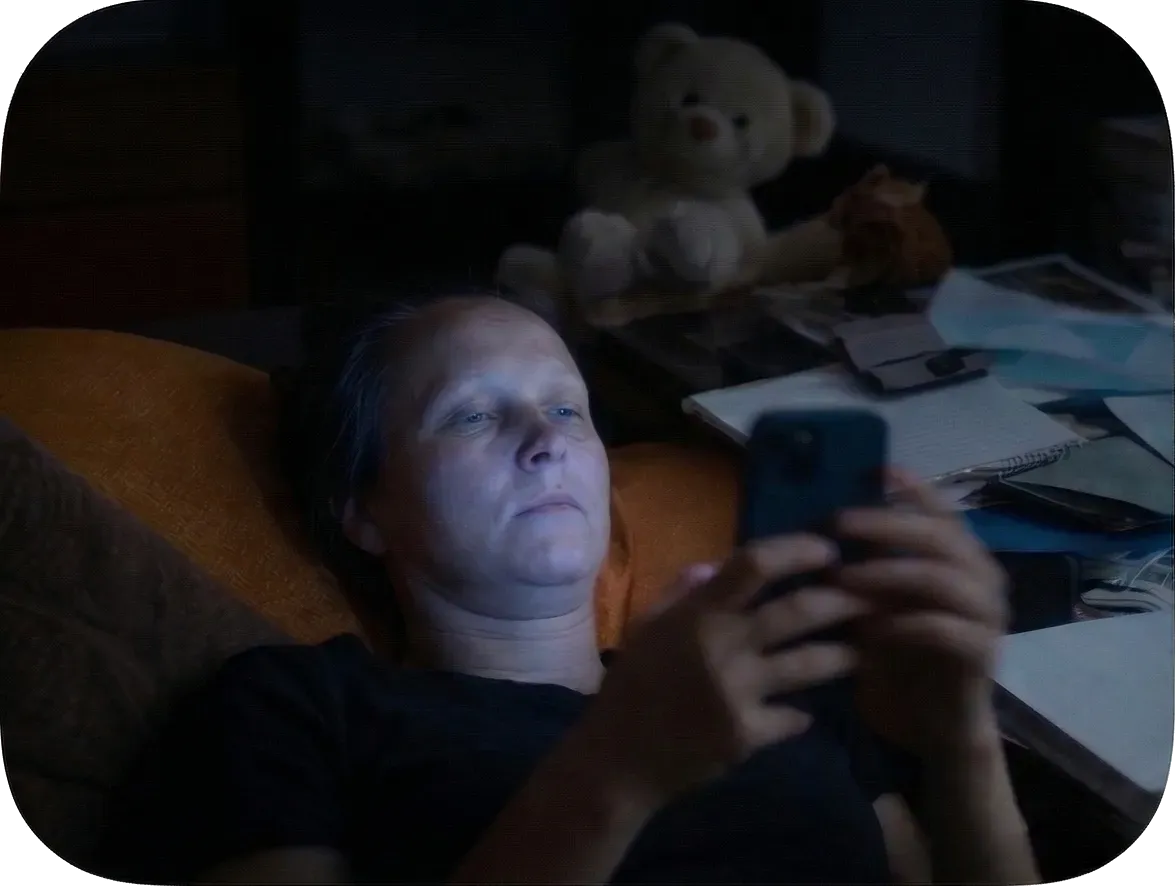
Dopamine addiction test
Find out if your brain's reward system is out of balance and learn how to restore healthy dopamine levels
By clicking "Take test", you agree to the Terms of Use, Privacy Policy, Subscription Policy and Cookie Policy
Do you constantly seek the next thrill, scroll endlessly, or struggle to feel satisfied even after getting what you wanted? You are not alone, and your brain is not broken. You may have a dopamine pattern that is working against you.
Dopamine is the neurotransmitter that drives motivation, reward, and desire. When its system gets dysregulated, it can push you toward behaviors such as chasing highs, numbing out, or grinding relentlessly for the next achievement. Over time, these patterns can erode your well-being and ability to enjoy everyday life.
Liven’s free dopamine addiction test identifies your specific dopamine type, e.g., Seeker, Achiever, or Soother, and maps the behavioral patterns driving your cycle. It takes about 3 minutes. You will leave with a clear picture of what is happening in your reward system and what to do about it.
What Is Dopamine Addiction?
Dopamine is one of the brain’s primary neurotransmitters. It plays a central role in the reward system, anticipation, and motivation. When you eat something you enjoy, connect with someone you love, or accomplish a goal, dopamine is released in the nucleus accumbens, which is the brain’s reward center, reinforcing that behavior and telling you to do it again.
Dopamine addiction does not mean you are addicted to the neurotransmitter itself. It refers to a behavioral pattern in which the dopamine reward loop becomes hijacked by high-stimulus activities such as substances, social media, food, gambling, or work to the point where natural rewards feel dull, and the compulsive behavior feels necessary just to feel normal.
Research indicates that chronic stimulation of the dopamine system leads to downregulation of dopamine receptors over time. The brain adapts to the flood of dopamine by reducing its own sensitivity to it. This creates a cycle: you need more stimulation to feel the same reward, and less stimulation produces discomfort.
Usually, addiction-like patterns are often described through the 4 C’s:
- Control: difficulty controlling how much or how often you engage in a behavior
- Compulsion: a strong urge to engage even when you do not want to
- Cravings: intense desire for the stimulus between episodes
- Consequences: continuing the behavior despite negative outcomes in relationships, health, or daily function
Please note that this test is not a clinical diagnosis. It is a behavioral self-assessment designed to help you identify which dopamine pattern is active in your life right now.
Signs You Might Have a Dopamine Addiction
Dopamine dysregulation shows up differently for different people. Some chase novelty and stimulation. Others numb out or grind compulsively. Here are the most common signs to watch for:
- You check your phone compulsively, even when you know nothing important is there.
- You feel restless or irritable when nothing stimulating is happening.
- You binge on food, content, or activities, then feel empty or regretful afterward.
- Ordinary activities, e.g., a walk, a conversation, a quiet evening, feel boring or insufficient.
- You use a behavior or substance to manage your mood rather than to enjoy it.
- You escalate over time, needing more of the same stimulus to get the same effect.
- You have tried to cut back on a habit and found it harder than expected.
- You seek risk, novelty, or intense experiences to feel alive.
- You feel low, flat, or unmotivated without your usual source of stimulation.
- Your habits have led to disrupted sleep, strained relationships, and poor focus, yet you continue.
You do not need to tick every box. If several of these feel accurate, your psychological and behavioral mechanisms may be running a pattern that is costing you a lot of energy.
Types of Dopamine Addiction
Liven’s dopamine addiction test identifies a few core types. Each reflects a different relationship with reward and a different set of triggers and coping behaviors.
Understanding your type is the first step toward changing the pattern.
The Seeker
Seekers are driven by novelty, stimulation, and the thrill of the new. The dopamine hit comes from the chase. Seekers may jump between hobbies, relationships, or jobs. They are prone to impulsive decisions, risk-taking, and boredom in stable situations. Social media scrolling, substance use, and constant content consumption are common Seeker behaviors.
At their best, Seekers are creative, energetic, and adventurous. When the pattern becomes dysregulated, the constant pursuit of the next thing leaves them unable to feel satisfied with what they have.
The Achiever
Achievers get their dopamine from productivity, success, and external validation. The reward comes from completing, winning, or being recognized. Achievers are often high-functioning on the surface but run on a treadmill of goals that never quite delivers lasting satisfaction. When there is nothing left to achieve, they can feel surprisingly empty or anxious.
Work addiction, perfectionism, compulsive goal-setting, and the inability to rest without guilt are hallmarks of the Achiever pattern. The brain has learned that productivity is the only reliable source of reward.
The Soother
Soothers use dopamine to regulate discomfort rather than to pursue pleasure. Food, alcohol, scrolling, or other numbing behaviors become the primary tools for managing stress, loneliness, boredom, or emotional pain. The behavior is less about chasing a high and more about avoiding a low.
Soothers often describe their habits as things they do without thinking, a default response to internal tension. Over time, the numbing behavior becomes a dominant coping strategy to feel okay, making natural emotional regulation increasingly difficult.
The Worrier
Worriers are driven by anxiety rather than reward. Checking behaviors, reassurance-seeking, doomscrolling, and rumination all provide a temporary sense of control that briefly quiets the nervous system. The relief is the reward, not the activity itself.
Worriers often have high stress levels and lower self-confidence, which creates a feedback loop: anxiety triggers the seeking behavior, the seeking behavior provides momentary relief, and the underlying anxiety grows stronger over time. Breaking the Worrier pattern requires addressing the stress response directly, not just the behavior on the surface.
How Does Our Dopamine Addiction Test Work?
The test includes a set of questions about your everyday behaviors, emotional patterns, and responses to reward, boredom, and stress. There are no trick questions and no right or wrong answers. Honest responses produce the most useful results.
After completing the test, you receive a full summary of your dopamine profile across four dimensions:
- Estimated dopamine dependence level — rated across a Low to High spectrum, with a description of how your level typically shows up in daily life
- Dopamine type — your behavioral profile (for example: Worrier, Seeker, or Achiever), which reflects how your reward system responds to stress and stimulation
- Excessive dopamine trigger — the primary emotional or situational driver behind your dopamine-seeking behavior, such as anxiety, boredom, or social pressure
- Stress and self-confidence levels — two additional markers that give context to your overall pattern and how your dopamine cycle interacts with your emotional baseline
Liven’s dopamine addiction test is co-created with licensed health professionals on evidence-backed methodologies, including Cognitive Behavioral Therapy (CBT), Dialectical Behavior Therapy (DBT), Behavioral Activation Therapy, and neuroimaging research in affective neuroscience.
Note that the results are not a clinical diagnosis. They are self-assessment tools designed to build awareness and provide you with clear direction. If you believe you are dealing with a substance use disorder or a clinical mental health condition, please seek support from a licensed professional.
How to Break the Dopamine Cycle
There is no single fix for dopamine addiction. What works is a consistent set of changes that allow your brain’s reward sensitivity to gradually recover. Here is where to start:
- Remove your highest-stimulation inputs (social media, processed food, streaming) for 24 hours. This is not a cure, but it builds awareness of how dependent you have become on external stimulation.
- Before acting on an impulse, pause for 10 minutes. Over time, this rebuilds the prefrontal cortex’s ability to regulate reward-seeking behavior.
- A behavioral gap left unfilled tends to be refilled by the original habit. Identify what need the behavior was meeting (stimulation, comfort, escape) and find a healthier substitute for that same need.
- Physical exercise is one of the most reliable natural regulators of dopamine. Even a 20-minute walk produces measurable changes in mood and motivation without overstimulating the reward system.
- Practices like mindfulness, Yoga Nidra, breathwork, and progressive relaxation train your nervous system to tolerate quiet without reaching for stimulation.
- For Soothers especially, and for anyone whose patterns involve substances, CBT and DBT offer well-researched frameworks for addressing the emotional regulation deficits beneath the behavior.
- Treat your dopamine test results as a map. Knowing your type tells you which triggers to watch for and which strategies are most likely to work for you specifically.
Summary
Dopamine is not your enemy. It’s the system your brain uses to pursue what matters. The problem is when that system gets calibrated to artificial highs, leaving natural rewards feeling flat and compulsive behaviors feeling necessary.
Liven’s free dopamine addiction test gives you a clear map: your type, your triggers, and a direction forward. Whether you are a Seeker, Achiever, or Soother, understanding your pattern is the most practical first step toward changing it. Your brain built this cycle. With the right tools, it can build a new one.
FAQ
Can you actually be addicted to dopamine?
Technically, no. You cannot be addicted to your own neurotransmitter. Certain behaviors or substances repeatedly trigger the dopamine reward system, leading to compulsive, hard-to-control patterns. The phrase “dopamine addiction” describes this pattern rather than a dependency on the chemical itself.
How do I know if my dopamine levels are low?
Low baseline dopamine activity often shows up as persistent low motivation, difficulty feeling pleasure (anhedonia), fatigue, difficulty concentrating, and a constant search for stimulation. These symptoms overlap with several conditions, including depression and ADHD. A behavioral self-assessment like this test can help surface the pattern, but for a clinical picture, speak with a doctor or mental health professional.
What is a dopamine detox?
A dopamine detox involves temporarily removing high-stimulation activities such as social media, processed food, streaming, gambling, and substances to allow your brain’s reward sensitivity to reset. The idea is grounded in the neuroscience of receptor downregulation: by reducing the flood of artificial dopamine spikes, the brain gradually restores its baseline sensitivity to natural rewards.
Is dopamine addiction the same as ADHD?
They overlap but are not the same. ADHD involves structural differences in dopamine regulation that affect attention, impulse control, and motivation from a neurological baseline. Dopamine addiction patterns can develop in anyone through behavioral and environmental factors. That said, people with ADHD are statistically more vulnerable to developing compulsive dopamine-seeking patterns because of their brain’s reward sensitivity. If you suspect ADHD, a formal assessment is worth pursuing.